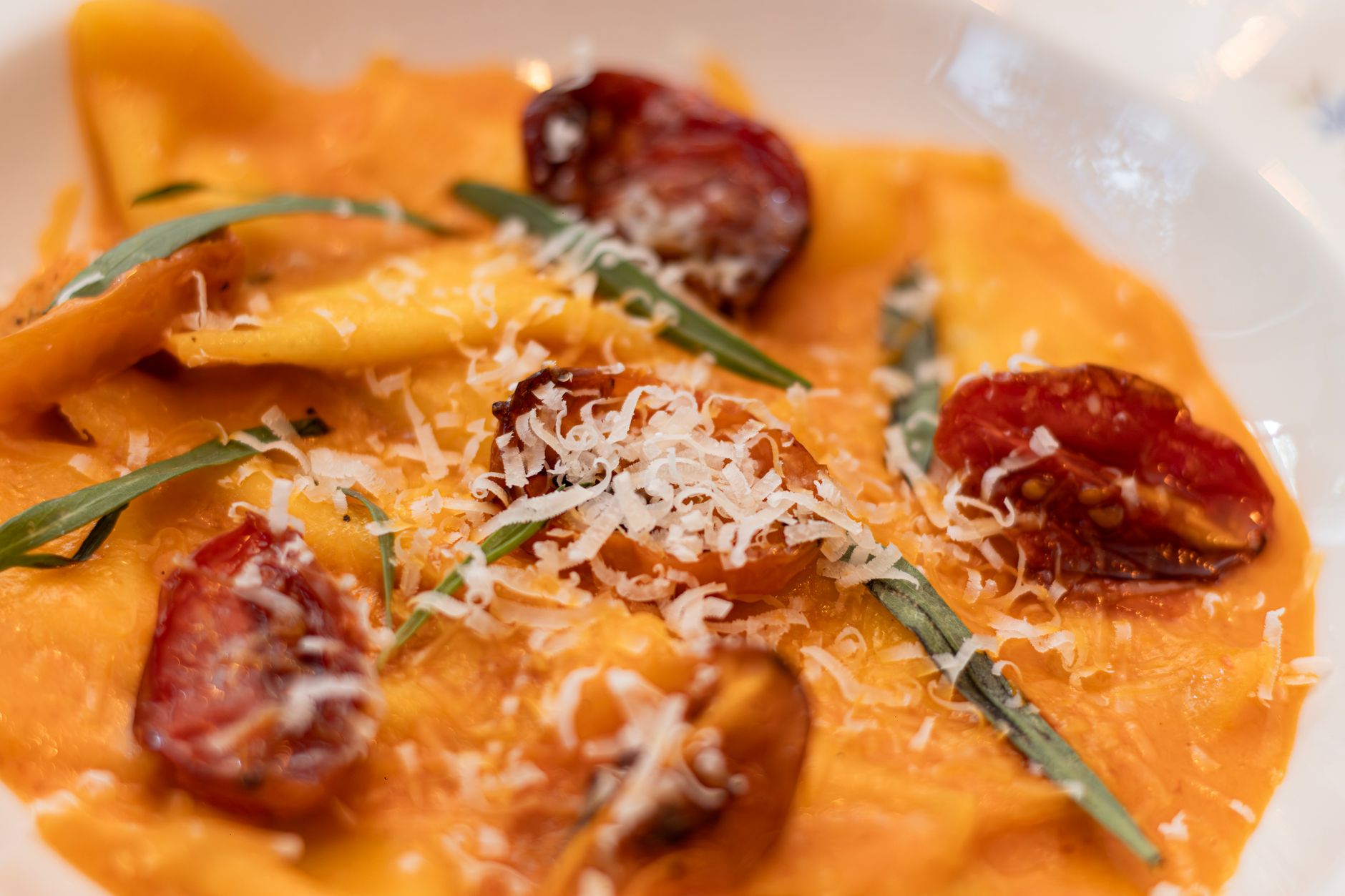
Why Ricotta Taleggio Ravioli With Wild Mushroom Sauce Recipe
The first bite brings together soft pasta, creamy cheese, crisp pancetta, and an earthy mushroom aroma. This Ricotta Taleggio Ravioli With Wild Mushroom Sauce Recipe is a from-scratch Italian dinner with a rich filling and a silky sauce that feels special without needing complicated restaurant equipment.
Ricotta-Taleggio ravioli with wild mushroom sauce is made by filling fresh egg pasta with ricotta, Taleggio, Parmesan, and parsley, then serving the ravioli with sautéed mushrooms, pancetta, chicken stock, butter, and more Parmesan. The dough rests before rolling, and the finished ravioli cooks in gently boiling water until tender.
The dish takes some time, but each stage is manageable. You can prepare the dough and filling earlier in the day, then assemble the ravioli shortly before dinner. The result is generous enough for four main-course servings.
Health Benefits & Nutrition
This is a rich pasta dish, best enjoyed as a satisfying main meal rather than a light side. It combines several useful foods, but the butter, cheese, pancetta, and pasta also make the recipe high in calories and saturated fat.
- Protein from dairy and eggs: Ricotta, Taleggio, Parmesan, and eggs contribute protein, which helps make the ravioli filling substantial.
- Mushrooms add variety: Shiitake, oyster, and cremini mushrooms provide fiber and several vitamins and minerals while adding savory flavor without needing a large amount of meat.
- Parsley and chives add freshness: The herbs bring color and a bright finish to a rich sauce. They also add small amounts of vitamins and plant compounds.
- Energy for a filling meal: Pasta, cheese, butter, and pancetta provide concentrated energy, making this recipe suitable for a hearty lunch or dinner.
Per serving, the recipe provides approximately 1,200–1,500 calories, 55–70 grams of protein, 95–115 grams of carbohydrates, and 75–95 grams of fat, depending on the exact cheeses, pancetta, and pasta portions used. These are kitchen estimates, not laboratory values.
The recipe contains wheat, eggs, and dairy. Taleggio and Parmesan may be made with different milk sources, so check labels for allergies or dietary requirements. If you are pregnant, immunocompromised, or preparing food for someone with a medical condition, use properly pasteurized dairy and cook the ravioli thoroughly. Ask a doctor or dietitian for personal dietary advice.
Ingredients & Preparation
Recipe Card
| Prep time | 1 hour 15 minutes |
|---|---|
| Cook time | 25 minutes |
| Total time | 1 hour 40 minutes |
| Servings | 4 servings |
| Calories | Approximately 1,350 per serving |
| Diet tags | Italian, contains wheat, eggs, and dairy |
Full Ingredient List
- 1 pound all-purpose flour, plus extra for dusting
- 5 large eggs
- 3 tablespoons extra-virgin olive oil
- 1 teaspoon kosher salt, divided, plus more for pasta water
- 1/2 cup semolina or polenta, for the baking sheet
- 2 cups sheep’s milk ricotta cheese
- 1 cup Taleggio cheese, rind removed and diced
- 3 large eggs
- 1/2 cup finely grated Parmigiano-Reggiano, divided
- 1/4 cup finely chopped fresh parsley
- 1 tablespoon extra-virgin olive oil, for the sauce
- 1/2 cup diced pancetta
- 3 garlic cloves, smashed
- 1 cup sliced shiitake mushrooms
- 1 cup sliced oyster mushrooms
- 1 cup sliced cremini mushrooms
- 1 1/2 cups chicken stock
- 4 tablespoons unsalted butter
- 1/4 cup chopped fresh chives
Equipment Needed
You will need a large work surface, mixing bowls, plastic wrap, a pasta roller, a rolling pin, a pastry bag or sturdy zip-top bag, a ravioli cutter or sharp knife, a large pot, a wide skillet, a slotted spoon, and a semolina-dusted baking sheet.
Tips for Choosing Quality Ingredients
Use fresh ricotta that is thick rather than watery. If the ricotta looks loose, drain it in a fine sieve for 20–30 minutes before mixing the filling. A firm piece of Taleggio is easier to dice and gives the filling a smooth, savory flavor.
Choose mushrooms that feel dry and firm, with no slippery patches. A mix of varieties gives the sauce more depth than using one mushroom alone. For the pasta, ordinary all-purpose flour works well, while finely ground semolina is best reserved for dusting because it helps prevent sticking without becoming gummy.
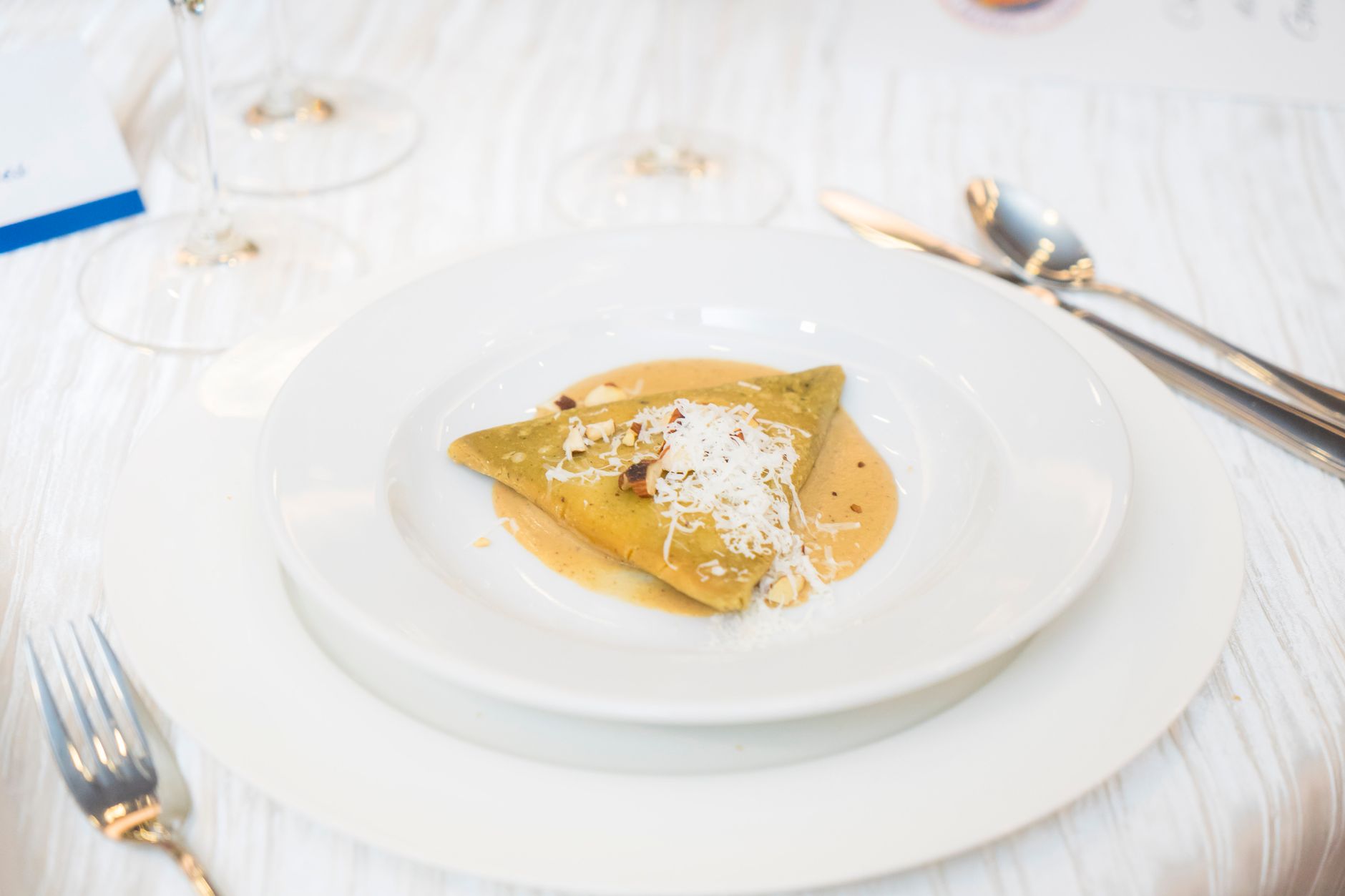
Step-by-Step Instructions
1. Make and rest the pasta dough
Place the flour on a work surface and form a wide well. Add 5 eggs, 3 tablespoons olive oil, and 1/2 teaspoon kosher salt. Beat the eggs with a fork, gradually pulling flour from the sides into the center. Knead the dough for 10–15 minutes, until smooth and springy. Wrap it tightly and rest at room temperature for 45 minutes.
The first time I made this dough, I added extra flour too quickly because it looked sticky. The finished pasta was tougher than it needed to be. Knead for several minutes first; the dough usually becomes supple as the flour hydrates.
2. Prepare the cheese filling
While the dough rests, stir together the ricotta, diced Taleggio, 3 eggs, 1/4 cup Parmigiano-Reggiano, parsley, and 1/2 teaspoon kosher salt. Mix for 1–2 minutes, until evenly combined. Transfer the filling to a pastry bag or zip-top bag and refrigerate for at least 30 minutes.
The filling should hold a soft peak rather than run across the bowl. If it feels wet, refrigerate it longer or drain the ricotta before mixing. Chilling makes cleaner portions and reduces the chance of filling leaking during cooking.
3. Roll the pasta sheets
Cut the rested dough into 4 pieces and keep 3 pieces covered. Flatten one piece and pass it through a pasta roller at the widest setting twice. Fold the sheet into thirds and pass it through twice more. Continue reducing the setting one notch at a time until the dough reaches the second-thinnest setting, approximately 1/16 inch thick. Repeat with the remaining dough.
Dust only when needed. Too much flour can make the edges difficult to seal. The finished sheet should feel smooth and cool, with enough flexibility to fold around the filling without cracking.
4. Fill and shape the ravioli
Lay one pasta sheet on a lightly floured surface. Pipe rounded teaspoons of filling along the sheet, leaving about 1 1/2 inches between portions and a 1-inch border. Brush the pasta lightly with water, fold the sheet over the filling, and press around each mound to remove air. Cut into individual ravioli and seal the edges firmly with your fingers or a ravioli cutter. Place them on a semolina-dusted baking sheet.
Press from the filling outward when sealing. I once left small air pockets in the first batch, and two ravioli opened in the pot. Removing the air is more important than pressing hard on the filling.
5. Cook the mushroom sauce
Heat 1 tablespoon olive oil in a wide skillet over medium heat. Add the pancetta and cook for 4–5 minutes, until lightly crisp. Add the garlic and mushrooms, season with a pinch of salt, and cook for 6–8 minutes. The mushrooms should shrink and turn golden at the edges. Add the chicken stock and simmer for 5 minutes, then remove the garlic.
Lower the heat to medium-low and whisk in the butter one tablespoon at a time. Stir in 1/4 cup Parmigiano-Reggiano and the chives. The sauce should look glossy and lightly coat a spoon. If it seems too thick, add 1–2 tablespoons of pasta water.
6. Boil and finish the ravioli
Bring a large pot of salted water to a gentle boil. Cook the ravioli in batches for 3–4 minutes, depending on thickness, until the pasta is tender and the filling is hot. Lift them out with a slotted spoon and transfer them directly to the mushroom sauce. Toss gently for 30 seconds, then serve with extra Parmigiano-Reggiano and chives.
A gentle boil is better than a forceful one. Vigorous bubbling can knock the ravioli against one another and split the seams. The pasta is ready when it looks slightly puffed and gives easily under a fork.

Variations & Substitutions
- Vegetarian sauce: Omit the pancetta and use 1 tablespoon olive oil instead. Replace the chicken stock with vegetable stock. Add 1/2 teaspoon smoked paprika if you want a deeper savory note.
- Different mushrooms: Replace the shiitake, oyster, and cremini mushrooms with 3 cups sliced portobello, chanterelles, or a mixed mushroom selection. Keep the total quantity the same.
- milk ricotta: Replace sheep’s milk ricotta with 2 cups whole-milk cow’s milk ricotta. Drain it for 30 minutes if it is especially wet.
- Less intense cheese: Replace half of the Taleggio with an equal amount of fontina. Use 1/2 cup Taleggio and 1/2 cup diced fontina for a milder filling.
- Herb change: Replace the parsley in the filling with 2 tablespoons chopped fresh basil. Keep the chives in the sauce for their sharper finish.
- Make it without a pasta machine: Roll each dough portion with a lightly floured rolling pin until approximately 1/16 inch thick. The sheets may be less uniform, so check carefully for thick edges before filling.
Storage & Shelf Life
Cooked ravioli and sauce can be refrigerated in an airtight container for up to 3 days. Cool the food promptly, refrigerate it within 2 hours, and reheat gently in a covered skillet with 1–2 tablespoons of water or stock. Avoid boiling during reheating, which can make the sauce separate and the pasta soft.
Uncooked assembled ravioli can be frozen on a semolina-dusted baking sheet for 1–2 hours, then transferred to a freezer bag or airtight container. Cook them directly from frozen, adding approximately 2–3 minutes to the boiling time. Frozen ravioli are best used within 1 month for good texture.
Discard the dish if it develops a sour or unpleasant odor, slimy mushrooms, mold, a sticky surface, or unusual discoloration. Do not taste food to decide whether it has spoiled.
Pro Tips
Drain watery ricotta. Excess moisture thins the filling and makes the pasta seams harder to close. A short drain over a sieve can make a noticeable difference.
Keep the pasta covered. Fresh sheets dry quickly. Cover rolled dough with a clean towel or plastic wrap while you work on another sheet.
Use a light dusting of semolina. Flour can turn pasty in the cooking water, while semolina keeps the ravioli separated on the tray. Brush away any heavy coating before boiling.
Brown the mushrooms before adding stock. The skillet should be hot enough for a gentle sizzle. If the mushrooms release liquid and steam immediately, keep cooking until that liquid evaporates and the edges begin to color.
Balance the sauce at the end. Pancetta, stock, Taleggio, and Parmesan all bring salt. Taste only after the stock has reduced and the cheese has been stirred in, then adjust carefully.
Save pasta water. The starchy water helps loosen the sauce while encouraging it to cling to the ravioli. Add it one tablespoon at a time rather than flooding the skillet.
Questions & Answers
When is the best time to eat Ricotta Taleggio Ravioli With Wild Mushroom Sauce Recipe?
The best time to eat this ravioli is immediately after it is tossed with the mushroom sauce. Fresh pasta has its most tender texture straight from the pot, while the butter and cheese sauce is still glossy. Serve it as a hearty lunch or dinner with a simple green salad to balance the richness.
Can I make the ravioli dough ahead of time?
Yes, you can make the dough up to 24 hours ahead and refrigerate it. Wrap it tightly in plastic wrap, then let it sit at room temperature for 20–30 minutes before rolling. Chilling makes the dough firm, while a short rest outside the refrigerator makes it easier to flatten.
Why is my ravioli filling leaking?
Ravioli usually leak because of trapped air, wet filling, or poorly sealed edges. Drain watery ricotta, leave a clear border around each portion, and press from the filling outward before sealing. Cook the ravioli in gently simmering water rather than a hard boil.
Can I use store-bought pasta sheets?
Yes, fresh store-bought pasta sheets can be used, although they may vary in thickness. Cut them into manageable strips and keep them covered while filling. If the sheets feel dry, brush the edges with a very small amount of water before pressing them closed.
What can I serve with this ravioli?
A crisp green salad, roasted vegetables, or lightly dressed bitter greens work well with this dish. Avoid pairing it with another heavy cream-based side. A simple salad with lemon juice and olive oil provides acidity that cuts through the cheese and butter.
Can I make the sauce without chicken stock?
Yes, replace the chicken stock with an equal amount of vegetable stock, mushroom stock, or water. Vegetable or mushroom stock gives the sauce more flavor, while water creates a lighter result. Taste before adding salt because prepared stocks vary widely in sodium.
How do I reheat leftover ravioli?
Reheat leftover ravioli gently in a covered skillet over medium-low heat with a splash of water or stock. Stir carefully for 4–6 minutes until hot throughout. A microwave can work in short 30-second intervals, but the sauce may separate and the pasta can become softer.
More Recipes You Will Love
If you enjoy rich Italian-inspired comfort food, try this Butternut squash ravioli with brown butter sage sauce 8091371. It uses the same fresh-pasta spirit but swaps the savory cheese filling for sweet, earthy squash.
For a handheld option with salty meat and fruit-forward flavor, make the Mortadella and fig focaccianini recipe 1925371. It is a convenient choice when you want something warm and satisfying without shaping pasta.

Conclusion
Ricotta Taleggio Ravioli With Wild Mushroom Sauce Recipe rewards careful preparation with tender pasta, a creamy cheese center, and a deeply savory mushroom sauce. Keep the filling chilled, seal out air, and cook the ravioli gently for the best results. You can prepare the dough or freeze the shaped pasta ahead, making this homemade dinner easier to manage. If you make it, please leave a rating, share your result, or comment with the mushroom combination you used.
FAQs
When is the best time to eat Ricotta Taleggio Ravioli With Wild Mushroom Sauce Recipe?
The best time to eat Ricotta Taleggio Ravioli With Wild Mushroom Sauce Recipe is during a relaxed dinner, when the ravioli can be served straight from the pot. The dish is rich and filling, so it works best as a main course rather than a light side. It also suits special occasions, since the dough and filling take about an hour to prepare. Serve it right after cooking so the sauce stays silky.
Can I make Ricotta Taleggio Ravioli With Wild Mushroom Sauce Recipe ahead of time?
Yes, you can prepare the dough and filling earlier in the day and assemble the ravioli shortly before dinner. Arrange the shaped ravioli in a single layer on a tray dusted with semolina so they do not stick. Cover them and keep them chilled until cooking. For longer storage, freeze the tray first, then move the frozen ravioli to a sealed bag and cook them directly from frozen in gently boiling water.
Can I use cow's milk ricotta instead of sheep's milk ricotta in this ravioli filling?
Yes, you can use cow's milk ricotta instead of sheep's milk ricotta. Cow's milk ricotta is usually milder and less rich, so the filling may taste softer. Drain it in a fine sieve for 30 minutes to an hour before mixing so the filling does not turn wet. Check the flavor after mixing and add a little extra Parmigiano-Reggiano if you want more savory depth.
Why is the ravioli filling runny, and how can I fix it?
A runny ravioli filling usually means the ricotta still holds too much liquid. Drain the ricotta in a sieve set over a bowl before mixing it with the Taleggio, eggs, Parmesan, and parsley. Press the edges of each ravioli firmly so the filling does not leak during cooking. If the filling still seems loose, chill it briefly before spooning it onto the dough.
Can I make the mushroom sauce without pancetta?
Yes, you can leave out the pancetta and still make a satisfying sauce. Cook the mushrooms in butter and olive oil until deeply browned, which builds much of the savory flavor on its own. Use vegetable stock in place of chicken stock if you want a version with no meat-based ingredients. The sauce will taste lighter, so season it carefully before serving.