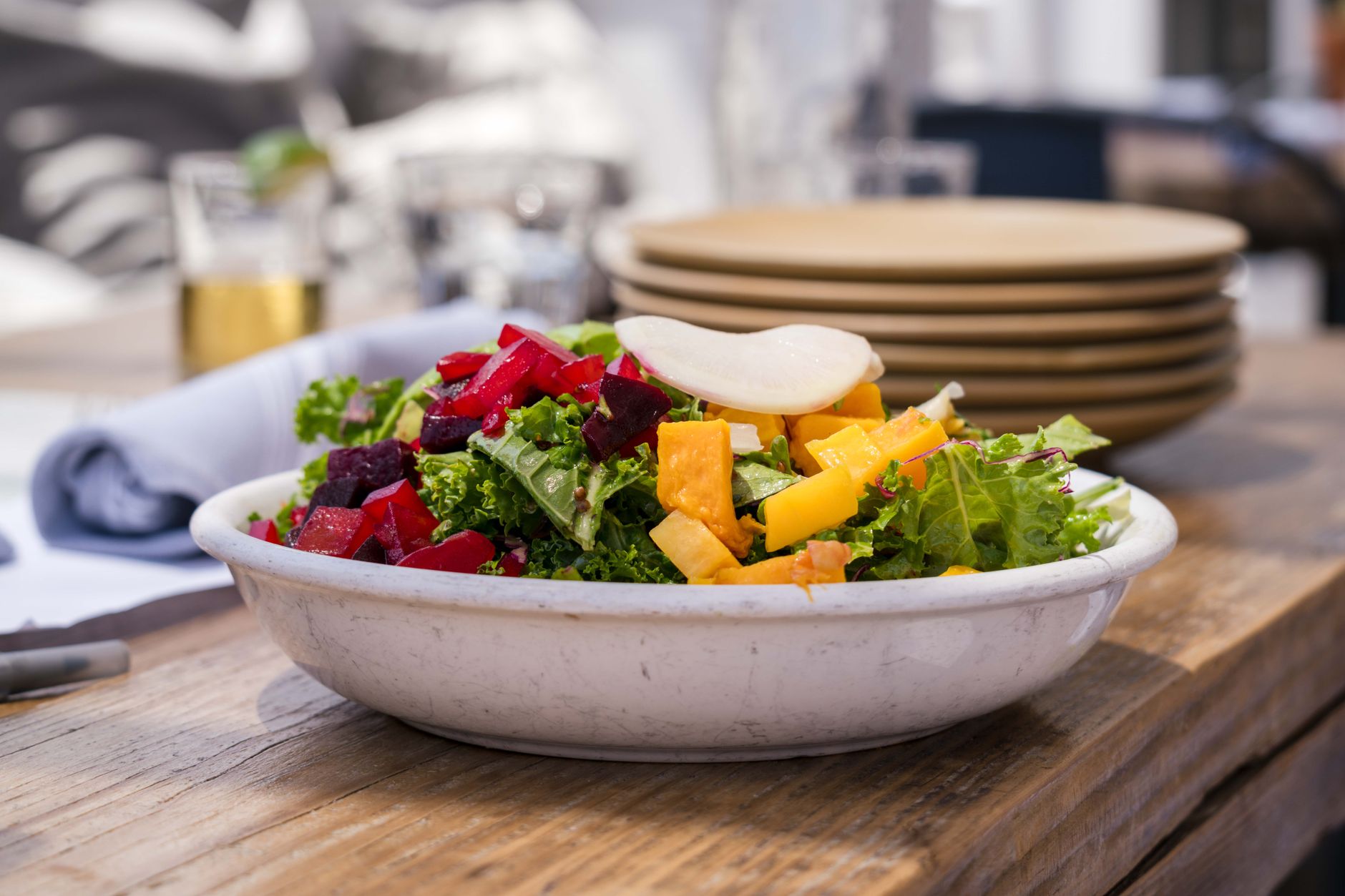
Why Houstons Style Kale Salad Works
The first bite is crunchy, nutty, tangy, and slightly sweet, with a dressing that clings to every curly leaf. Houstons Style Kale Salad turns sturdy kale into a tender restaurant-style side without any cooking.
Houstons Style Kale Salad is a crunchy American restaurant-style salad made with curly kale, green cabbage, roasted peanuts, cilantro, scallions, and a sweet-tangy peanut oil dressing. The kale is briefly massaged with the dressing, which softens the leaves while preserving their texture. It takes about 20 minutes and makes four generous servings.
I have made this salad several times, and the small details matter. Chopping the kale into bite-sized pieces makes each forkful easier to eat. I also found that one minute of massaging is enough; longer makes the leaves limp rather than pleasantly tender. Serve it alongside grilled chicken, burgers, sandwiches, or roasted vegetables.

Health Benefits & Nutrition
This salad combines leafy greens, cabbage, herbs, and peanuts, so it brings several useful nutrients to the table. The dressing is flavorful and rich, which means a modest serving can feel satisfying.
- Kale provides leafy-green nutrients: Kale contributes fiber and is a source of vitamins such as vitamin K, vitamin C, and vitamin A. The exact amount varies with the type and quantity of kale used.
- Cabbage adds crunch and fiber: Raw green cabbage supplies additional fiber and water while keeping the salad crisp.
- Peanuts add plant protein and healthy fats: Roasted peanuts make the salad more filling and provide protein, though they also add calories and sodium when salted.
- Cilantro and scallions add flavor without much sugar: Fresh herbs and scallions create a bright finish, helping the dressing taste lively without relying on a large amount of sweetener.
As written, one serving contains approximately 360 calories, 9 grams of protein, 14 grams of carbohydrates, 5 grams of fiber, and 32 grams of fat. These are estimates, not laboratory measurements, and they can change with the peanut oil, peanut brand, and serving size.
This recipe contains peanuts and mustard. Avoid it if you have an allergy to either ingredient, and check labels for shared-facility warnings. Anyone managing a medical condition or following a medically prescribed diet should ask a doctor or registered dietitian for personalized advice.
Ingredients & Preparation
Recipe Card
| Prep time | 20 minutes |
|---|---|
| Cook time | 0 minutes |
| Total time | 20 minutes |
| Servings | 4 servings |
| Calories | Approximately 360 per serving |
| Diet tags | Vegetarian, dairy-free, no-cook |
Full Ingredient List
- 1 tablespoon rice vinegar
- 1 tablespoon honey Dijon mustard
- 1 teaspoon granulated sugar
- 2 pinches cayenne pepper
- 1/4 teaspoon kosher salt, plus more to taste
- Freshly ground black pepper, to taste
- 1/3 cup roasted peanut oil
- 8 cups chopped curly kale leaves, from 1 ten-ounce bunch
- 1 1/2 cups finely shredded green cabbage, from about 1/4 small head
- 3/4 cup roasted salted peanuts, finely chopped
- 3/4 cup fresh cilantro, roughly chopped
- 4 scallions, green parts only, thinly sliced
Equipment Needed
You need a large mixing bowl, a small whisk or fork, a chef’s knife, a cutting board, measuring spoons and cups, and a salad-serving spoon or tongs. A salad spinner is useful for drying the kale and cabbage, but clean kitchen towels work well too.
Tips for Choosing Quality Ingredients
Choose kale with firm, deeply green leaves and no yellow or slimy spots. Curly kale gives the closest texture because its ruffled leaves hold the dressing. Smaller leaves are usually more tender, while very large leaves may need a little extra chopping.
Use fresh green cabbage that feels heavy for its size. The cut surface should look moist and crisp, not brown. For the peanuts, roasted salted peanuts provide the most familiar flavor. If you use unsalted peanuts, add extra salt gradually because the dressing already contains mustard.
Fresh cilantro should look perky and green. Avoid bunches with widespread wilting or dark stems. Peanut oil has a clean, mild flavor here, so use a fresh bottle. Rancid oil can smell stale or paint-like and will overpower the salad.

Step-by-Step Instructions
1. Wash and prepare the vegetables — 5 minutes
Rinse the kale, cabbage, cilantro, and scallions under cool running water. Dry them thoroughly, then strip the kale leaves from the thick stems. Chop the leaves into pieces about 1 inch wide. Thinly shred the cabbage, slice the scallion greens, and roughly chop the cilantro.
Drying is more important than it may seem. Excess water dilutes the dressing and makes it slide to the bottom of the bowl. The kale should feel dry to the touch before you add it.
2. Whisk the dressing — 3 minutes
In a large mixing bowl, whisk together the rice vinegar, honey Dijon mustard, sugar, cayenne, 1/4 teaspoon kosher salt, and several grinds of black pepper for 30 seconds. Slowly drizzle in the peanut oil over 1 minute while whisking constantly.
The dressing should look glossy and lightly thickened, with no obvious puddle of oil around the edges. The first time I made this, I poured in the oil too quickly, and it separated immediately. A slow, steady stream prevents that problem.
3. Soften the kale and cabbage — 1 minute
Add the chopped kale and shredded cabbage directly to the bowl of dressing. Using clean hands, massage and toss the greens for exactly 1 minute. Squeeze a small handful once or twice, then release it and continue tossing.
The leaves are ready when the kale turns a slightly darker green and feels flexible rather than stiff. You should still see some curly edges and hear a faint crunch from the cabbage. Stop at that point to preserve the salad’s texture.
4. Add the crunchy and fresh ingredients — 5 minutes
Add the chopped peanuts, cilantro, and sliced scallion greens. Toss with salad tongs for 30 to 45 seconds, lifting from the bottom so the dressing coats the cabbage and kale evenly.
Keep the peanut pieces small enough to distribute throughout the bowl. Large chunks tend to fall to the bottom, while very fine crumbs disappear into the dressing.
5. Taste and serve — 6 minutes
Taste one forkful from the center of the bowl. Add a small pinch of salt or a few grinds of pepper if needed, then toss for 15 seconds. Serve immediately, or let the salad stand at room temperature for up to 10 minutes before serving.
The finished salad should smell nutty and fresh, with a bright vinegar note. It should taste savory first, followed by mild sweetness, gentle heat, and a clean cilantro finish.
Variations & Substitutions
- Use another neutral oil: Replace the 1/3 cup peanut oil with 1/3 cup grapeseed, avocado, or light olive oil. The flavor will be less distinctly nutty, so add 1 tablespoon of extra chopped peanuts if desired.
- Make it peanut-free: Use sunflower seed oil in a 1:1 ratio and replace the peanuts with 3/4 cup roasted sunflower seeds. Check all labels carefully if the salad is being served to someone with an allergy.
- Reduce the heat: Omit the cayenne completely for a mild dressing. For moderate heat, use one small pinch instead of two.
- Make it vegan: Replace the honey Dijon mustard with a vegan Dijon mustard. Keep the same 1 tablespoon quantity, and confirm that the sugar is suitable for your dietary preferences.
- Add a heartier protein: Fold in 1 1/2 cups of cooked, cooled edamame or 2 cups of shredded roasted chicken. Add the protein after massaging the greens so it does not break apart.
- Use a different cabbage: Purple cabbage can replace half or all of the green cabbage. It adds color and a slightly firmer bite, but it may tint the dressing lightly purple after several hours.
I tried using bagged shredded coleslaw mix once, and the result was less appealing because the pieces were too thick and uneven. If you use a prepared mix, chop it into smaller strands before tossing it with the kale.
Storage & Shelf Life
Store leftover salad in a covered container in the refrigerator for up to 2 days. The kale remains fairly sturdy, but the peanuts gradually lose their crunch and the cabbage softens. For the best texture, keep the chopped vegetables and dressing separate for up to 3 days, then combine them shortly before serving.
This salad does not freeze well. Freezing damages the raw kale, cabbage, cilantro, and scallions, leaving them watery and limp after thawing. The dressing can be whisked together and refrigerated separately for up to 4 days, although it may need another vigorous whisk before use.
Discard the salad if it develops a sour or fermented smell, slimy leaves, unusual discoloration, bubbling, or visible mold. Do not taste food to decide whether it is safe after those signs appear.
Pro Tips for Better Texture and Flavor
- Remove the tough kale stems: The stems stay fibrous even after massaging. Strip them away before chopping rather than trying to chew around them later.
- Cut everything evenly: Kale pieces around 1 inch wide and fine cabbage shreds create a better balance. Oversized leaves carry too much dressing in one bite.
- Add the oil slowly: Rice vinegar and mustard form the sharp base, while the peanut oil rounds it out. A slow drizzle creates a more cohesive dressing.
- Do not over-massage: One minute is enough for curly kale. Excessive handling breaks down the leaves and removes the crisp contrast that makes this salad appealing.
- Balance salt at the end: Salted peanuts contribute seasoning, so taste after they are added. This prevents an overly salty dressing.
- Keep the peanuts dry: If preparing the salad ahead, reserve the peanuts and sprinkle them over each serving. This protects their roasted crunch.
- Use a large bowl: A crowded small bowl makes it difficult to coat the leaves evenly. The extra space lets you massage without spilling dressing over the sides.
For a broader look at nutrition information from restaurant-style dishes, you can also read this Cheesecake factory nutrition guide. It is useful when comparing richer menu favorites with homemade versions.
Questions About Serving and Using This Salad
When is the best time to eat Houstons Style Kale Salad?
The best time to eat Houstons Style Kale Salad is within a few hours of mixing it. The kale softens pleasantly during that window, while the peanuts and cabbage still retain their crunch. Serve it as a lunch salad, a side with dinner, or part of a buffet. If making it ahead, add the peanuts just before serving.
Can I make this kale salad ahead of time?
Yes, you can make this kale salad up to 3 days ahead by storing the components separately. Wash and chop the vegetables, whisk the dressing, and refrigerate each part in a covered container. Massage the kale and cabbage with the dressing, then add the peanuts, cilantro, and scallions shortly before serving.
Why does my kale salad taste bitter?
Your kale salad may taste bitter because the kale is mature, the stems were included, or the dressing lacks enough balance. Remove the stems, massage the leaves thoroughly, and taste the dressing before combining everything. A small extra pinch of sugar or a teaspoon of vinegar can adjust the flavor without making the salad noticeably sweet.
Can I use baby kale instead of curly kale?
Yes, baby kale can replace curly kale in an equal volume, but it needs less massaging. Toss it with the dressing for about 30 seconds rather than the full minute. Baby kale has softer leaves and a milder flavor, so the finished salad will be more delicate and less chewy.
What can I use instead of peanut oil?
You can replace peanut oil with grapeseed, avocado, or another mild neutral oil in the same 1/3 cup quantity. Extra-virgin olive oil also works, but its stronger flavor changes the dressing. Avoid strongly flavored oils such as toasted sesame oil because they can overwhelm the cilantro, mustard, and roasted peanuts.
How do I keep the peanuts crunchy?
Keep the peanuts crunchy by storing them separately and adding them immediately before serving. Moisture from the dressing gradually softens them. For an especially crisp topping, chop the peanuts while the vegetables rest, then scatter them over individual portions rather than mixing them into the entire batch.
What should I serve with this salad?
Serve this salad with grilled chicken, roasted salmon, turkey burgers, steak, or simple baked tofu. Its tangy dressing also works beside sandwiches and rich comfort foods. For a party spread, pair it with a Pimiento cheese spread recipe and crisp crackers.
More Recipes You Will Love
If you enjoy salads with bold, savory dressings, try pairing this one with grilled chicken or roasted vegetables for a complete meal. The peanuts and cabbage provide enough texture to keep the salad interesting without croutons.
For a casual gathering, serve this kale salad with sandwiches, a bowl of soup, or a spread of crackers and pimiento cheese. The fresh greens help balance creamy and richer dishes without requiring extra cooking.
You can also turn the recipe into a meal-prep lunch by adding cooked edamame, roasted chicken, or chickpeas. Keep the crunchy toppings separate until you are ready to eat.
Conclusion
Houstons Style Kale Salad is quick, crunchy, and full of contrast. The key is to dry the greens well, whisk the peanut dressing slowly, and massage the kale for only one minute. Fresh cabbage, cilantro, scallions, and roasted peanuts give every bite color and texture. Make it for a weeknight side or a casual lunch, then share how you customized it. A rating or comment is always welcome if you try the recipe.
FAQs
When is the best time to eat Houstons Style Kale Salad?
The best time to eat Houstons Style Kale Salad is right after dressing it, while the kale is tender and the cabbage and peanuts still have crunch. It works well as a side with grilled chicken, burgers, sandwiches, or roasted vegetables. Because it needs no cooking, it is also a practical choice for warm days or busy weeknights.
How long does Houstons Style Kale Salad keep in the fridge?
Houstons Style Kale Salad is best eaten the same day it is made. If you store leftovers, cover them in the refrigerator, since the leaves soften and the peanuts lose crunch over time. For better texture, keep the chopped peanuts separate and add them just before serving.
Can I use a different oil instead of roasted peanut oil?
Yes, you can use a neutral oil such as canola or a light vegetable oil in place of roasted peanut oil, though the dressing will taste less nutty. Keep the vinegar, honey Dijon mustard, sugar, and salt amounts the same so the dressing stays balanced.
How do I keep kale from getting soggy in Houstons Style Kale Salad?
To keep Houstons Style Kale Salad from turning soggy, massage the kale with the dressing for only about one minute. Longer massaging makes the leaves limp rather than pleasantly tender. Chopping the kale into bite-sized pieces and dressing the salad shortly before serving also helps it stay crisp.
Can I make Houstons Style Kale Salad without peanuts?
No, the salad is not peanut-free as written, because it includes roasted salted peanuts and peanut oil. To make a version without peanuts, replace the peanut oil with a neutral oil and swap the peanuts for toasted seeds, such as sunflower seeds. Always check labels, since the recipe also contains mustard.