Looking for the perfect herb to elevate your dish or boost your wellness routine? In a nutshell, rosemary delivers a bold, piney punch that cuts through rich, fatty foods, while thyme offers a gentle, earthy aroma that blends seamlessly into sauces, stews, and veggies. Both herbs bring their own set of health perks rosemary shines for circulation and brain health, whereas thyme packs a mineralrich, antimicrobial punch. Lets dig into the details so you can decide which herb (or combo) belongs in your pantry.
Flavor Showdown Overview
First things first: taste. If youve ever wondered why a roasted chicken can feel flat without any herbs, the answer usually lies in the missing aromatic layer. Rosemary and thyme each have a unique flavor profile that can transform a bland bite into something memorable.
| Aspect | Rosemary | Thyme |
|---|---|---|
| Aroma | Strong, piney, almost camphorlike | Mild, earthy, slightly floral |
| Intensity | Pungent can dominate if overused | Gentle blends without stealing the spotlight |
| Best Pairings | Fatty meats (lamb, steak), roasted potatoes, garlic | Poultry, soups, stews, veggies, subtle sauces |
| Dried Form | More robust, a hint of burnt if overcooked | Intensifies aroma, becomes mellow & versatile |
When I first experimented with rosemary in a delicate lemonbutter sauce, the herb completely overpowered the citrus. Switching to thyme gave the sauce the subtle depth it needed without drowning the other flavors. That little swap taught me the power of understanding each herbs personality.
Cooking With Herbs
Now that weve sorted out the taste, lets talk about how to actually use them in the kitchen. Below are a few everyday scenarios where rosemary and thyme shine and where they can clash.
Rosemary vs Thyme for Steak
Rosemary: Ideal for a bold, dramatic crust. A light dusting of dried rosemary mixed with sea salt before searing adds a piney crunch that pairs perfectly with a juicy ribeye. Just rememberbecause rosemary is strong, a little goes a long way.
Thyme: Perfect for a nuanced herbbutter glaze. Combine fresh thyme leaves with softened butter, a clove of minced garlic, and a squeeze of lemon. Baste the steak as it cooks for a subtle herbaceous finish that wont mask the beefs natural flavor.
Quick Steak CheatSheet
- Highheat sear brush steak with olive oil.
- Sprinkle tsp dried rosemary + sea salt crust.
- Or melt 1tsp fresh thyme leaves into butter, baste while grilling.
Rosemary vs Thyme for Chicken
For chicken thighs, thyme is the goto. Its mild earthiness penetrates the meat during a slow roast, especially when mixed with lemon zest and a drizzle of honey. Rosemary, on the other hand, works wonders with whole roasted chickenits strong scent cuts through the birds fat, keeping the skin crisp and aromatic.
Rosemary vs Thyme for Veggies & Potatoes
Crushed rosemary tossed with olive oil and roasted potatoes creates a smokypine flavor thats downright addictive. If youre sauting green beans or mushrooms, thyme is the better partner; its subtle notes allow the vegetables to shine without being overpowered.
Fresh vs Dried Which to Pick?
Fresh rosemary is bright and piney best for quickcook dishes or as a finishing garnish. Dried rosemary holds up in long, slow roasts and sauces because its oils have already concentrated. Fresh thyme is delicate; add it in the last few minutes of cooking. Dried thyme survives the heat of soups and stews, releasing its earthy flavor gradually.
Health Benefits Overview
Beyond flavor, both herbs have been studied for their potential health benefits. Lets break down the science without getting lost in jargon.
Core Nutrient Profiles
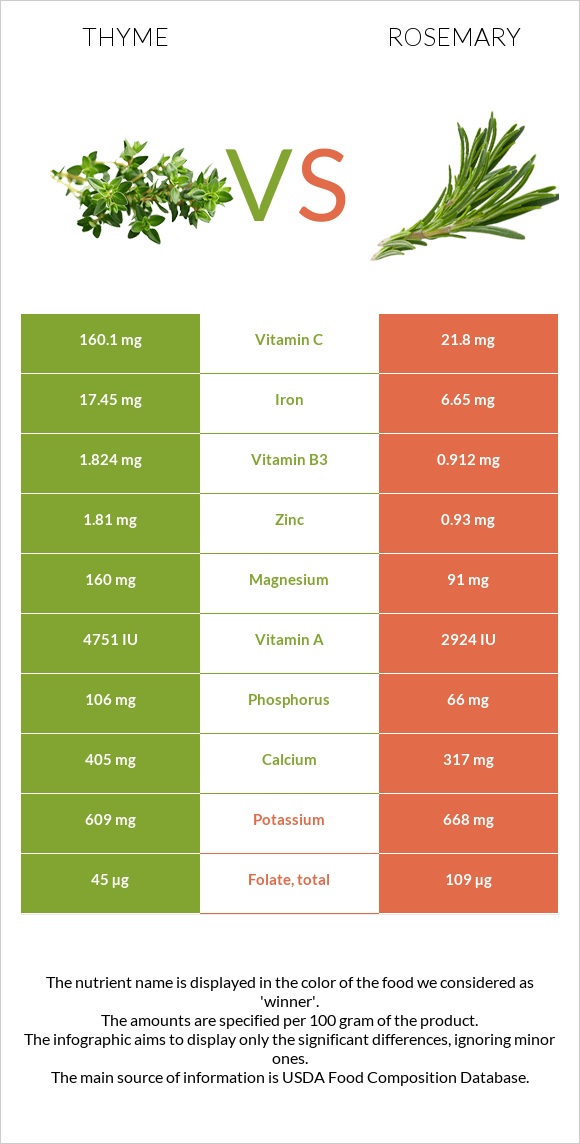
According to the USDA, thyme is slightly higher in minerals like calcium, iron, and magnesium, while rosemary offers more folate and a unique compound called rosmarinic acid, known for antiinflammatory properties.
Specific Uses From Kitchen to Hair Care
Rosemary vs Thyme for hair: Rosemary essential oil has been cited in several studies for stimulating scalp circulation and even supporting regrowth in cases of androgenic alopecia. Thyme, rich in thymol, possesses antimicrobial qualities that help keep the scalp clean and reduce dandruff. A simple DIY rinsemix a few drops of rosemary oil with a teaspoon of thyme-infused watercan give your hair a fresh, invigorating boost.
Digestive support: Thymol from thyme aids digestion by relaxing the guts smooth muscle, while rosemarys rosmarinic acid may help relieve muscle tension after a tough workout.
Safety & Risks
Both herbs are safe in culinary amounts. However, pregnant women should limit highdose rosemary supplements, and folks with thyroid disorders might want to keep thyme intake moderate because it contains goitrogenic compounds. When in doubt, a quick chat with your healthcare provider can clear things up.
Herb Comparison Chart
| Herb | Aroma | Best Dish | Standout Nutrient | Health Highlight |
|---|---|---|---|---|
| Rosemary | Piney, resinous | Lamb, roasted potatoes | Folate | Antiinflammatory (rosmarinic acid) |
| Thyme | Earthy, floral | Chicken, stews | Iron, calcium | Antimicrobial (thymol) |
| Parsley | Fresh, grassy | Salads, garnish | VitaminK | Bone health |
| Oregano | Warm, pungent | Pizza, pasta sauce | VitaminE | Antioxidant power |
Seeing them sidebyside makes it easier to choose the right herb for a specific recipe. If youre after a bold punch, go rosemary. If you need a subtle, supportive background, thyme takes the stage.
Storage Tips Basics
Even the best herbs lose their magic if they sit wilting in the fridge for weeks.
- Fresh rosemary: Trim the stems, place them in a glass of water, loosely cover with a plastic bag, and refrigerate. Itll stay vibrant for up to two weeks.
- Fresh thyme: Wrap loosely in a damp paper towel, pop it into a ziplock bag, and store in the crisper drawer. Expect about a week of freshness.
- Dried herbs: Keep them in airtight containers, away from light and heat. When stored properly, they retain potency for 12 years; after that, the flavor merely fades.
- Pro tip: Lightly toast dried rosemary in a dry skillet for 30 seconds before using it revives the piney aroma like magic.
Conclusion and Next Steps
So, whats the final take? Rosemary brings bold, piney vigor thats perfect for hearty meats and longcooked dishes, while thyme offers a gentle, earthy background that shines in sauces, poultry, and healthfocused applications. Both herbs are nutritionally valuable, and when you understand their strengths, you can swap them in and out to keep your meals exciting and your body thriving.
Why not experiment tonight? Toss a handful of fresh thyme into a tomato soup, or finish your grilled steak with a dash of rosemaryinfused olive oil. If youre curious about supporting your hair, brew a rosemarythyme rinse once a week and see how your scalp feels. Share your favorite herb combos with friends, and lets keep the conversation cooking!
FAQs
What’s the main flavor difference between rosemary and thyme?
Rosemary has a strong, piney, resinous aroma that can dominate a dish, while thyme offers a milder, earthy‑floral scent that blends subtly into sauces, soups, and vegetables.
Can I use dried rosemary instead of fresh in a sauce?
Yes—dried rosemary’s flavor is more concentrated and holds up well in long‑cooked sauces. Add it early in the cooking process; fresh rosemary is best for quick‑sear dishes or as a finishing garnish.
Which herb is better for heart health?
Both herbs support cardiovascular health, but rosemary’s rosmarinic acid has notable anti‑inflammatory effects, while thyme’s thymol can help lower blood pressure. Using a mix gives you the combined benefits.
How do I store fresh thyme to keep it vibrant?
Wrap thyme loosely in a damp paper towel, place it in a zip‑lock bag, and store it in the refrigerator’s crisper drawer. It stays fresh for about a week.
Is it safe to use rosemary essential oil for hair growth?
When diluted properly (a few drops in a carrier oil or water), rosemary essential oil is generally safe for topical use and may stimulate scalp circulation, but avoid using it undiluted and consult a healthcare professional if you’re pregnant or have skin sensitivities.