Red Cabbage and Apple Sauerkraut
- Level: Intermediate
- Yield: 8 to 10 cups
- Nutritional Analysis Per Serving
Serving Size: 1 of 4 servings
Calories 160
Total Fat 1 g
Saturated Fat 0 g
Carbohydrates 38 g
Dietary Fiber 10 g
Sugar 21 g
Protein 5 g
Cholesterol 0 mg
Sodium 1004 mg - Total Time: 7 days 2 hr 30 min (including fermentation)
- Active Time: 30 min
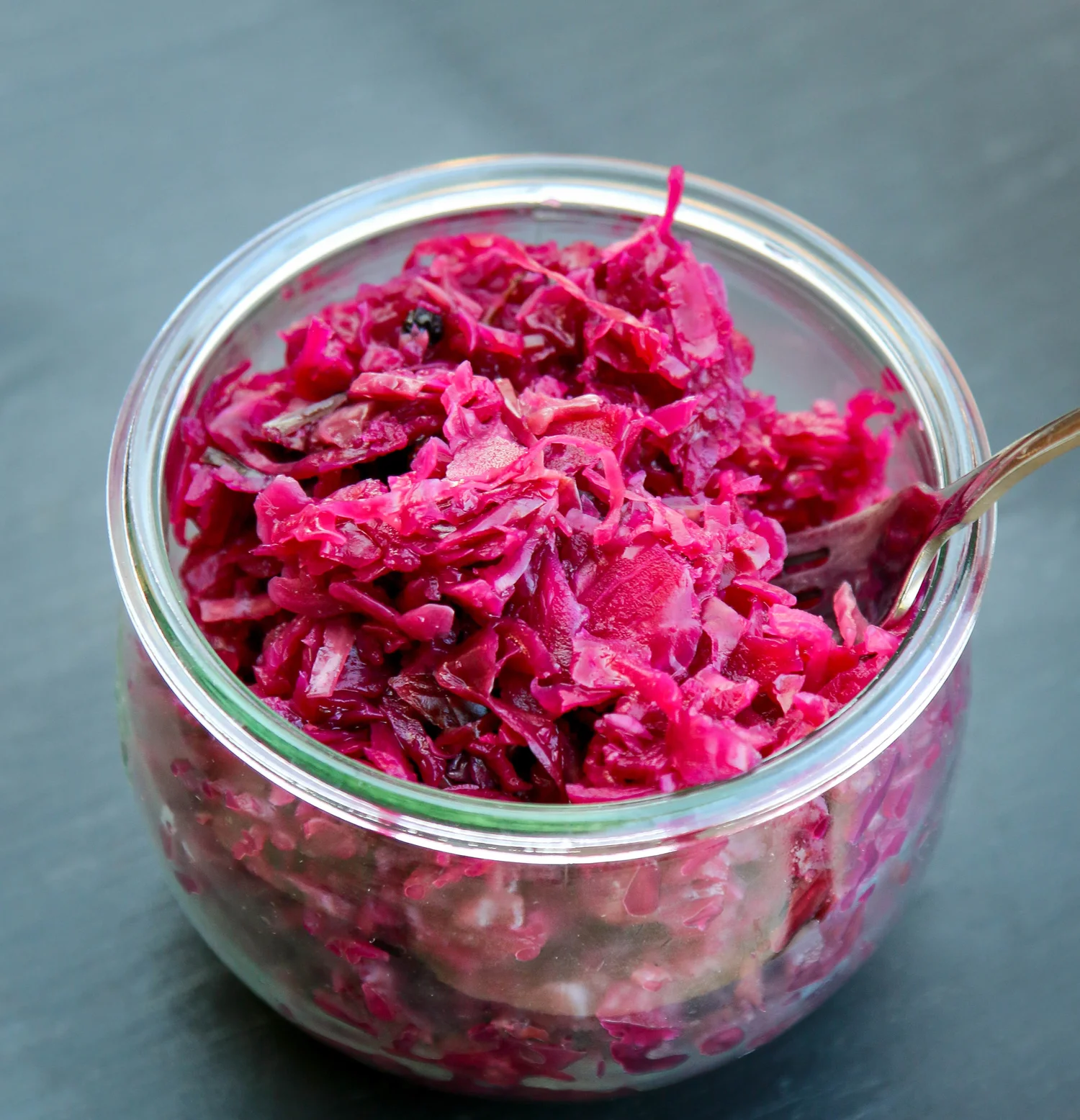
Transform simple red cabbage and crisp apples into a tangy, probiotic-packed sauerkraut that elevates any meal. This vibrant ferment bursts with sweet-tart flavor and is easier than you thinkperfect for home cooks ready to master fermentation!
- Remove any loose outer leaves from the cabbage and set aside. Cut the cabbage into quarters and shred it finely, using a mandoline if available (aiming for shreds about as thick as a quarter). Place the cabbage in a large bowl and sprinkle with the pickling salt. Massage and knead the cabbage for a couple of minutes until it softens and starts to release liquid.
- Slice the Granny Smith apples thinly, then cut them into matchstick strips, keeping the peel intact (a mandoline works well here too). Slice the fresh ginger into rounds and lightly bruise them with the side of your knife to release flavor. Add the apples, ginger, and allspice berries to the cabbage and mix thoroughly. Allow the mixture to rest for one to two hours, letting more liquid develop.
- Firmly press the cabbage mixture into a large, wide-mouthed fermentation crock until the brine fully covers it. (Note that the amount of liquid released may vary depending on the cabbage's freshness; younger cabbage yields more liquid, whereas older cabbage releases less.) If the mixture isn't submerged, create a brine by dissolving 4 1/2 teaspoons of pickling salt in one quart of cold water and add until the cabbage is fully covered.
- Use a few of the reserved whole cabbage leaves to cover the surface of the packed cabbage. Place a plate or fermenting crock weight over it and add a heavy object on top to press it down evenly (canned goods work well, or a plastic bag filled with the salted brine solution to avoid leaks). Store the crock in a cool, dry area.
- After two days, check on the sauerkraut. You should see bubbles forming along the edgesproof your ferment is alive and thriving! Skim off any foam or scum that appears on the surface. Continue to check every few days and remove scum as needed. Depending on the ambient temperature, the sauerkraut will generally be ready after about one week. Some prefer fermenting for longer, even several weeks, to deepen the flavor.
- Once fermentation is complete, transfer the sauerkraut into jars and refrigerate. Before eating, drain and rinse the kraut thoroughly, discarding any ginger slices. Enjoy atop sausages, salads, or straight from the jar for a gut-healthy crunch!