Why Poached Lobster With Caviar Mousse And Dijon Mustard Sauce?
The first bite is cool, creamy, briny, and gently sweet, with tender lobster beneath a sharp mustard finish. This Poached Lobster With Caviar Mousse And Dijon Mustard Sauce Recipe pairs softly poached lobster with airy cream, salty caviar, tangy Dijon, crisp toast, and earthy sea greens for an elegant plated starter.
Poached lobster with caviar mousse and Dijon mustard sauce is a refined seafood dish made by gently cooking lobster, folding caviar into lightly whipped mustard cream, and serving both with a cool crème fraîche sauce. The lobster should remain moist and springy, while the mousse stays light enough to spoon or mold neatly on the plate.
I adapted the original restaurant-style presentation for a home kitchen by giving the poaching liquid a clear temperature target and simplifying the plating. It is best served as a first course, not a dessert, despite the supplied category label. The recipe makes four generous appetizer portions.
Health Benefits & Nutrition
Lobster is naturally rich in protein and provides minerals such as selenium, copper, and zinc. It is also lower in carbohydrates than many traditional entrée ingredients, although the finished dish becomes richer because of the cream, crème fraîche, caviar, and toast.
- Protein for a satisfying course: Lobster supplies substantial protein in a relatively compact serving, which helps make a small plated portion feel substantial.
- Seafood nutrients: Lobster and caviar provide vitamin B12 and other nutrients found in seafood. Caviar also contributes small amounts of omega-3 fats.
- Moderate carbohydrates: Most of the carbohydrates come from the toast and the small amount naturally present in dairy ingredients. You can omit the toast for a lower-carbohydrate plate.
- Strong flavor from small amounts: Dijon mustard, caviar, and mustard seeds add intensity, so the dish does not need a large quantity of sauce or garnish.
These nutrition values are approximate estimates per serving and can change substantially with the size of the lobster, type of caviar, amount of cream, and portion of toast. Lobster, caviar, dairy, and mustard may cause allergic reactions. Use fully cooked lobster and pasteurized dairy when appropriate. If you are pregnant, immunocompromised, allergic to shellfish, or managing sodium intake, ask a qualified healthcare professional about suitable portions and preparation.
Ingredients & Preparation
Recipe Card
| Details | Amount |
|---|---|
| Prep time | 45 minutes |
| Cook time | 20 minutes |
| Total time | 1 hour 5 minutes |
| Servings | 4 |
| Calories | Approximately 525 per serving |
| Diet tags | Pescatarian, shellfish, high-protein |
Full Ingredient List
- 3 tablespoons Dijon mustard, divided
- 2 cups cold heavy cream, lightly whipped
- 1 shallot, finely chopped
- 1 teaspoon fine sea salt, divided, plus more as needed
- 1/4 teaspoon freshly ground black pepper, plus more as needed
- 1 cup caviar
- 4 tablespoons crème fraîche
- 2 lobster tails, about 8 ounces each
- 4 lobster claws
- 2 quarts water
- 2 tablespoons kosher salt, for the poaching water
- 4 ounces edible sea lettuce or other food-safe algae, rinsed and dried
- 4 thin slices white bread
- 1 tablespoon black mustard seeds
- 1 teaspoon unsalted butter, for toasting the bread
Equipment Needed
- Large saucepan or wide pot for poaching
- Instant-read thermometer
- Large bowl and whisk or hand mixer
- Fine-mesh strainer
- Small mixing bowls
- Lobster crackers or kitchen shears
- Small ring mold, biscuit cutter, or clean 3-inch food ring
- Four chilled serving plates
Tips for Choosing Quality Ingredients
Choose lobster tails that smell clean and faintly of the sea, never sour or strongly ammonia-like. Fresh lobster meat should look translucent before cooking and pearly white afterward. Frozen tails work well, but thaw them overnight in the refrigerator and pat them thoroughly dry before poaching.
Use pasteurized caviar from a reputable refrigerated source. The eggs should be glossy and separate rather than watery or mashed. A clean, mildly briny caviar lets the lobster remain the focus. Avoid heavily smoked or strongly flavored varieties for your first attempt.
For the algae garnish, buy only sea vegetables labeled for culinary use. I use tender sea lettuce because it adds a fresh, oceanic note without the toughness of some dried seaweeds. Rinse it well and dry it carefully so water does not streak the sauce.

Step-by-Step Instructions
1. Make the caviar mousse — 10 minutes
Whip 2 cups of cold heavy cream to soft peaks, about 2 to 3 minutes with a hand mixer on medium speed. In a separate bowl, stir 2 tablespoons Dijon mustard, the chopped shallot, 1/2 teaspoon salt, and black pepper. Fold the mustard mixture into the whipped cream with a rubber spatula. Add the caviar last and fold only 4 to 5 times, keeping the eggs intact. Cover and refrigerate for 30 minutes.
2. Mix the Dijon crème fraîche sauce — 5 minutes
Whisk 4 tablespoons crème fraîche with the remaining 1 tablespoon Dijon mustard and 1/2 teaspoon salt. Add 1 to 2 teaspoons cold water if the sauce is too thick to drizzle. Refrigerate it while you prepare the lobster. The finished sauce should fall from a spoon in a smooth ribbon, not sit in a stiff mound.
3. Prepare the poaching liquid — 5 minutes
Pour 2 quarts water into a wide saucepan and add 2 tablespoons kosher salt. Heat over medium-high heat until the liquid reaches 180°F, or until small bubbles gather around the edges without a rolling boil. Lowering the temperature before adding the lobster keeps the meat tender rather than rubbery.
4. Poach the lobster — 15 to 20 minutes
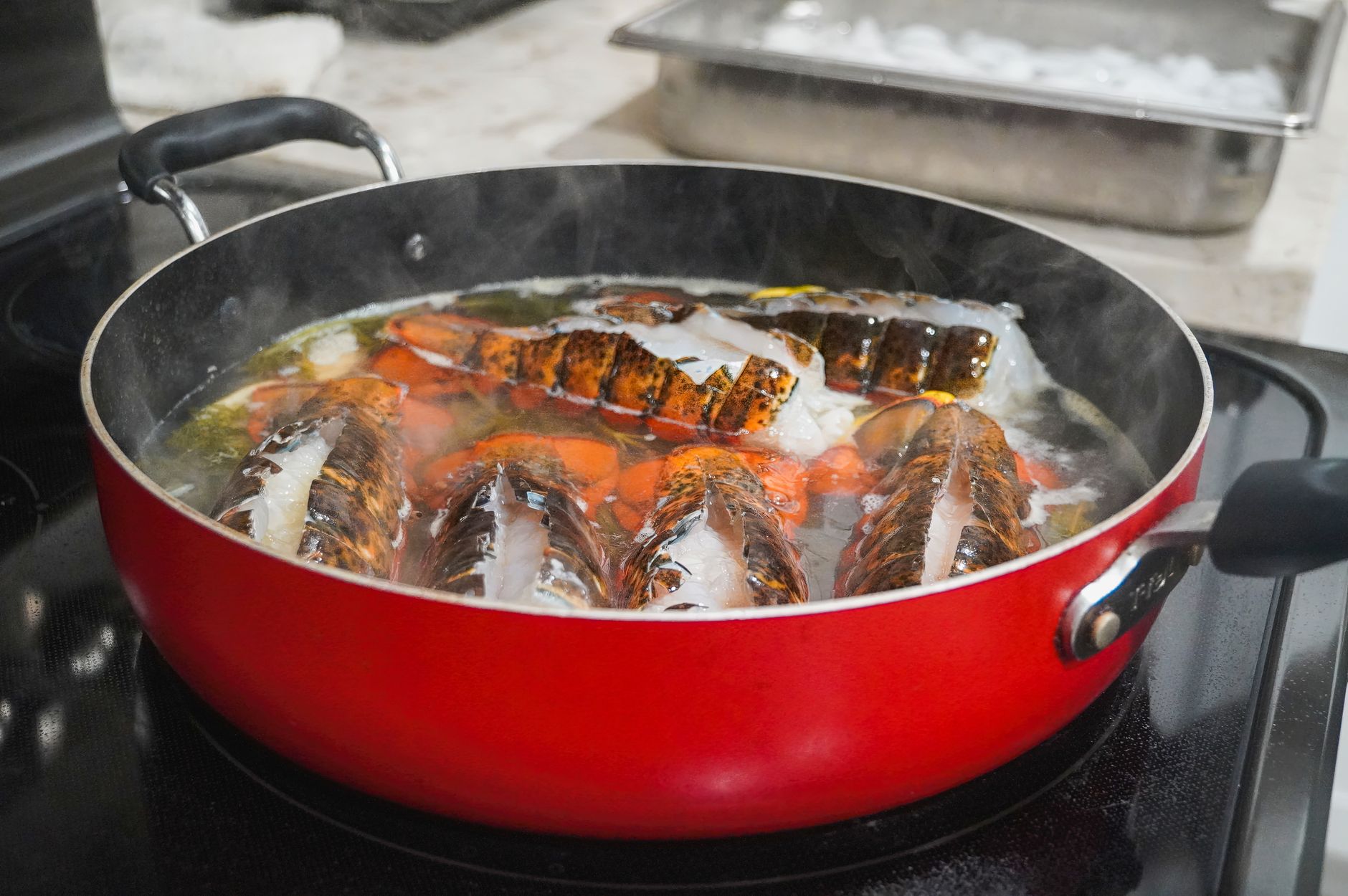
Add the lobster tails and claws to the 180°F water. Cover the pot and maintain 175°F to 180°F for 8 to 10 minutes for the tails and 5 to 7 minutes for the claws, removing the claws first if they finish sooner. The shells should turn bright red, and the meat should reach 140°F to 145°F in the thickest part. Remove the lobster to a tray and cool for 5 minutes.
Crack the claws and remove the meat in large pieces. Use kitchen shears to split the tails, then lift out the meat and slice each tail into two even portions. The first time I made this, I left the tails in the water while waiting for the claws; the tail meat became noticeably firmer. Removing each piece as soon as it reaches temperature makes a real difference.
5. Toast, garnish, and plate — 10 minutes
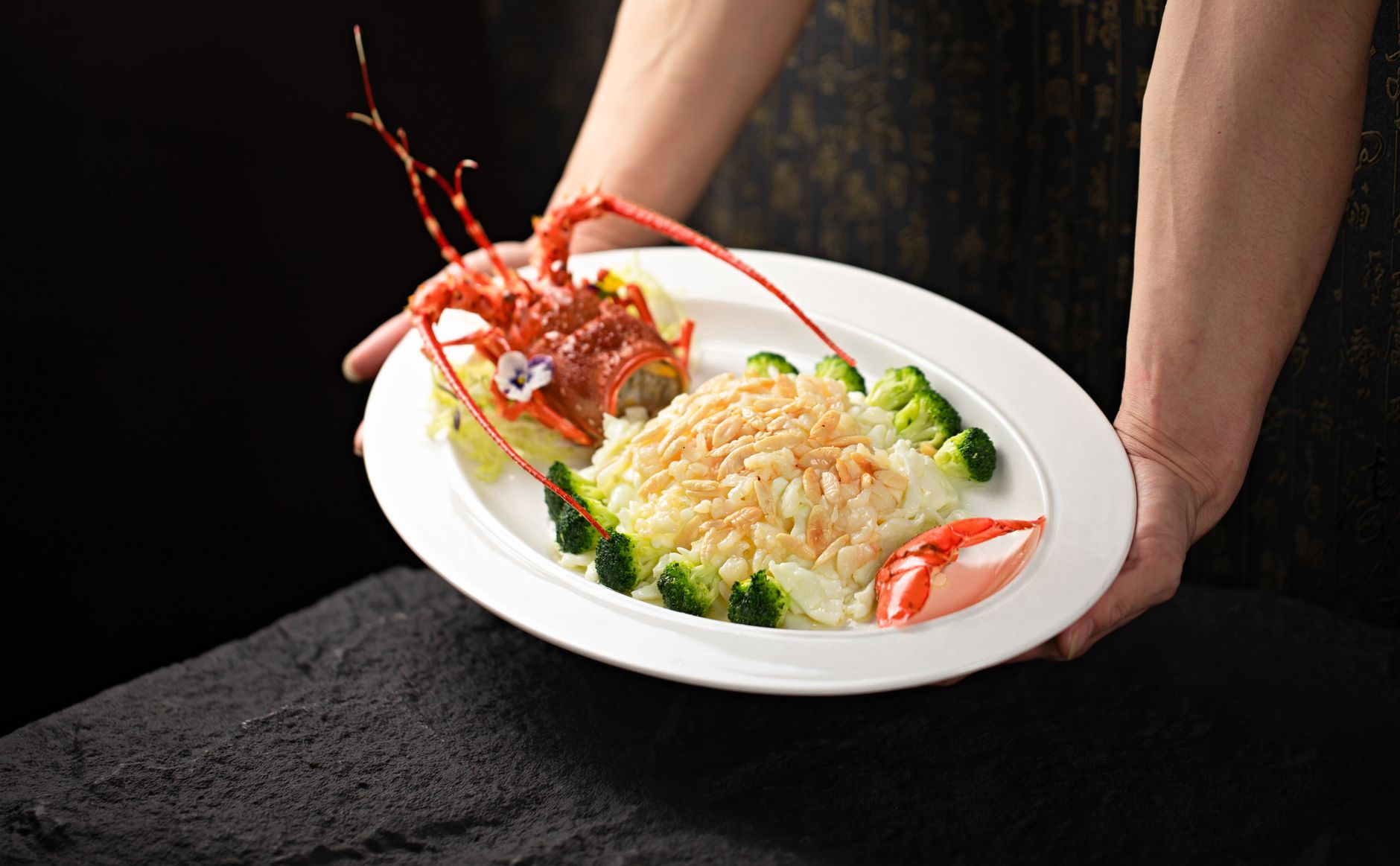
Melt 1 teaspoon butter in a skillet over medium heat. Toast the four bread slices for 2 to 3 minutes per side, until golden and crisp at the edges. Warm the rinsed sea lettuce in the same skillet for 30 seconds, just until softened. Spoon or mold one quarter of the caviar mousse onto each plate. Add half a lobster tail and one claw per serving, drizzle the Dijon sauce around the seafood, and finish with toast, sea lettuce, and black mustard seeds.
Keep the mustard seeds mostly on the plate rather than directly on the mousse. Their sharp crunch can overpower the delicate caviar if too many land in one bite. The finished lobster should smell sweet and clean, with a springy texture rather than a soft or cottony center.
Variations & Substitutions
- Use shrimp instead of lobster: Replace the two lobster tails and four claws with 24 large peeled shrimp. Poach them at 175°F to 180°F for 3 to 4 minutes, until opaque and curled. Chill briefly before plating.
- Make a lighter mousse: Replace 1 cup of the whipped cream with 1 cup chilled crème fraîche. The result will be tangier and denser, so serve it with a smaller 2-tablespoon mound per plate.
- Use trout roe: Substitute 1 cup trout roe for the caviar at a one-to-one ratio. Trout roe is larger and more assertive, so reduce the added salt by half.
- Replace white bread: Use four thin slices of sourdough or brioche. Toast sourdough for 3 to 4 minutes per side; brioche needs closer attention because its sugar browns quickly.
- Skip the algae: Replace the 4 ounces of sea lettuce with 1/2 cup watercress or finely sliced cucumber. These options provide freshness without adding a strong seaweed flavor.
- Make the sauce sharper: Add 1 teaspoon lemon juice to the Dijon crème fraîche sauce. Taste before adding more salt because the caviar and lobster already bring plenty of salinity.
For a playful finish to a larger menu, you could follow the seafood course with Mini sweet potato pies. Their warm spice and soft texture contrast nicely with this cool, briny starter.
Storage & Shelf Life
Store cooked lobster in a covered container in the refrigerator for up to 2 days at 40°F or below. Keep the caviar mousse, mustard sauce, toast, and sea lettuce in separate containers so the textures remain distinct. Assemble the plates shortly before serving.
The caviar mousse is best within 24 hours because the eggs gradually lose their pop and the whipped cream becomes less airy. The Dijon sauce keeps for up to 3 days, although it may thicken slightly. Stir in a teaspoon of cold water before serving if needed.
Do not freeze the assembled dish. Freezing damages the lobster texture and causes the cream-based mousse to separate. If necessary, freeze only the uncooked lobster tails for up to 2 months in airtight packaging, then thaw them overnight in the refrigerator before cooking.
Discard any component with a sour smell, slimy surface, unusual discoloration, curdled cream, or bubbling that is not part of the recipe. Never taste food to decide whether it has spoiled.
Pro Tips for Better Texture and Presentation
Chill the bowl and whisk before whipping the cream. Cold equipment gives you a more stable mousse, especially in a warm kitchen. Stop at soft peaks; stiff cream makes the caviar mixture heavy and difficult to spread.
Fold the caviar with a spatula instead of stirring vigorously. The eggs should remain visible and round. I found that adding the caviar directly to the mustard mixture before folding in the cream broke too many eggs, leaving a salty paste rather than a light mousse.
Use a wide pot rather than a narrow stockpot. A shallow layer of water makes it easier to maintain the target temperature and prevents the lobster from crowding. If the water starts boiling, remove the pot from the heat for 30 seconds before continuing.
Drain and dry the lobster before plating. Excess poaching water dilutes the mousse and makes the Dijon sauce slide across the plate. A brief rest on a clean towel is enough; do not leave the meat exposed for long.
For clean edges, lightly chill the mousse for 30 minutes and wipe the ring mold after every portion. Dip the mold in warm water, dry it, then place it on the plate. This releases the mousse neatly without leaving a wet ring.
Balance each forkful with all the elements. A small amount of sauce, one caviar-topped piece of mousse, lobster, and a shard of toast gives a better contrast than a large pool of mustard sauce.

Questions & Answers
When is the best time to drink or eat Poached Lobster With Caviar Mousse And Dijon Mustard Sauce Recipe?
The best time to eat this dish is immediately after plating, while the lobster is just warm and the mousse remains chilled. Serve it as a first course at lunch or dinner. Preparing the sauce and mousse ahead helps, but wait until the last few minutes to poach the lobster and toast the bread.
Can I prepare the caviar mousse in advance?
Yes, prepare the caviar mousse up to 24 hours in advance and keep it covered in the refrigerator. Press plastic wrap gently against the surface to limit drying. Fold it once before plating, but do so carefully so the caviar eggs remain whole and the whipped cream does not lose too much volume.
How do I know when lobster is fully cooked?
Lobster is ready when the thickest meat reaches 140°F to 145°F and looks pearly white rather than translucent. The shell will be bright red, but shell color alone is not a reliable doneness test. Remove the lobster promptly because residual heat continues cooking the meat after it leaves the water.
Can I use frozen lobster tails?
Yes, frozen lobster tails are suitable when thawed slowly in the refrigerator overnight. Pat them dry before cooking and check the thickest section with an instant-read thermometer. Do not thaw them at room temperature, since the surface can warm too quickly while the center remains frozen.
What can I use instead of caviar?
Use trout roe, salmon roe, or finely minced smoked salmon if caviar is unavailable. Replace caviar with trout roe at a one-to-one volume ratio, but reduce added salt by about half. Smoked salmon is much saltier and heavier, so use 4 ounces instead of 1 cup and fold it in very gently.
Why did my caviar mousse become watery?
A watery mousse usually comes from over-whipped cream, warm ingredients, or excess liquid from the lobster or sea lettuce. Whip the cream only to soft peaks, chill the mixture for 30 minutes, and dry all garnishes thoroughly. If the mousse loosens, serve it in a small spoon or shallow bowl rather than forcing it into a ring mold.
Can I serve this as a main course?
Yes, serve it as a light main course by using one whole lobster tail and two claws per person, then add a simple salad or roasted vegetables. Double the lobster while keeping the mousse and sauce amounts close to the original recipe. The mousse is rich, so a modest portion still provides plenty of flavor.
More Recipes You Will Love
If you enjoy carefully plated dishes with contrasting textures, try Happee birthdae harry cake for a whimsical dessert after the seafood course. Its chocolate flavor offers a striking finish after the briny lobster and tangy mustard.
For another small-format sweet course, Mini sweet potato pies are easy to portion and prepare ahead. They are especially useful when you want to turn a formal seafood starter into a relaxed multi-course meal.
Conclusion
This Poached Lobster With Caviar Mousse And Dijon Mustard Sauce Recipe rewards gentle heat, careful folding, and restrained plating. Keep the lobster tender, protect the caviar eggs, and let the mustard sauce provide brightness rather than dominate the plate. Make the mousse and sauce ahead, then poach and plate just before serving. If you try it, share how your lobster turned out, leave a rating, or tell us which garnish you used.
FAQs
When is the best time to eat Poached Lobster With Caviar Mousse And Dijon Mustard Sauce Recipe?
This dish is best served as a first course, shortly after the lobster is poached and the mousse is assembled. It works well for a elegant dinner party opener or a special occasion starter. Serve it chilled or at cool room temperature so the mousse stays light and the lobster stays tender.
Can I make the caviar mousse ahead of time?
Make the mustard cream base ahead, but fold in the caviar and finish the mousse just before serving. Caviar can lose its texture and the whipped cream can soften or deflate if it sits too long. Keep the base covered and cold until plating.
Can I substitute something for crème fraîche in the Dijon mustard sauce?
Full-fat sour cream is the closest substitute for crème fraîche, though it is slightly tangier. Thick Greek yogurt can also work if you thin it with a little cream. Taste and adjust the salt and Dijon, since substitutes can change the balance of the sauce.
How do you tell when lobster is done poaching?
Lobster is done when the shell turns bright red and the meat becomes opaque white and firm but still springy. Many cooks check that the thickest part of the tail reaches about 140°F (60°C). Chill the lobster quickly in ice water after poaching to stop the cooking and keep it moist.
Is this dish safe to eat during pregnancy?
Pregnant people should check with a qualified healthcare professional before eating this dish. Caviar is often unpasteurized, and many health guidelines advise caution with raw or minimally processed seafood during pregnancy. Use fully cooked lobster and pasteurized dairy, and skip the caviar if your provider advises against it.