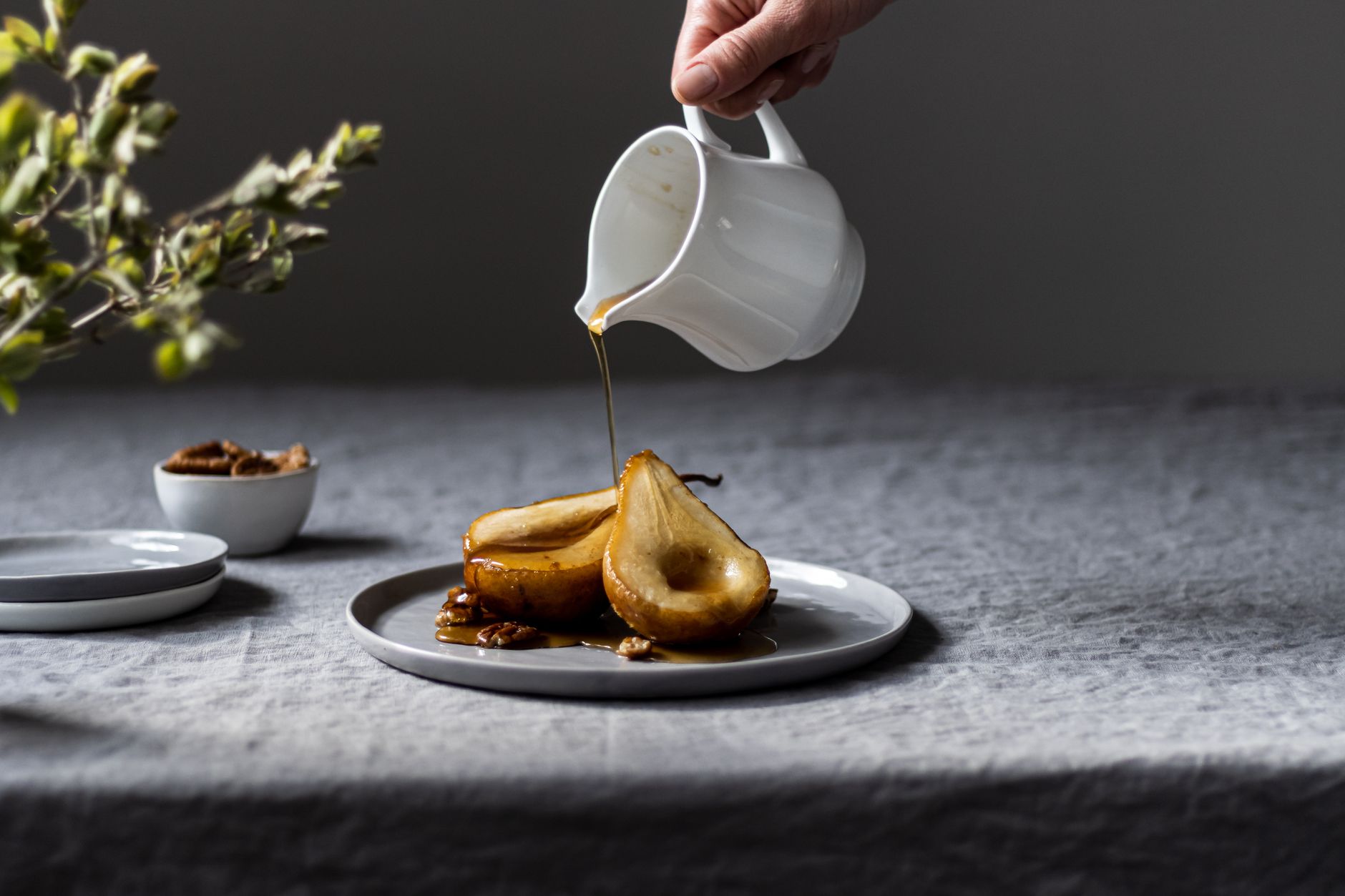
Why Maple Pear Upside-Down Cake?
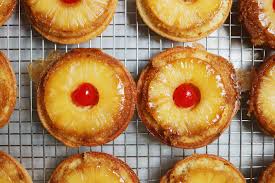
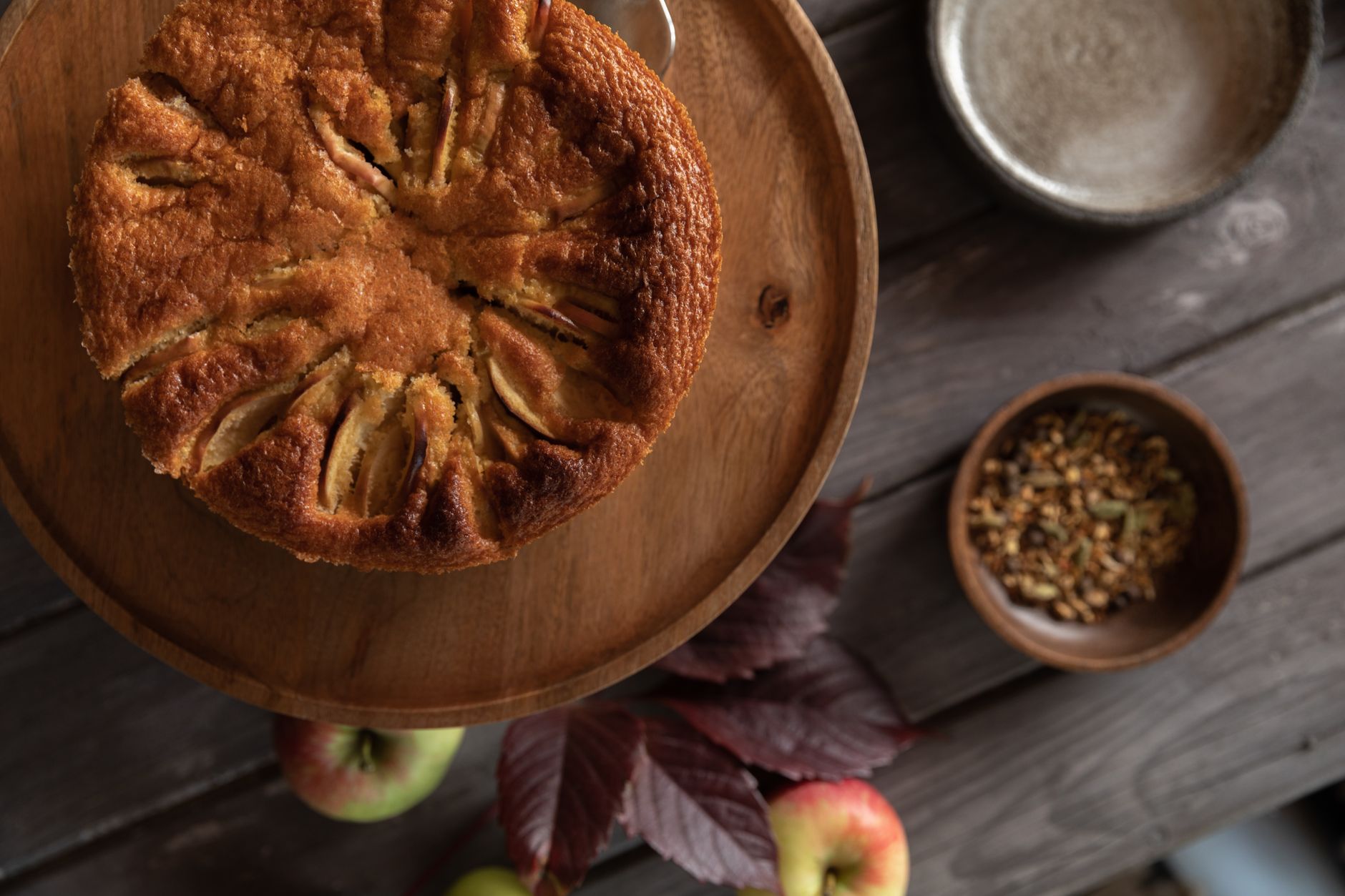
Soft pears turn glossy and amber beneath a tender vanilla cake, while maple syrup bubbles into a buttery caramel sauce. The first slice is especially satisfying because the fruit becomes the topping when you turn the cake out of the pan.
Maple Pear Upside-Down Cake is a warm, tender dessert made by arranging sliced pears over maple-brown sugar syrup, then covering them with vanilla cake batter. The cake bakes until golden, rests briefly, and flips onto a serving plate so the pears sit on top. Serve it warm or at room temperature.
This recipe uses firm-ripe pears, real maple syrup, butter, and a simple creamed cake batter. The result is sweet without tasting one-dimensional, with soft fruit, crisp caramelized edges, and a light crumb that holds together after flipping.

Health Benefits & Nutrition
This is a dessert, so it is best enjoyed as part of a varied eating pattern rather than treated as a health food. Still, the ingredients offer a few useful qualities:
- Pears provide fiber. Fresh pears contribute dietary fiber, especially when some peel remains. This recipe uses peeled fruit for a softer finish, so the fiber amount is more modest.
- Pears add natural fruit flavor. Their mild sweetness lets the cake use maple syrup for depth without relying on strong spices or heavy frosting.
- Maple syrup brings concentrated sweetness. Pure maple syrup has a distinctive woodsy flavor, so a smaller amount can provide more character than plain sugar alone. It is still an added sugar.
- Eggs and milk contribute protein. They also help create the cake’s structure and tender texture.
Nutrition varies with pear size, the amount of syrup left in the pan, and how the cake is divided. One of nine servings contains approximately 425 calories, 6 grams of protein, 62 grams of carbohydrates, and 18 grams of fat. The recipe contains dairy, eggs, and wheat. Use appropriate alternatives only if they meet your dietary needs, and check packaged ingredients for cross-contact warnings when allergies are a concern.
Ingredients & Preparation
Recipe Card
| Prep time | 40 minutes |
|---|---|
| Cook time | 55 minutes |
| Total time | 1 hour 35 minutes |
| Servings | 8 to 10 servings |
| Calories | Approximately 425 per serving |
| Diet tags | Vegetarian |
Full Ingredient List
- 11 tablespoons unsalted butter, divided
- 3/4 cup pure maple syrup
- 1/4 cup packed light brown sugar
- 3 to 4 firm-ripe pears, peeled, cored, and thinly sliced
- 3/4 cup granulated sugar
- 1 teaspoon vanilla extract
- 2 large eggs, at room temperature
- 1 1/2 cups all-purpose flour
- 1 1/2 teaspoons baking powder
- 1/4 teaspoon fine salt
- 1/2 cup whole milk, at room temperature
Equipment Needed
- 9-inch round cake pan
- Small saucepan
- Large mixing bowl or stand mixer
- Medium bowl for the dry ingredients
- Flexible spatula
- Wire cooling rack
- Large flat serving plate
- Thin-bladed knife
Tips for Choosing Quality Ingredients
Choose pears that yield slightly near the stem but still feel firm. Bartlett, Anjou, and Bosc pears all work, although Bosc slices keep their shape particularly well. Avoid very soft pears; they can release too much juice and make the topping slippery.
Use pure maple syrup rather than pancake syrup. The natural maple flavor is noticeable here, and imitation syrup can make the topping taste overly sweet. Unsalted butter gives you better control over the final flavor, while room-temperature eggs and milk help the batter mix evenly.
I tested this with very ripe Bartlett pears once, and the pieces nearly disappeared into the syrup. Firm-ripe fruit gives a far prettier pattern and a cleaner slice.
Step-by-Step Instructions
1. Heat the oven and make the maple topping
Set the oven to 350°F. Place 3 tablespoons of the butter in a small saucepan over medium heat. When melted, add the maple syrup and brown sugar. Stir for 1 to 2 minutes, until the sugar dissolves and the mixture begins to bubble. Let it boil gently for 2 minutes, then remove the pan from the heat.
Cool the syrup for about 5 minutes. Pour it into a 9-inch round cake pan and tilt the pan carefully so the base is covered. Do not leave the syrup in the saucepan until it cools completely; it thickens quickly and becomes difficult to spread.
2. Arrange the pears
Arrange the pear slices in overlapping circles over the syrup. Start at the outside edge and work toward the center. Slight overlap is helpful because the fruit shrinks as it bakes.
Keep the slices as level as possible. A crowded center can make the batter slide during spreading, so use smaller pear pieces there if needed. The syrup should remain visible in a few narrow gaps.

3. Cream the butter, sugar, eggs, and vanilla
Place the remaining 8 tablespoons of butter and the granulated sugar in a large bowl. Beat with a hand mixer on medium speed for 3 to 4 minutes, or use a stand mixer with the paddle attachment. Stop when the mixture looks pale and fluffy.
Add the vanilla. Beat in the eggs one at a time on medium speed, mixing for about 30 seconds after each addition. Scrape the bowl once. The mixture may look slightly curdled after the eggs go in, but it will smooth out when the flour is added.
4. Mix and spread the batter
Whisk the flour, baking powder, and salt together in a separate bowl. Add the dry mixture in three additions, alternating with the milk in two additions. Mix on low speed just until each addition disappears.
Spread the batter gently over the pears with a flexible spatula. Work from the center outward, using light pressure so you do not disturb the fruit arrangement. The batter will be fairly thick. A few visible swirls on top are fine.
5. Bake, rest, and invert
Bake at 350°F for 45 to 55 minutes. Begin checking at 45 minutes. The cake is ready when the top is deep golden, the edges pull slightly from the pan, and a toothpick inserted into the center comes out clean or with only a few moist crumbs.
The finished cake smells buttery and maple-sweet, and the syrup may make a faint sizzling sound near the edges. Cool the cake in the pan for 15 minutes. Run a thin knife around the edge, place a flat plate over the pan, and carefully invert it in one confident movement. Leave the pan in place for 30 seconds before lifting it away if any syrup seems slow to release.
Variations & Substitutions
- Spiced pear cake: Add 1 teaspoon ground cinnamon and 1/4 teaspoon ground ginger to the flour mixture. The spices add warmth without changing the method.
- Apple and pear version: Replace one pear with one medium firm apple. Peel, core, and thinly slice it just like the pears. Use a crisp variety such as Honeycrisp or Pink Lady.
- Walnut topping: Add 1/3 cup finely chopped toasted walnuts over the syrup before arranging the fruit. Keep the pieces small so the cake can invert cleanly.
- Orange-maple flavor: Add 1 teaspoon finely grated orange zest to the creamed butter and sugar. Do not add extra orange juice, which can loosen the batter.
- Dairy-free adaptation: Use a plant-based butter stick in a 1:1 quantity and replace the milk with 1/2 cup unsweetened oat milk. Choose products labeled for baking, since soft spreads can contain more water.
- Gluten-free adaptation: Use 1 1/2 cups of a reliable cup-for-cup gluten-free flour blend that includes xanthan gum. The crumb may be slightly more delicate, so cool the cake for the full 15 minutes before turning it out.
I tried replacing all the butter with oil, but the cake lost the rich flavor and fine crumb that make the buttery batter work with the maple topping. A partial substitution is possible, but keeping the butter gives the best texture.
Storage & Shelf Life
Store the cooled cake in an airtight container or cover it tightly with plastic wrap. Keep it at room temperature for up to 2 days if your kitchen is cool. For longer storage, refrigerate it for up to 4 days.
Refrigeration firms the syrup and crumb. Set an individual slice out for 20 to 30 minutes before serving, or warm it in the microwave for 10 to 15 seconds. Avoid overheating, because the syrup can become very hot before the cake feels warm.
To freeze the cake, cool it completely and wrap individual slices in plastic wrap followed by foil. Freeze for up to 2 months. Thaw overnight in the refrigerator, then bring to room temperature or warm gently before serving.
Discard the cake if you notice mold, an unpleasant fermented smell, slimy fruit, or a sour flavor that was not present originally. Do not taste food to test whether visible mold has spread.
Pro Tips
- Measure the flour by weight when possible. Too much flour makes the cake dense and harder to spread over the pears. If using cups, spoon flour into the cup and level it with a knife.
- Do not rush the syrup. The brown sugar should dissolve before the mixture boils. Undissolved sugar can create grainy patches in the topping.
- Cool the syrup briefly before adding fruit. Very hot syrup can soften the pears immediately and make the slices shift while you arrange them.
- Use a pan with straight sides. Deeply sloped pans make the cake harder to release and can create an uneven fruit pattern.
- Do not overmix after adding flour. Excess mixing develops gluten and produces a chewy rather than tender crumb. Stop as soon as the batter is cohesive.
- Spread instead of pour. The batter is thick by design. Dropping it in spoonfuls and smoothing it gently prevents the pears from moving.
- Respect the resting time. Inverting immediately can leave the syrup behind in the pan, while waiting much longer can allow it to set. Fifteen minutes gives the cake time to firm without losing its release.
- Protect the serving plate. Choose a plate with a rim because warm maple syrup can run toward the edges when the cake is inverted.
Questions & Answers
When is the best time to eat Maple Pear Upside Down Cake?
The best time to eat Maple Pear Upside Down Cake is shortly after it has been inverted and cooled for a few minutes. The pears and syrup are still warm, while the crumb has had time to set. It is also delicious at room temperature, especially with whipped cream or vanilla ice cream.
Can I use canned pears for this cake?
Fresh pears are the better choice for this cake, but canned pears can work if they are drained and patted completely dry. Choose pear halves packed in juice, not heavily sweetened syrup. Slice them evenly, and expect a softer topping with less defined edges.
Why did my upside-down cake stick to the pan?
The cake usually sticks because the syrup cooled and hardened, the pan had rough edges, or the cake was not loosened before inverting. Run a thin knife around the entire perimeter, then invert while the cake is still slightly warm. A straight-sided nonstick pan also helps.
How do I stop the pears from moving?
Use firm-ripe pears, cool the maple syrup for about 5 minutes, and arrange the slices before adding batter. Spread the batter gently instead of pouring it into one spot. If a slice shifts, nudge it back with the tip of a spatula before baking.
Can I make this cake in a square pan?
You can use an 8-inch square pan with similar capacity, but the fruit pattern will look different. A 9-inch round pan gives the most even baking and the classic presentation. Avoid a shallow pan, since the syrup may bubble over during baking.
What should I serve with pear upside-down cake?
Serve it with lightly whipped cream, vanilla ice cream, or plain Greek-style yogurt. Choose a topping with little added sugar because the maple syrup already provides sweetness. A small pinch of cinnamon on the cream also complements the pears without overpowering them.
Can I prepare the cake ahead of time?
You can bake the cake up to 1 day ahead and store it covered in the refrigerator. For the best texture, let it sit at room temperature for 20 to 30 minutes before serving. You can also warm slices briefly, but avoid high heat that may make the syrup runny.
More Recipes You Will Love
If you enjoy fruit-forward desserts with caramelized edges, try Turon sweetened jackfruit and plantain dessert rolls 19480207. The combination of fruit, brown sugar, and crisp pastry makes it a lovely contrast to this soft baked cake.
For another cozy dessert with a tender crumb and gentle spice, serve Naked carrot cake 3266063. Its simple finish keeps the focus on the flavor of the cake rather than a thick layer of frosting.

Conclusion
Maple Pear Upside-Down Cake brings together buttery vanilla cake, tender pears, and a glossy maple topping in one uncomplicated dessert. The most important details are using firm-ripe fruit, spreading the batter gently, and waiting 15 minutes before inverting. Serve each slice warm with cream or ice cream, or enjoy it at room temperature with coffee. If you make this recipe, leave a rating or comment and share how your pears turned out.
FAQs
When is the best time to eat Maple Pear Upside Down Cake?
The best time to eat Maple Pear Upside Down Cake is warm or at room temperature, shortly after it rests and is flipped onto the plate. Serve it as dessert after dinner, with coffee, or with a scoop of vanilla ice cream. The pears are softest and the maple caramel most fluid while the cake is still warm, while slices cooled to room temperature hold their shape more neatly.
How do you keep Maple Pear Upside Down Cake from sticking to the pan?
Butter the pan thoroughly, arrange the pear slices evenly in the maple-brown sugar syrup, and let the cake rest briefly after baking so the syrup settles. Then invert it onto a large flat plate with a quick, confident turn. Using firm pears also helps, because very soft fruit releases extra juice that can make the cake slide and stick.
Can you make Maple Pear Upside Down Cake ahead of time?
Yes, you can bake Maple Pear Upside Down Cake a day ahead and keep it covered at room temperature. The pears may soften and the topping may lose some of its glossy shine over time. Store leftovers in an airtight container in the refrigerator for a few days, and warm slices briefly before serving for the best texture.
What pears work best in a maple pear upside down cake?
Firm-ripe Bosc, Anjou, or Bartlett pears work best because they hold their shape under heat. Bosc slices are especially good at keeping their form. Choose pears that give slightly near the stem but still feel firm, since very soft pears release too much juice and can make the topping slippery.
Can you use pancake syrup instead of pure maple syrup in this cake?
Pure maple syrup is recommended instead of pancake syrup for this cake. Pancake syrups are often corn-based and flavored to taste like maple, so they usually lack the depth of real maple syrup and can make the caramel topping taste flat. Pure maple syrup gives the pears and cake a richer, woodsy flavor.