Why Guava Bread Pudding?
Warm brioche, caramel-like brown sugar, and fragrant guava paste turn golden in the oven, while the sauce melts into every soft pocket of bread.
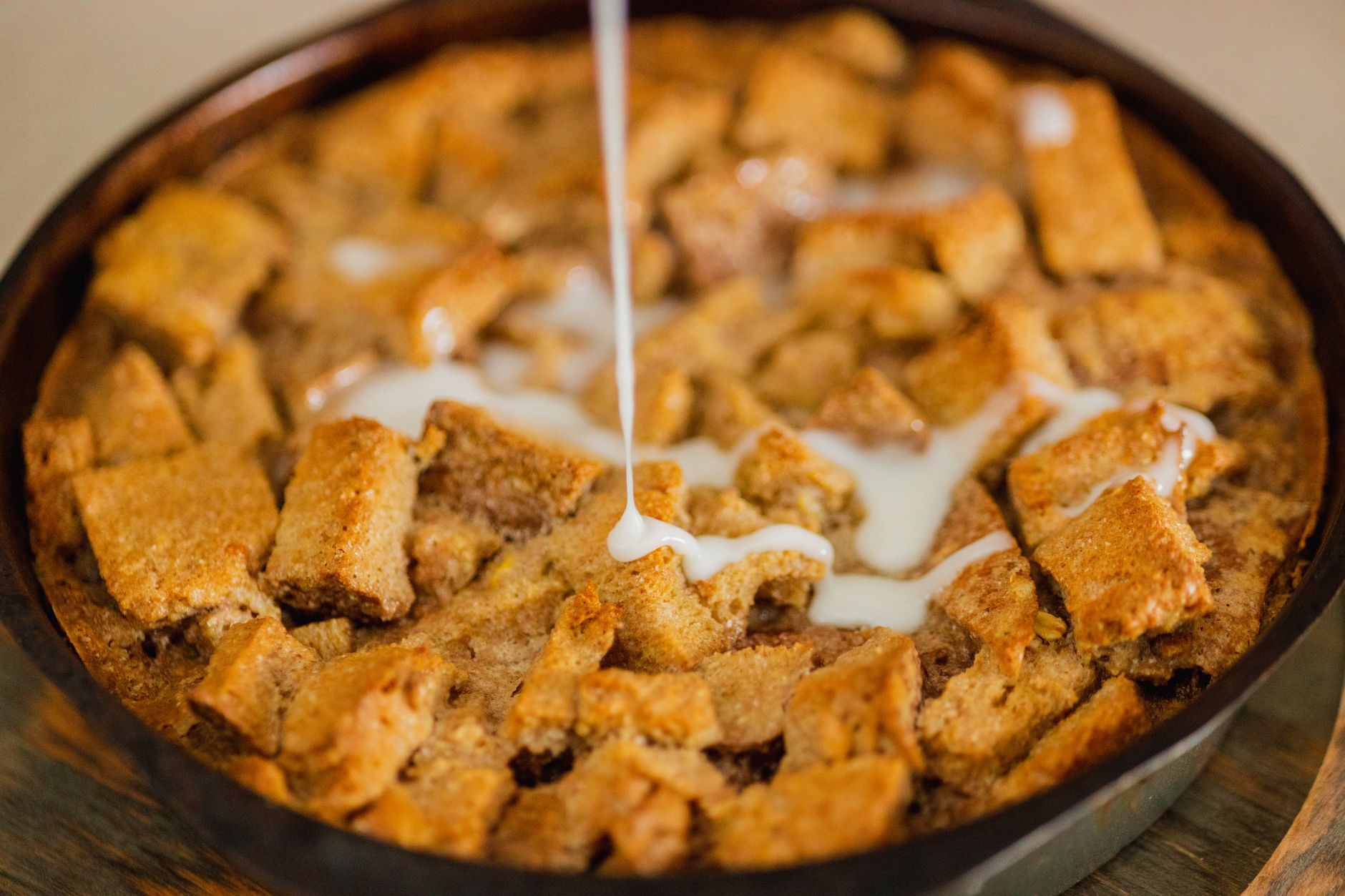
Guava Bread Pudding is a rich baked dessert made with cubed brioche, milk, eggs, warm spices, raisins, and guava paste. The pudding bakes until lightly crisp on top and tender in the center, then gets finished with a smooth marshmallow-vanilla cream sauce. Serve it warm for the softest texture and strongest guava flavor.
I have made this pudding with both fresh and day-old brioche. Slightly stale bread works best because it absorbs the custard without collapsing. The finished dessert is sweet, warmly spiced, and especially comforting on cool evenings.
Health Benefits & Nutrition
This is a celebratory dessert rather than a low-sugar dish, but its ingredients still offer a few useful qualities.
- Eggs provide protein: The eggs help set the custard and add protein to each serving.
- Milk contributes calcium: Milk adds calcium and protein, although the amount varies by brand and serving size.
- Guava adds fruit flavor: Guava paste brings a distinct tropical taste and a small amount of fruit content. Because it is sweetened and concentrated, it should not be treated like a serving of fresh fruit.
- Spices add flavor without extra liquid: Cinnamon, nutmeg, and allspice make the pudding taste full and fragrant without adding additional sugar or fat.
The approximate nutrition is about 780 calories per serving when the recipe is divided into six portions and served with the sauce. The actual amount can change with the size of the brioche loaf, the brand of marshmallows, and how much sauce you spoon over each portion.
This recipe contains wheat, dairy, eggs, and gelatin may be present in some marshmallows. Check package labels if you need to avoid a specific allergen or follow a vegetarian diet. For personal medical, pregnancy, allergy, or dietary guidance, consult a qualified doctor or dietitian.
Ingredients & Preparation
Recipe Card
| Prep time | 25 minutes |
|---|---|
| Cook time | 45 minutes |
| Total time | 1 hour 10 minutes |
| Servings | 6 |
| Calories | About 780 per serving |
| Diet tags | Vegetarian if using vegetarian marshmallows; contains wheat, dairy, and eggs |
Full Ingredient List
- 4 tablespoons unsalted butter, divided
- 1 loaf brioche bread, cut into 1-inch cubes
- 1 cup packed light brown sugar
- 1 cup granulated white sugar
- 1 tablespoon ground allspice
- 1 tablespoon ground cinnamon
- 1 tablespoon ground nutmeg
- 2 cups whole milk
- 5 large eggs
- 1/4 cup golden raisins
- 1/2 cup guava paste, cut into small cubes
- 1 cup marshmallows
- 1/2 cup heavy cream
- 1/4 cup confectioners’ sugar
- 1 teaspoon vanilla extract
Equipment Needed
- 9-by-5-inch loaf pan
- Small saucepan or nonstick skillet
- Large mixing bowl
- Medium bowl
- Whisk
- Rubber spatula
- Measuring cups and spoons
- Wire cooling rack
- Small serrated knife
Tips for Choosing Quality Ingredients
Use a rich brioche with a tender crumb, not a very airy sandwich loaf. If the bread is fresh, cube it and leave it uncovered for 30 to 60 minutes. Day-old brioche usually needs no extra drying.
Choose guava paste that is firm enough to cut cleanly. Very soft paste disappears into the custard, while small cubes create little sweet, tangy pockets. I prefer golden raisins because they stay plump and taste less sharp than darker raisins.
Freshly opened spices give the best aroma. If your ground spices have been sitting in the cupboard for years, increase the flavor by using a fresh batch rather than adding more than the recipe calls for.

Step-by-Step Instructions
1. Prepare the Pan and Oven
Heat the oven to 350°F. Use 1 tablespoon of the butter to grease the bottom and sides of a 9-by-5-inch loaf pan. Set the remaining 3 tablespoons of butter aside.
Grease the corners carefully because sticky guava and brown sugar can cling there. The first time I made this, I rushed this step and lost the crisp edge when I turned the pudding out.
2. Combine the Brioche, Sugar, and Spices
Place the brioche cubes in a large bowl. Add the brown sugar, white sugar, allspice, cinnamon, and nutmeg. Toss for 1 minute, making sure the sugar and spices coat the bread evenly.
Add the golden raisins and guava paste cubes. Separate any guava pieces stuck together with your fingers. Keeping the cubes distinct gives the baked pudding noticeable guava pockets instead of one uniform layer of fruit.
3. Make and Add the Custard
Whisk the milk and eggs in a medium bowl for 60 seconds, or until the mixture looks evenly blended with no visible streaks of egg white.
Pour the custard over the brioche mixture. Fold gently with a rubber spatula for 2 minutes, then let the bowl stand for 5 minutes. This short rest lets the bread absorb the liquid without becoming mushy.
4. Bake the Pudding
Transfer the mixture to the greased loaf pan and press it down lightly. Melt the remaining 3 tablespoons of butter and drizzle it over the top. Bake at 350°F for 45 minutes.
The pudding is ready when the top is deep golden, the edges look slightly puffed, and the center has only a gentle wobble. A thin knife inserted near the center should come out moist but without liquid custard. The kitchen will smell strongly of cinnamon and warm butter near the end of baking.
5. Cook the Marshmallow-Vanilla Sauce and Serve
While the pudding bakes, place the marshmallows in a nonstick skillet over low heat. Stir for 3 to 4 minutes, until they are mostly melted. Add the heavy cream, confectioners’ sugar, and vanilla extract.
Continue stirring over low heat for 3 to 5 minutes, until the sauce is smooth and pourable. Do not let it boil. Cool the baked pudding on a wire rack for 10 minutes, then turn it onto a serving plate or slice it directly from the pan. Spoon the warm sauce over each portion.
Variations & Substitutions
- Use challah instead of brioche: Replace the brioche with an equal-weight loaf of challah. The result will be slightly less buttery but still tender and rich.
- Make it citrusy: Add 1 tablespoon of finely grated orange zest to the bread mixture. Orange pairs well with guava and brightens the brown sugar.
- Swap the raisins: Use 1/4 cup dried cranberries or chopped dried apricots instead of golden raisins. Chop larger fruit into pieces no bigger than 1/4 inch.
- Use evaporated milk: Replace 1 cup of the whole milk with 1 cup evaporated milk and keep the remaining 1 cup as whole milk. This creates a slightly denser custard.
- Make a coconut version: Replace 1/2 cup of the whole milk with 1/2 cup canned, unsweetened coconut milk. Avoid sweetened coconut cream because the pudding is already quite sweet.
- Skip the marshmallow sauce: Serve the pudding with lightly sweetened whipped cream or a simple vanilla custard sauce. Use about 1/2 cup topping per serving instead of the marshmallow mixture.
I tried folding in large chunks of fresh guava, but they released extra moisture and made uneven wet spots. Guava paste is more reliable here because it stays concentrated during baking.
Storage & Shelf Life
Store cooled bread pudding in an airtight container or cover the loaf pan tightly with foil. Refrigerate it for up to 4 days. Keep the sauce in a separate covered container and refrigerate it for up to 3 days.
To reheat, place an individual portion in the microwave for 30 to 45 seconds, or warm it in a 300°F oven for 10 to 15 minutes. Add a spoonful of milk or cream to the sauce and warm it gently over low heat, stirring often.
Freeze the baked pudding without sauce for up to 2 months. Wrap individual slices in plastic wrap, place them in a freezer bag, and thaw overnight in the refrigerator. Reheat at 300°F until warmed through. The texture may be slightly softer after freezing.
Discard the pudding if it develops a sour smell, visible mold, unusual sliminess, or a watery layer with an off odor. Do not taste food to determine whether it has spoiled.
Pro Tips
Cut the bread evenly. One-inch cubes absorb the custard at a similar rate. Smaller pieces can turn pasty, while very large cubes leave dry centers.
Do not overmix. Fold the custard through the bread just until everything is coated. Vigorous stirring breaks down the brioche and removes the soft pockets that make the dessert pleasant.
Rest before baking. Five minutes is enough for slightly stale brioche. If your bread is very dry, rest it for 10 minutes, but avoid soaking it for much longer.
Protect the pan edges. Butter the corners and sides thoroughly. Guava paste can caramelize where it touches the metal, making the pudding harder to release.
Keep the sauce gentle. Marshmallow sauce becomes thick and stretchy when overheated. Low heat and frequent stirring produce a smoother finish. If it tightens before serving, stir in 1 tablespoon of warm cream at a time.
Balance each serving. The pudding is already sweet, so drizzle the sauce rather than flooding the plate. A small pinch of flaky salt on top can also sharpen the guava flavor.
Questions & Answers
When is the best time to eat Guava Bread Pudding?
The best time to eat it is warm, about 10 minutes after baking. This brief rest lets the custard finish setting while the center stays soft. The guava aroma is most noticeable when the pudding is warm, and the marshmallow-vanilla sauce pours easily over the slices.
Can I prepare the pudding ahead of time?
Yes, you can prepare it up to 24 hours ahead and refrigerate it before baking. Cover the filled loaf pan tightly and let it sit at room temperature for 20 minutes before placing it in the oven. Add about 5 minutes to the baking time if the mixture is still cold.
Why is my bread pudding watery in the center?
A watery center usually means the pudding needed more baking time or contained too much moisture. Bake until the center gently wobbles rather than ripples, and use day-old bread when possible. Letting the mixture rest for only 5 minutes also helps prevent excessive soaking.
Can I use fresh guava instead of guava paste?
Fresh guava can be used, but it will not provide the same concentrated flavor or texture. Use about 3/4 cup peeled, finely chopped guava and reduce the milk by 2 tablespoons. Remove excess seeds and expect a softer, more fruit-forward pudding.
How do I stop the top from browning too quickly?
Cover the loaf pan loosely with foil after 30 minutes if the top is already deeply golden. Keep the foil slightly raised so it does not touch the pudding. Continue baking until the center is set, then remove the foil for the final 5 minutes if the surface needs more color.
Can I make the sauce without marshmallows?
Yes, you can replace the marshmallow sauce with vanilla whipped cream or a simple cream sauce. For a quick alternative, warm 1/2 cup heavy cream with 2 tablespoons confectioners’ sugar and 1 teaspoon vanilla over low heat for 3 to 4 minutes.
What should I serve with this dessert?
Serve it with fresh berries, sliced bananas, or a spoonful of unsweetened whipped cream. Fresh fruit adds brightness to the rich pudding. Keep additional toppings modest because the guava, brown sugar, and vanilla sauce already create a full dessert.
More Recipes You Will Love
If you enjoy rich, colorful desserts, try this His and hers tuxedo cupcake. Its chocolate and vanilla layers offer a nice contrast to the fruity warmth of this baked pudding.
For a lighter fruit-centered option, make this Finnish blueberry dessert. Blueberries bring a gently tart flavor that works well after a rich meal.

Conclusion
Guava Bread Pudding turns simple brioche into a warmly spiced dessert with crisp edges, a tender custardy center, and sweet tropical pockets. Let the baked pudding rest before slicing, and keep the vanilla sauce warm but never boiling. The recipe is especially good for sharing because it can be prepared ahead and reheated gently. If you make it, leave a comment or rating and share how you served yours.
FAQs
When is the best time to eat Guava Bread Pudding?
The best time to eat Guava Bread Pudding is warm, soon after it comes out of the oven. At this point the bread is soft, the sauce has melted into the pudding, and the guava flavor is at its strongest. It is especially comforting served on a cool evening, though it can also be enjoyed later once it has cooled.
Can I use fresh bread instead of brioche for Guava Bread Pudding?
Yes, but slightly stale bread works best. If you use fresh brioche, cube it and leave it uncovered for 30 to 60 minutes so it dries slightly and can soak up the custard without collapsing. Day-old brioche usually needs no extra drying. Very airy sandwich bread tends to turn mushy, so a rich loaf with a tender crumb is the better choice.
How should you store leftover Guava Bread Pudding?
Store leftover Guava Bread Pudding in an airtight container in the refrigerator. Refrigerate it within two hours of baking to keep it safe to eat. Reheat individual portions in a microwave or a low oven until they are warm throughout. Keep the vanilla cream sauce stored separately if you want to spoon it over each portion fresh.
Why is my Guava Bread Pudding soggy in the center?
A soggy center usually means the custard did not finish setting before the pudding was removed from the oven. Bake until the top is lightly crisp and the center feels tender when gently pressed. Letting the pudding rest briefly after baking also helps it firm up, so the slices hold their shape when served.
Can I make the cream sauce for Guava Bread Pudding without marshmallows?
Yes, you can make a simple vanilla cream sauce using heavy cream, confectioners' sugar, and vanilla extract. The sauce may have a slightly different texture and sweetness without marshmallows. Some marshmallows contain gelatin, so check the package label if you need to avoid animal products or follow a specific diet.