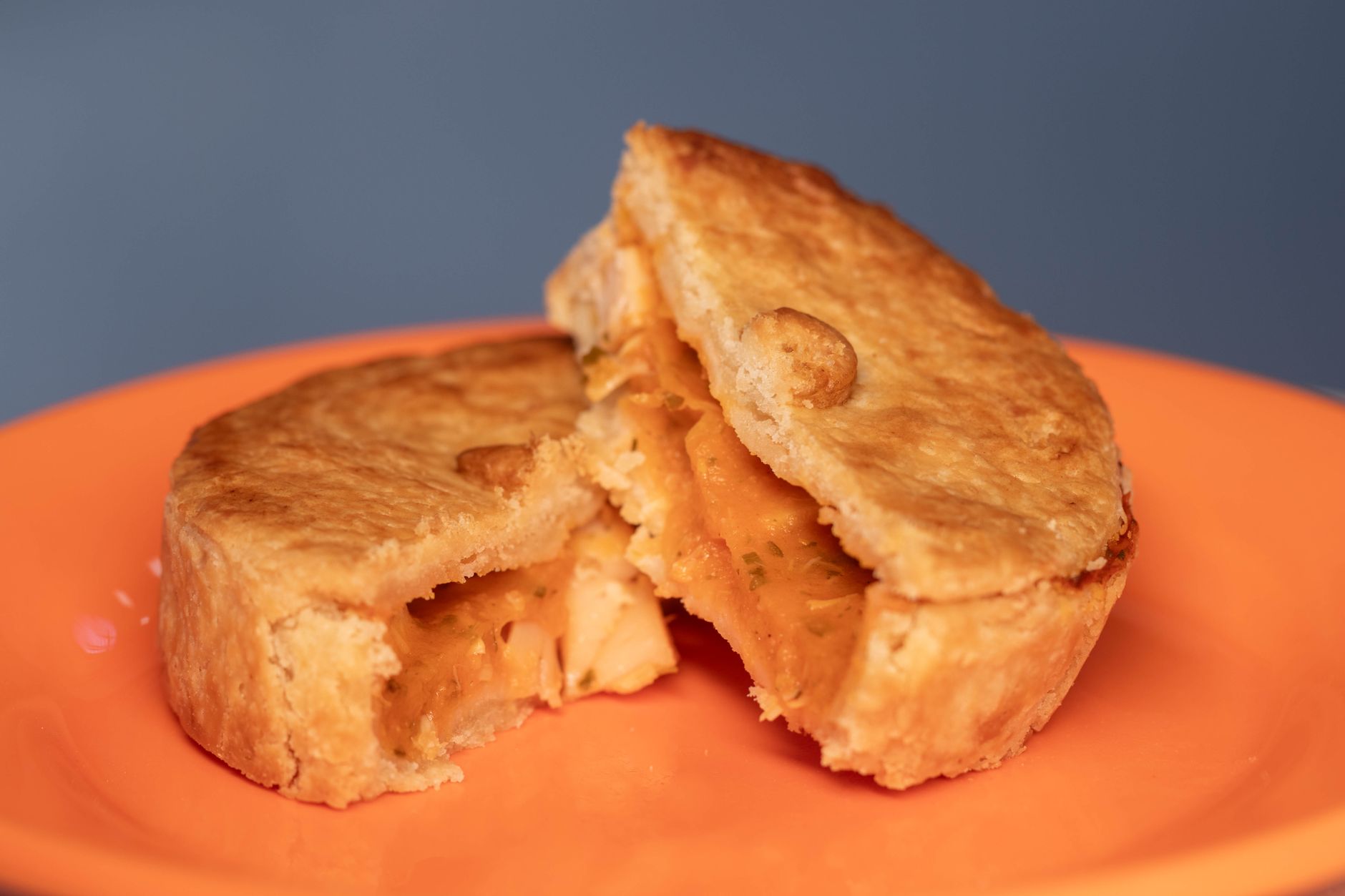
Why Asian Chicken Pot Pie with Scallion Pancake Crust?
The crust rises into crisp, flaky layers while the filling bubbles with ginger, garlic, and toasted sesame aroma.
Asian Chicken Pot Pie with Scallion Pancake Crust combines a creamy chicken and vegetable filling with puff pastry layered like a scallion pancake. The result is cozy, savory, and lightly tangy, with crisp pastry on top and tender chicken underneath. It uses cooked chicken, frozen peas, and everyday pantry ingredients, so it is practical for a weeknight dinner or relaxed weekend meal.
I tested this in a wide oven-safe braiser, which lets the sauce thicken and the pastry bake in the same pan. The filling is rich without tasting heavy because rice vinegar, ginger, scallions, and soy sauce keep the flavor lively.

Health Benefits & Nutrition
This is a comforting main course rather than a low-calorie dish, but it includes several useful ingredients in one serving:
- Chicken provides protein. Cooked chicken helps make the pie filling satisfying and substantial. Using skinless chicken keeps the filling less greasy.
- Peas add fiber and plant nutrients. Fresh or frozen peas contribute fiber, color, and a gentle sweetness to the creamy sauce.
- Scallions, garlic, and ginger add flavor without relying only on salt. Their sharp, aromatic character makes the sauce taste brighter and more layered.
- Celery and onion add vegetables and texture. They soften into the sauce while retaining enough flavor to keep the filling from tasting flat.
The puff pastry, cream, oil, and sesame oil make this recipe rich, and soy sauce contributes sodium. Nutrition varies with the chicken, stock, pastry brand, and portion size. An approximate serving contains 690 calories, 46 grams of protein, 30 grams of carbohydrates, and 43 grams of fat.
This recipe contains wheat, dairy, egg, and soy. Anyone managing a food allergy or a medical condition affected by sodium, fat, or dairy should choose substitutions with guidance from a qualified healthcare professional or dietitian.
Ingredients & Preparation
Recipe Card
| Prep time | 35 minutes |
|---|---|
| Cook time | 35 minutes |
| Total time | 1 hour 10 minutes |
| Servings | 4 servings |
| Calories | Approximately 690 per serving |
| Diet tags | High-protein; contains gluten, dairy, egg, and soy |
Full Ingredient List
- 2 tablespoons neutral oil
- 1 yellow onion, finely chopped
- 2 celery stalks, finely chopped
- 1 bunch scallions, thinly sliced, white and green parts separated
- Kosher salt and freshly ground black pepper, to taste
- 1 tablespoon grated fresh ginger
- 2 garlic cloves, finely chopped
- 1/4 teaspoon crushed red pepper flakes
- 6 tablespoons all-purpose flour
- 2 1/2 cups low-sodium chicken stock
- 3/4 cup fresh or frozen peas
- 4 cups cooked chicken, chopped
- 1/2 cup heavy cream
- 1 tablespoon rice vinegar
- 2 teaspoons soy sauce
- 2 sheets puff pastry, thawed
- 2 tablespoons toasted sesame oil
- 1 large egg, beaten with a splash of water
- Sesame seeds, for sprinkling
- Flaky salt, for sprinkling
- Chinese hot mustard, for serving
Equipment Needed
Use a 3- to 4-quart oven-safe braiser or deep skillet, a wooden spoon, a whisk, a rolling pin, a pastry brush, a sharp knife, and measuring cups and spoons. A rimmed baking sheet is useful insurance in case the filling bubbles over during baking.
Tips for Choosing Quality Ingredients
Choose puff pastry that is still cold but flexible. If it becomes warm and sticky, return it to the refrigerator for 10 minutes before rolling. All-butter pastry gives the most pronounced flavor, while an all-vegetable version can produce especially crisp layers.
Use low-sodium stock because the soy sauce and seasoned chicken both affect the final salt level. Fresh ginger should feel firm and have smooth skin. For the chicken, leftovers from a roast chicken work well, but poached or rotisserie chicken are also suitable.

Step-by-Step Instructions
1. Heat the oven and soften the vegetables
Preheat the oven to 425°F. Heat the neutral oil in a 3- to 4-quart oven-safe braiser over medium heat for 1 minute. Add the onion, celery, scallion whites, and a pinch of salt, then cook for 7 to 10 minutes, stirring every 1 to 2 minutes, until the vegetables are soft and the onion looks translucent.
2. Build and thicken the savory sauce
Add the ginger, garlic, and red pepper flakes and cook for 1 minute over medium heat, until fragrant. Whisk in the flour and cook for 2 minutes. Add the chicken stock in 3 or 4 small additions, whisking constantly and letting each addition thicken for about 30 seconds before adding more.
3. Finish the chicken filling
Stir in the peas and a small handful of the scallion greens. Reduce the heat to low and add the cooked chicken, cream, rice vinegar, soy sauce, and black pepper. Simmer for 3 to 5 minutes, stirring twice, until the sauce coats a spoon and the filling looks creamy rather than watery.
4. Layer and shape the scallion pastry
Place the two thawed puff pastry sheets on a lightly floured surface and press the seams together. Roll the pastry into one rectangle about 18 by 12 inches. Brush the surface with sesame oil, scatter over most of the remaining scallion greens, and sprinkle lightly with salt. Fold the pastry into thirds, roll it gently back to about 12 inches wide, then place it over the filling with the edges tucked inward.
5. Egg-wash and bake until golden
Brush the pastry with the beaten egg and water. Sprinkle with sesame seeds, flaky salt, and the remaining scallion greens. Cut 3 small vents in the top, place the braiser on a rimmed baking sheet, and bake at 425°F for 25 to 30 minutes, until the crust is deeply golden and the filling is audibly bubbling at the edges. Rest for 10 minutes before serving with Chinese hot mustard.
The first time I made this, I added the stock too quickly and ended up with small flour lumps. Whisking in only a little stock at a time fixed the problem. I also found that a 10-minute rest matters: cutting immediately makes the creamy filling run across the plate.
When the pastry is ready, listen for a steady gentle bubbling rather than a loud boil. The top should look puffed and bronzed, while the vents release a savory ginger-and-sesame aroma.

Variations & Substitutions
- Use turkey instead of chicken: Replace the 4 cups of cooked chicken with 4 cups of chopped cooked turkey. Dark meat gives the filling a softer texture, while breast meat keeps it leaner.
- Make it mushroom-forward: Replace 1 cup of chicken with 1 cup of sliced mushrooms. Sauté the mushrooms with the onion and celery for an additional 5 minutes, until their moisture has cooked away.
- Adjust the spice: Replace the 1/4 teaspoon of red pepper flakes with 1/2 teaspoon for a warmer filling. For a mild version, omit the flakes and serve extra hot mustard at the table.
- Use milk instead of cream: Replace the 1/2 cup heavy cream with 1/2 cup whole milk. The sauce will be lighter and slightly less glossy, so simmer it for an extra 1 to 2 minutes before adding the chicken.
- Make a gluten-free version: Use a certified gluten-free puff pastry and replace the 6 tablespoons all-purpose flour with 3 tablespoons cornstarch mixed with 3 tablespoons cold water. Add the slurry after the stock is hot, then simmer for 2 minutes.
- Increase the vegetables: Add up to 1 cup of diced carrots with the celery. Cook them for 10 to 12 minutes, or until tender, before adding the aromatics and flour.
I tried making the topping with tortillas, but they became chewy rather than flaky. Puff pastry is the better shortcut here because its laminated layers mimic the crisp, layered character of a scallion pancake.
Storage & Shelf Life
Cool leftovers within 2 hours, then transfer them to a covered container. Refrigerate for up to 3 days. The pastry softens as it sits, but reheating in a 375°F oven for 15 to 20 minutes helps restore some crispness.
For freezing, cool the filling completely and freeze it without the pastry for up to 2 months. Thaw overnight in the refrigerator, warm the filling until hot, then add freshly assembled pastry and bake at 425°F until golden and bubbling. Freezing the fully baked pie is possible, but the crust will be softer after thawing.
Discard the dish if it develops a sour or unpleasant odor, slimy chicken, visible mold, or unusual discoloration. Do not taste food to decide whether it has spoiled.
Pro Tips
- Control the sauce thickness: The finished filling should slowly slide from a spoon, not pour like soup. It thickens slightly as it rests, so stop simmering when it is creamy but still loose.
- Whisk in the stock gradually: A gradual addition disperses the flour evenly and creates a smooth sauce. Scrape the corners of the braiser as you whisk.
- Keep the pastry cold: Cold butter or shortening creates better separation between the layers. If the pastry feels soft, chill it before brushing with sesame oil.
- Do not overload the topping: A moderate layer of scallions gives the pastry flavor without making the folds wet. Pat very damp scallions dry before scattering them over the pastry.
- Balance salt at the end: Stock, chicken, soy sauce, and flaky salt can all vary. Taste the sauce after the vinegar and soy sauce are mixed in, then add kosher salt only if needed.
- Prevent a soggy center: Make sure the filling is hot before covering it. Cold filling creates steam slowly, which can leave the underside of the pastry underbaked.
Questions & Answers
When is the best time to eat Asian Chicken Pot Pie With Scallion Pancake Crust?
The best time to eat this pie is 10 minutes after it comes out of the oven. That short rest lets the sauce settle while the pastry remains crisp. Serve it hot for dinner, with Chinese hot mustard on the side. It also makes a satisfying lunch when reheated gently in the oven.
Can I make the filling ahead of time?
Yes, you can make the filling up to 2 days ahead and refrigerate it in a covered container. Cool it promptly, then warm it gently before adding the pastry. Cold filling can prevent the underside of the crust from baking properly, so bring it to a steaming temperature first.
Can I use leftover rotisserie chicken?
Yes, rotisserie chicken works very well in this recipe. Remove the skin and bones, then chop enough meat to measure 4 cups. Because rotisserie chicken can already be salty, taste the finished sauce before adding extra salt.
Why is my puff pastry not flaky?
Warm pastry, an overly wet filling, or insufficient baking time can reduce flakiness. Keep the pastry cold, bake the filling while it is hot, and cut vents in the top. The crust should be deeply golden, not pale blond, before you remove the pie.
Can I bake this in individual dishes?
Yes, divide the hot filling among four oven-safe ramekins and cover each with pastry. Bake at 425°F for about 20 to 25 minutes, checking that the pastry is puffed and golden. Place the ramekins on a baking sheet to catch bubbling sauce and make them easier to handle.
What can I serve with this chicken pot pie?
A crisp cucumber salad, lightly dressed greens, or steamed broccoli balances the creamy filling. Keep side dishes fresh and lightly seasoned because the pie already contains pastry, cream, stock, and soy sauce. A small spoonful of Chinese hot mustard adds sharpness without requiring another sauce.
Can I use frozen peas without thawing them?
Yes, frozen peas can go directly into the warm sauce. They cool the mixture briefly, so allow an extra minute or two before adding the chicken and cream. Fresh peas work the same way, though they may need slightly longer to become tender.
More Recipes You Will Love
If you enjoy the ginger, scallion, and soy flavors in this pie, try our Thai style turkey with fried eggs. It uses familiar ground meat in a faster skillet meal with bold seasoning.
For another warming dinner, make our Korean chicken noodles soup. Its broth, chicken, and noodles offer a lighter but equally comforting direction for leftover poultry.
You can also turn this pot pie into a casual spread with steamed greens, quick-pickled cucumbers, and extra scallions. The bright sides make the rich pastry feel balanced.
Conclusion
Asian Chicken Pot Pie with Scallion Pancake Crust brings together a creamy, aromatic chicken filling and a crisp topping packed with sesame and scallion flavor. Take your time with the sauce, keep the pastry chilled, and let the baked pie rest before serving. Those small details make the texture noticeably better. If you try the recipe, leave a rating or comment and share what vegetables or protein you used.
FAQs
When is the best time to eat Asian Chicken Pot Pie With Scallion Pancake Crust?
The best time to eat Asian Chicken Pot Pie With Scallion Pancake Crust is right after it rests for about 10 minutes out of the oven, when the filling is hot and the pastry is at its crispest. It works well for a weeknight dinner or a relaxed weekend meal. Serve it with Chinese hot mustard to balance the rich, creamy filling.
Can I make Asian Chicken Pot Pie With Scallion Pancake Crust ahead of time?
Yes, you can cook the filling ahead of time, cool it quickly, and refrigerate it in a covered container for up to a day. Thaw the puff pastry, then assemble, top, and bake the pie just before serving. Baking from a chilled filling may add a few minutes to the cook time.
Can I use rotisserie chicken in Asian Chicken Pot Pie With Scallion Pancake Crust?
Yes, rotisserie chicken is a practical choice for this recipe. Use about 4 cups of chopped, skinless meat to keep the filling less greasy. Remove the skin and bones before chopping, and season the sauce to taste because store-bought chicken can already be salty.
Why is the filling runny in Asian Chicken Pot Pie With Scallion Pancake Crust?
A runny filling usually means the flour and stock did not simmer long enough to thicken the sauce. Cook the mixture until it coats the back of a spoon before adding the chicken and cream. Bake the pie until the filling bubbles through the pastry, then let it rest so the sauce can set.
Is Asian Chicken Pot Pie With Scallion Pancake Crust gluten-free or dairy-free?
This recipe is not gluten-free or dairy-free as written. The puff pastry contains wheat, the filling uses heavy cream, and the egg wash adds egg. Substitutions are possible, but anyone with a food allergy or medical condition should get guidance from a qualified healthcare professional or dietitian before making changes.