Why 7-Day Works
Shortterm planning beats winging it
Research from the shows that people who follow a structured weekly menu are 27% more likely to keep their A1C within target ranges compared with those who eat without a plan. A focused week gives you a clear roadmap, reduces decision fatigue, and lets you test how different foods affect your glucose levels.
How many carbs per meal?
For most adults with diabetes, keeping each main meal around 4560g of carbohydrates works well. Snacks should stay under 1520g. These numbers come from the American Diabetes Associations carbohydratecounting guidelines, which aim to prevent the spikes and crashes that make daily life feel like a rollercoaster.
Quick carb chart
| Condition | Daily Carb Range |
|---|---|
| Type1 | 150200g |
| Type2 | 130150g |
| Prediabetes | 120130g |
Core Meal Principles
Balance is everything
Each plate should contain:
- Protein lean meats, tofu, fish, or legumes ( of the plate).
- Fiberrich nonstarchy veggies the biggest slice ( of the plate).
- Wholegrain or starchy carbs the remaining , measured in portionsize cups.
- Healthy fats a drizzle of olive oil, a handful of nuts, or avocado slices.
Portionsize tricks
Use your hand as a tool:
- Fist = nonstarchy veg.
- Palm = protein.
- Cupped hand = whole grains or starchy veg.
- Thumb = healthy fat.
Visual plate example
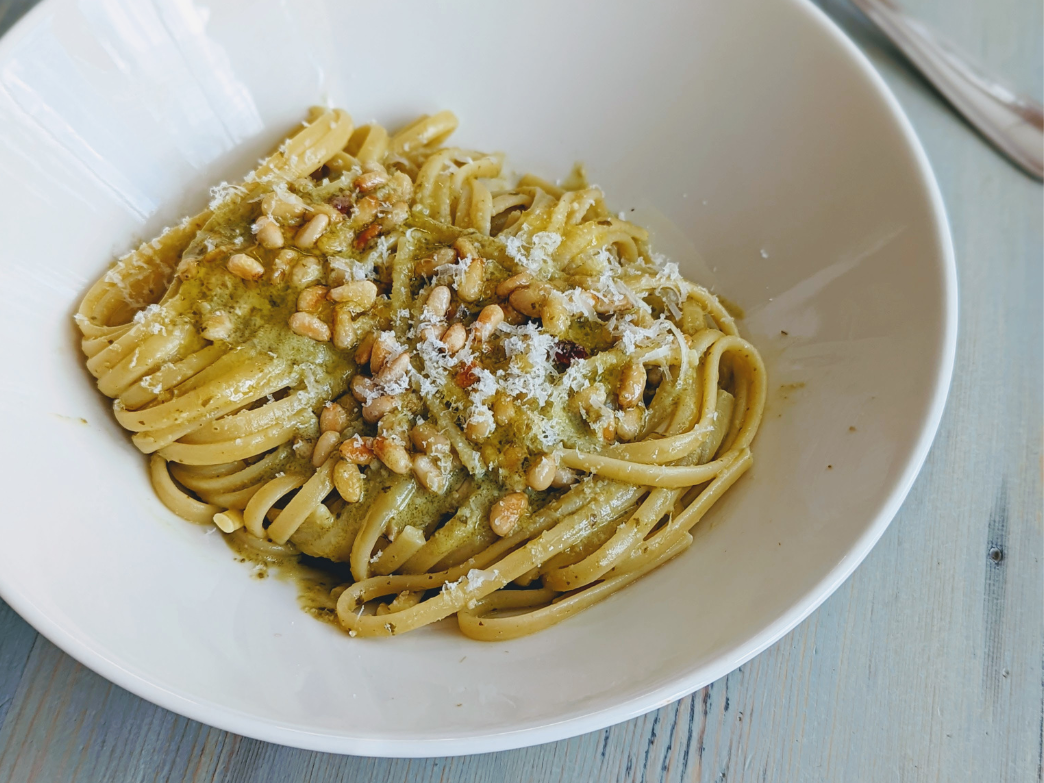
Imagine a plate split into three sections: a big green half for broccoli, cauliflower, or leafy greens; a quarter covered with grilled chicken; and a quarter of quinoa or sweet potato. The picture itself tells a story of balance without a calculator.
7-Day Sample Menu
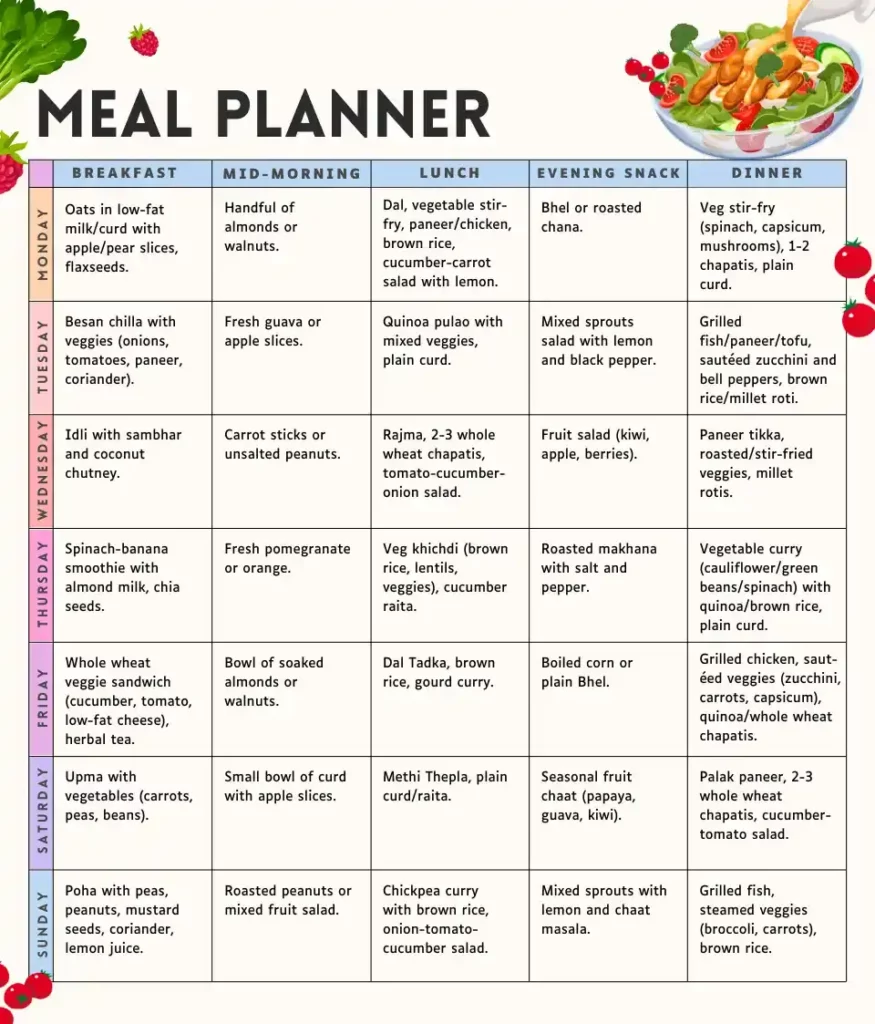
Below is a daybyday breakdown. Feel free to swap proteins, veggies, or carbs to match your preferences. Each day totals roughly 1,5001,800kcal, ideal for most adults looking to maintain weight while stabilizing glucose.
Day1
Breakfast
Greekyogurt parfait: cup plain Greek yogurt, cup rolled oats, cup mixed berries, and a drizzle of cinnamon.
Lunch
Grilled chicken salad: 3oz chicken breast, 2cups mixed greens, cup chickpeas, cherry tomatoes, cucumber, and 1tbsp oliveoil vinaigrette.
Dinner
Baked salmon (4oz) with cup cooked quinoa and roasted broccoli (1cup). Finish with a squeeze of lemon.
Snacks
Apple slices + tbsp almond butter; or a small handful of pistachios.
Day2
Breakfast
Spinachegg scramble: 2 eggs, a cup of fresh spinach, cup lowfat cheese, and a slice of wholegrain toast.
Lunch
Turkey lettuce wraps: 3oz sliced turkey, lettuce leaves, shredded carrots, sliced avocado, and a splash of lime juice.
Dinner
Stirfried tofu with bell peppers, snap peas, and cup brown rice. Use garlic, ginger, and lowsodium soy sauce for flavor.
Snacks
Celery sticks with 2tbsp hummus; or a small orange.
Day3 Day7
Repeat the pattern, rotating proteins (lean beef, shrimp, lentils), carbs (sweet potato, barley, wholegrain pasta), and veggies (zucchini, cauliflower, kale). One day can be fully vegetarian, and another day can feature a lowercalorie 1,500kcal version for those who need a slight deficit.
Download the full plan
If you prefer a printable version, click the free 7day diabetic meal plan PDF to open a clean, downloadable file you can keep on your phone or print on the fridge.
Customizing the Plan
Prediabetes vs. Type2
If youre managing prediabetes, aim for the lower end of the carb range (120130g per day) and incorporate more highfiber foods like chia seeds or psyllium husk. For type2 diabetes, you may need a slightly higher carb count (130150g) but still keep meals balanced.
Adjusting calories
Want to lose a few pounds? Cut the afternoon snack in half or swap a cup quinoa for cauliflower rice. Looking to maintain? Keep the portions as listed. Need more energy for an active lifestyle? Add an extra cup of whole grains or an extra ounce of lean protein.
Swap table
| Original | Swap | Why? |
|---|---|---|
| Quinoa (cup) | Cauliflower rice (cup) | Lower carbs, same volume |
| Chicken breast (3oz) | Tempeh (3oz) | Plantbased protein |
| Wholegrain toast (1 slice) | Sproutedgrain toast (1 slice) | Higher fiber, lower GI |
Shopping List & MealPrep Hacks
Weekly grocery checklist
- Proteins: chicken breast, salmon, tofu, turkey slices, eggs.
- Veggies: broccoli, spinach, kale, bell peppers, carrots, cauliflower.
- Whole grains: rolled oats, quinoa, brown rice, wholegrain bread.
- Fruits: berries, apples, oranges, small bananas.
- Pantry: olive oil, nuts, seeds, lowsodium soy sauce, herbs.
Batchcook in 30 minutes
While a pot of quinoa simmers, roast a tray of mixed veggies with olive oil and spices. Grill a batch of chicken breasts, then slice them for salads and wraps. Store everything in portioncontrolled containersthis cuts daily cooking time to under 10minutes.
Storage tips
Use clear, BPAfree containers; label each with the day and meal. Keep salads separate from dressings to avoid sogginess. A good rule of thumb: most cooked foods stay fresh 45days in the fridge if kept at 40F.
Monitoring Your Progress
Daily bloodglucose log
Print or download a simple log sheet (available on the blood glucose testing resources page) to record your fasting, premeal, and postmeal readings along with what you ate. Over time youll spot patternsperhaps a certain fruit spikes your sugar, or a proteinrich snack steadies it.
When to tweak the plan
If you notice repeated lows (<70mg/dL) after a particular meal, try lowering the carbs or adding a bit more protein. Persistent highs (>180mg/dL) may signal you need more fiber or a smaller portion of starchy carbs. Always discuss major changes with your healthcare provider, especially if youre on insulin.
RealWorld Success Stories
Marias sixweek turnaround
Maria, 58, was diagnosed with type2 diabetes two years ago. She struggled with fluctuating A1C numbers until she tried a 7day diet plan similar to the one above. After six weeks of consistent meals, her A1C dropped from 8.2% to 6.9%, and she reported feeling more energetic and less anxious about food.
Expert endorsement
Registered Diabetes Educator Laura Chen, CDE says, A shortterm, structured plan like this teaches patients portion control and carb awareness without feeling restrictive. Its a practical stepping stone toward lifelong healthy eating.
Potential Risks & Tips
Overrestricting carbs
While cutting carbs helps control glucose, going too low can trigger hypoglycemia, especially if youre on insulin or sulfonylureas. Aim for at least 45g per main meal unless your doctor advises otherwise.
Hidden sugars in healthy foods
Granola bars, flavored yogurts, and lowfat dressings often hide added sugars. Check nutrition labels for added sugars or syrup in the ingredient list. If youre unsure, stick to whole foods as much as possible.
When to see a professional
If you experience frequent dizziness, unexplained weight loss, or your glucose readings swing wildly despite following the plan, schedule a visit with your endocrinologist or diabetes educator. The plan is a toolnot a substitute for personalized medical advice.
Conclusion
This 7day diet plan for diabetic patients gives you a clear, balanced roadmap to keep blood sugar steady, enjoy tasty meals, and feel confident about your choices. By following the core principles, customizing portions to your needs, and using the printable , youll have everything you need to start today.
Give the plan a try, track your numbers, and notice how a week of intentional eating can transform how you feel. If you have questions or want to share how the menu works for you, feel free to reach outlets keep each other motivated on this journey toward healthier living.
FAQs
What is the ideal amount of carbohydrates per meal for diabetes?
Most adults with diabetes aim for about 45‑60 g of carbs per main meal and under 15‑20 g for snacks, but individual needs can vary.
Can I swap the protein sources in the plan?
Yes. Feel free to replace chicken, fish, or tofu with any lean protein you prefer, such as turkey, lean beef, shrimp, tempeh, or legumes.
How many calories does the 7‑day plan provide?
The sample menu totals roughly 1,500‑1,800 kcal per day, which is suitable for most adults aiming to maintain weight while stabilizing glucose.
Is it safe to follow this plan if I take insulin?
Overall it’s safe, but monitor your blood‑glucose closely. If you notice frequent lows, adjust the carb portions or consult your healthcare provider.
How can I adapt the plan for a lower‑carb diet?
Replace higher‑carb foods like quinoa or brown rice with cauliflower rice, extra non‑starchy vegetables, or increase leafy greens while keeping protein portions the same.