Why Chicken And Feta Sausage Recipe Works
The first bite brings bright lemon, salty feta, and a gentle herbal aroma before the casing gives way with a juicy snap.
This Chicken And Feta Sausage Recipe combines ground chicken thighs, pork fatback, feta cheese, lemon zest, mint, garlic, and coriander in natural hog casings. The mixture is chilled, finely ground, stuffed, and grilled until it reaches 160°F. Serve the browned links with sliced tomatoes, parsley, and a drizzle of olive oil.
Chicken thighs provide more flavor and moisture than chicken breast. Pork fat keeps the sausage tender, while feta adds creamy, tangy pockets throughout. Lemon and mint cut through the richness, making these links especially good with a simple tomato salad, warm flatbread, or roasted vegetables.
I first made these with meat that was not quite cold enough. The mixture smeared instead of passing cleanly through the grinder. Chilling the meat, bowl, grinder parts, and paddle attachment makes a noticeable difference.

Health Benefits & Nutrition
This sausage is satisfying and flavorful, but it is also rich because it contains pork fat, olive oil, and feta. Pairing one link with vegetables or a fresh salad keeps the plate balanced.
- Protein from chicken: Chicken thighs provide protein, which helps make the meal filling and substantial.
- Fresh herbs and lemon: Mint, garlic, and lemon zest add strong flavor without relying on a heavy sauce.
- Tomatoes add produce: Serving the sausage with tomatoes contributes fluid, fiber, and naturally bright acidity.
- Feta adds calcium and flavor: A small amount brings a creamy texture and salty taste, so you may need less additional seasoning.
The approximate nutrition is 320 calories, 14 grams of protein, 2 grams of carbohydrates, and 27 grams of fat per sausage, before optional tomato salad. Actual values vary with the fatback, feta, sausage size, and cooking loss.
This recipe contains chicken, pork, dairy, and wheat may be present in some serving accompaniments. Use a clean thermometer and cook the sausage to 160°F in the center. For pregnancy, food allergies, medically restricted diets, or personal nutrition concerns, ask a doctor or registered dietitian for advice.
Ingredients & Preparation
Recipe Card
| Prep time | 25 hours 30 minutes |
|---|---|
| Cook time | 15 minutes |
| Total time | 25 hours 45 minutes |
| Servings | 15 six-inch sausages |
| Calories | Approximately 320 per sausage |
| Diet tags | High-protein, freezer-friendly |
Full ingredient list
- 2 pounds skinless, boneless chicken thighs, cut into 1-inch cubes
- 1 pound pork fatback, cut into 1-inch cubes
- 1 tablespoon coriander seeds, toasted and ground
- 2 garlic cloves, finely minced
- 1/4 cup chopped fresh mint
- Finely grated zest of 3 lemons
- 2 tablespoons kosher salt, plus more for the tomatoes
- 1/2 cup crumbled feta cheese
- 1/4 cup extra-virgin olive oil, plus more for serving
- 1/4 cup chilled white wine
- 1 8-foot hog casing, soaked in water for 30 minutes and flushed with water
- 4 medium tomatoes, sliced, for serving
- 2 tablespoons chopped fresh parsley, for serving
- Freshly ground black pepper, for serving
Equipment needed
You will need a meat grinder with a small die plate, a sausage stuffer, a stand mixer with a paddle attachment, a large mixing bowl, kitchen twine, a small skillet for toasting coriander, and an instant-read thermometer. Keep the grinder plate, blade, bowl, paddle, and stuffer parts very cold.
Tips for choosing quality ingredients
Choose chicken thighs with an even, fresh color and trim away tough connective tissue. Fatback should be firm and white, not soft or yellow. Fresh coriander seeds smell warm and citrusy when crushed. Use block feta for a creamier crumble; pre-crumbled feta is often drier.
A dry white wine works well here. Sauvignon blanc, Pinot Grigio, or an unoaked Chardonnay will all fit the lemon and feta. If you prefer not to open a bottle, use chilled chicken stock, although the finished sausage will lose some wine-like brightness.

Step-by-Step Instructions
1. Marinate the chicken and fat for 24 hours
Toast the coriander seeds in a dry skillet over medium heat for 2 to 3 minutes, until fragrant. Grind them. Combine the chicken, fatback, coriander, garlic, mint, lemon zest, and kosher salt in a large bowl. Transfer the mixture to a sealed bag and refrigerate for 24 hours at 40°F or colder.
2. Chill the sausage equipment for 30 minutes
Place the grinder parts, die plate, blade, stand mixer bowl, paddle attachment, and stuffer components in the freezer for 30 minutes. Keep the marinated meat refrigerated until the equipment is cold and ready.
3. Grind and mix the filling for 10 minutes
Grind the cold meat mixture through the small die plate into the chilled bowl. Refrigerate it for 30 minutes. Fit the cold paddle attachment, then add the feta, olive oil, and chilled white wine. Mix on medium speed for 2 to 3 minutes, until the filling looks cohesive and slightly sticky.
The mixture should hold together when pressed between your fingers. If it looks glossy and loose, chill it for another 15 minutes before stuffing. The first time I rushed this stage, the feta broke down too much and the sausage lacked distinct creamy pieces.
4. Stuff and portion the casings for 20 minutes
Soak the hog casing in water for 30 minutes, then flush water through it to remove salt and check for holes. Lightly oil the stuffer nozzle. Thread the casing onto the nozzle, leaving about 3 inches loose. Push approximately 1 inch of filling into the casing, remove trapped air, and tie the end.
Crank the stuffer slowly and guide the casing with relaxed fingers. Fill each six-inch section firmly but not tightly. Twist alternate links in opposite directions, then refrigerate the stuffed sausages overnight for the best texture.
5. Grill the sausages at medium heat for 10 to 12 minutes
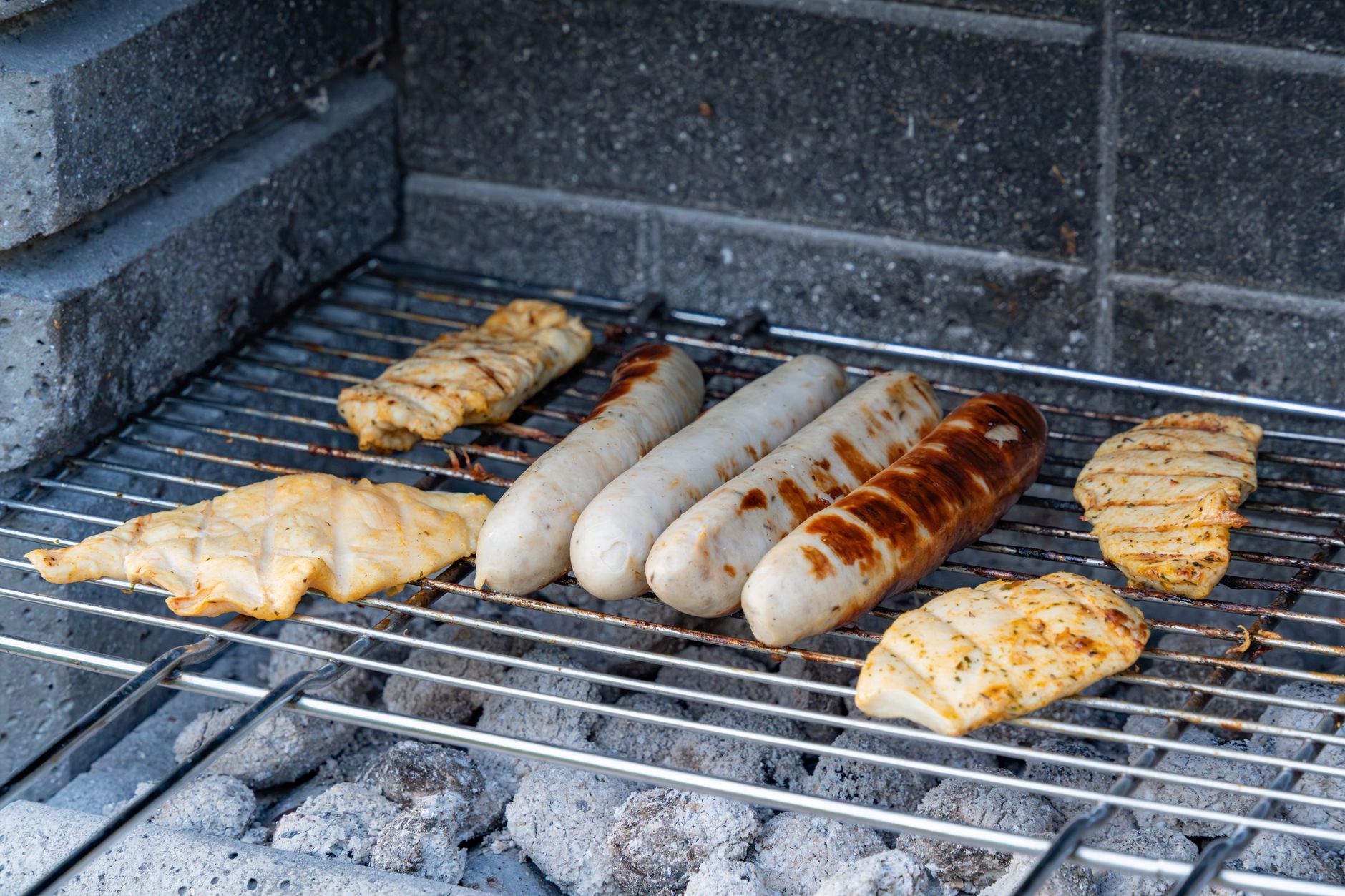
Pierce each link two or three times with a clean pin. Preheat a grill to medium, about 375°F to 400°F. Grill for 10 to 12 minutes, turning every few minutes, until the casing is golden brown and the center reaches 160°F.
Listen for a steady sizzle rather than aggressive popping. The sausages are ready when they feel springy, the juices run clear, and the surface has browned in patches. Toss the sliced tomatoes with olive oil, parsley, salt, and pepper, then serve immediately.
Variations & Substitutions
- Use chicken breast: Replace the thighs with 2 pounds chicken breast, but keep the full 1 pound of fatback. Breast meat alone makes a dry sausage.
- Make it pork-free: Replace the pork fatback with 12 ounces very cold chicken skin and 4 ounces extra-virgin olive oil. The texture will be softer and less springy.
- Try oregano instead of mint: Use 2 tablespoons finely chopped fresh oregano for a more Mediterranean flavor. Do not use the same volume of dried oregano; use 2 teaspoons instead.
- Add gentle heat: Mix in 1 teaspoon crushed red pepper flakes with the coriander and lemon zest. For a hotter sausage, use 2 teaspoons.
- Change the cheese: Replace feta with 1/2 cup finely crumbled queso fresco. It will be milder and less tangy, so add an extra pinch of salt only after tasting a cooked sample.
- Make patties instead of links: Skip the casings and shape the mixture into 15 small patties. Chill for at least 30 minutes, then pan-cook over medium heat until the centers reach 160°F.
Storage & Shelf Life
Store raw stuffed sausages in a covered container in the refrigerator for up to 2 days. Keep them on the lowest refrigerator shelf so juices cannot drip onto other foods. Cooked sausages keep for up to 3 days when refrigerated promptly in a shallow airtight container.
To freeze raw links, arrange them in a single layer on a parchment-lined tray and freeze for 1 to 2 hours. Once firm, transfer them to a freezer bag, remove excess air, label the date, and freeze for up to 2 months for the best quality.
Thaw frozen sausages overnight in the refrigerator. Do not thaw them on the counter. Cooked links can also be frozen for up to 2 months, although the casing may become slightly less crisp after reheating.
Discard sausages with a sour or unpleasant odor, sticky or slimy surfaces, gray-green discoloration, or damaged packaging that has leaked. When in doubt, do not taste them to check freshness.
Pro Tips
Keep the fat solid. Warm fat smears across the grinder plate instead of cutting into clean pieces. If the mixture begins looking pasty, stop and chill everything for 20 to 30 minutes.
Grind small batches. Overloading the hopper strains the grinder and produces uneven texture. Feed the meat gradually, using the pusher rather than your fingers.
Mix for bind, not volume. The filling should become tacky and cling to the paddle. This develops the protein bind that helps the sausage hold together. Overmixing can make the texture dense, so stop as soon as the mixture is cohesive.
Cook a test piece. Before stuffing all the casings, fry a teaspoon of filling in a small skillet. Taste it after cooking, then adjust salt, lemon zest, or herbs. Raw sausage mixture should never be tasted.
Prevent burst casings. Leave a little space inside each link and prick visible air pockets with a sterile pin. Turning the links gently also prevents the casing from twisting too tightly.
Build color gradually. High heat can split the casing before the center cooks. Medium grill heat gives the sausage time to cook through while the outside develops a toasted golden finish.
Balance the plate. The sausage is rich, so tomatoes benefit from a sharp finish. Add a small splash of red wine vinegar or lemon juice to the salad if the feta tastes especially salty.
Questions & Answers
When is the best time to eat Chicken And Feta Sausage Recipe?
The best time to eat these sausages is immediately after grilling, while the casing is browned and the center is juicy. They also work well for lunch or dinner meal prep. Reheat refrigerated links in a covered skillet over medium-low heat until hot throughout, then uncover briefly to restore some surface color.
Can I make these sausages without a sausage stuffer?
Yes, you can shape the mixture into patties if you do not own a stuffer. Form 15 even patties, chill them for 30 minutes, and cook them over medium heat to 160°F. A piping bag can fill casings in a pinch, but it is slower and usually creates more air pockets.
Why did my sausage mixture become mushy?
The mixture usually becomes mushy because the meat or fat warmed during grinding and mixing. Chill the cubed meat, grinder parts, and bowl before starting. If the filling looks smeared or glossy, refrigerate it for 20 to 30 minutes before continuing.
Can I use dried mint instead of fresh mint?
Yes, use 2 teaspoons dried mint in place of 1/4 cup fresh mint. Add it with the coriander, garlic, and lemon zest so it can distribute evenly. Dried mint has a more concentrated, earthy flavor, so start with less and adjust after cooking a small test piece.
How do I stop the casings from bursting on the grill?
Cook the sausages over medium heat and avoid placing them directly over intense flames. Fill the casings firmly but leave a little room for expansion. Prick only visible air pockets rather than piercing every part of the link, which can let too much moisture escape.
Can I cook these sausages in a skillet?
Yes, cook them in a lightly oiled skillet over medium heat for about 12 to 15 minutes, turning often. Add 2 tablespoons of water, cover for the first 5 minutes, then uncover and brown the links. Confirm that the thickest sausage reaches 160°F before serving.
What should I serve with chicken and feta sausage?
Serve the links with sliced tomatoes, parsley, olive oil, and black pepper for a fresh, simple plate. Warm pita, couscous, roasted potatoes, cucumber salad, or grilled zucchini also pair nicely. A lemony yogurt sauce works well, but keep added salt modest because feta already brings plenty of seasoning.
More Recipes You Will Love
For another comforting chicken dinner packed with vegetables, try our Best chicken vegetable soup recipe ever. It is a useful choice when you want a lighter bowl with plenty of savory flavor.
If you enjoy handheld chicken meals, our Chicken pot pie turnovers recipe 1924003 offers flaky pastry, creamy filling, and an easy-to-serve format.
You can also turn leftover cooked sausage into a quick breakfast hash with potatoes, peppers, and a fried egg. Slice the links only after resting them for a few minutes so the juices stay inside.
Conclusion
This Chicken And Feta Sausage Recipe rewards patience with juicy texture, crisp browned casings, and layers of lemon, mint, coriander, and salty feta. Keep every component cold, mix until tacky, and use a thermometer rather than relying only on color. Serve the links with fresh tomatoes for a bright contrast. If you make them, leave a comment with your favorite variation, rate the recipe, or share it with another sausage fan.
FAQs
When is the best time to eat Chicken And Feta Sausage Recipe?
The best time to eat Chicken And Feta Sausage Recipe is fresh off the grill, while the casing is crisp and the feta is still creamy. It works well for a summer dinner or a relaxed weekend lunch. Serve it with sliced tomatoes, parsley, and a drizzle of olive oil, or pair it with warm flatbread.
Can I use chicken breast instead of chicken thighs in this sausage?
Yes, you can use chicken breast, but the sausage will likely be drier and less flavorful. Chicken thighs contain more fat and moisture, which helps keep the links juicy. If you use breast, add a little extra fat, such as additional pork fatback or olive oil, to improve tenderness.
How long does homemade chicken and feta sausage last in the refrigerator?
Raw homemade chicken and feta sausage should be used within one to two days when stored in the refrigerator. For longer storage, wrap the links tightly and freeze them. Cooked sausage should also be refrigerated promptly and eaten within a few days.
Why does my sausage mixture smear instead of grinding cleanly?
The mixture usually smears when the meat, bowl, grinder parts, or paddle attachment are too warm. Chill all of them thoroughly before grinding, and keep the meat cold throughout the process. Working in small batches also helps the fat stay firm and the mixture pass through the grinder cleanly.
What internal temperature should chicken sausage reach for safety?
Chicken sausage should reach 165°F in the center to meet the USDA safe minimum for poultry. This is higher than the 160°F target in this recipe, so using a clean, calibrated thermometer is the safest approach. If you have health concerns or dietary restrictions, consult a doctor or registered dietitian.