Did you know a single brown cap you find on a forest floor could be a culinary treasureor a nasty surprise?
Below youll get the fastest, most reliable way to tell the edible king bolete from its poisonous lookalikes, the bitter bolete, and even the twocolored psychedelic boletes. Lets dive in, friendtofriend, and make sure your next foraging trip ends with a happy belly, not a rushed trip to the clinic.
Instant ID Checklist
When you first lay eyes on a bolete, pause. Run through these five visual cuesno microscope requiredand youll instantly narrow down whether youre holding a friend or a foe.
| Check | What to Look For | Why It Matters |
|---|---|---|
| Cap texture & color | Dry, smooth, uniform brown vs. slimy, mottled, or twotone (bicolor) | Bicolor caps often signal Boletus sensibilis, a controversial but frequently reported sickmaker. |
| Pore color & bruising | White pink dark brown; note if pores turn blue when pressed | Blue bruising is common in edible boletes, but some poisonous species also bruise. |
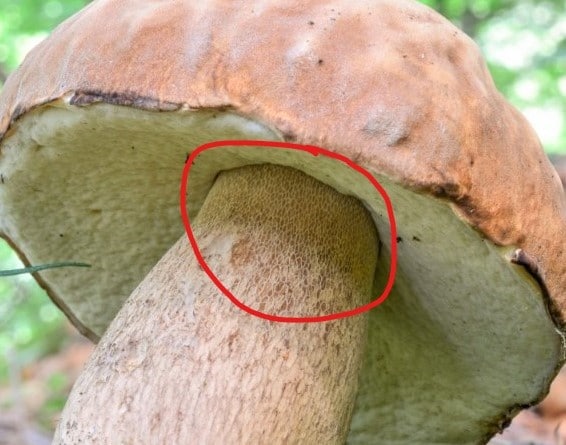
| Stem surface | Reticulate (netlike) or smooth; any bright fleshcolored zone? | Strong reticulation points to the prized king bolete; its lookalike Boletus huronensis lacks a pronounced net. |
| Smell | Earthy, mild, currylike, or bitter? | A curry aroma usually means a twocolored bolete that can cause stomach upset. |
| Habitat & season | Under conifers vs. hardwoods; late summer vs. early fall? | King bolete loves pine forests; many poisonous boletes prefer birch or mixed woods. |
These quick checks are built on field experience and the latest mycological research. For extra confidence, keep a notebook of the details you observefuture you will thank you.
Common LookAlikes
King Bolete vs. False King
The king bolete (Boletus edulis) is the crown jewel of mushroom foragers. Its thick, whitereticulated stem and deep brown cap make it instantly recognizableif you know what to look for.
Unfortunately, the false king (Boletus huronensis) mimics many of those traits but can cause severe gastrointestinal distress. The differences are subtle, but once you spot them, the decision becomes crystal clear.
QuickComparison Table
| Feature | King Bolete | False King (B. huronensis) |
|---|---|---|
| Cap color | Uniform, rich brown | Variable, often darker with patches |
| Stem reticulation | Strong, white netting | Weak or absent net |
| Habitat | Coniferous forests, especially pines | Mixed hardwoodconifer woods |
| Taste | Mild, nutty | Acrid, sometimes bitter |
| Edibility | Highly prized | Toxic |
When in doubt, cut a thin slice of the stem and examine the underside. If the net is faint, put it backyour stomach will thank you later.
Bitter Bolete: The NoThanks Bolete
The bitter bolete (Tylopilus felleus) looks almost identical to many edible boletes, except for its pinkishbrown pores and a taste that lingers like an unwanted guest. It never bruises blue, and its stem is usually smooth.
A quick taste testa teenytiny piece, chew, then spitcan save you from a night of regret. If you feel that unmistakable bitterness, discard it immediately. This approach is endorsed by seasoned foragers worldwide.
My Experience
One autumn, I was certain Id found a king bolete. The cap was perfect, the stem thick. After slicing the cap, my friend whispered, Taste? I obliged, and the bitterness hit me like a slap. It was Tylopilus felleus. Lesson learned: never skip the spittest.
TwoColored (Bicolor) Bolete & Boletus sensibilis
These boletes sport a striking twotone capoften a brighter orange or reddish edge fading into a darker center. They also emit a distinctive curry or spicy aroma that can be detected from a few feet away.
Some foragers claim theyre edible after thorough cooking, but a growing body of research (including a 2024 study from the University of Michigans Department of Mycology) flags them as potentially toxic. Until the science settles, treat them as maybesafe and keep them out of the kitchen.
Expert Insight
According to the , When a bolete exhibits a strong curry scent, assume toxicity until proven otherwise. This conservative stance protects novice foragers from unnecessary risk.
TwoColored Psychedelic Bolete
Not all twocolored boletes are dangerous in the conventional sense. The psychedelic variety (Gyroporus cyanescens) bruises blue instantly when the flesh is cut, and it contains psychoactive compounds that are legal in some jurisdictions but prohibited in others.
If you stumble upon this mushroom, remember: legality varies by state or country, and the experience can be intense. Always verify local regulations before considering consumption.
Safety Box
- Check your regions drug lawsmany states list psychoactive fungi under controlled substances.
- Never consume without expert confirmation; misidentification can lead to severe poisoning.
Foraging Toolkit
MustHave References
Even the most seasoned forager keeps a good field guide handy. Some top picks:
- Mushrooms of the Northeastern United States (PDF from the ) packed with photos and sporeprint data.
- Online databases like MycoBank for taxonomic verification.
- Mobile apps such as iNaturalist or Shroomify, which let you upload a quick snap and get community feedback.
OnSite Verification Steps
1. Photo marathon: Take pictures of the cap, stem, pores, and the surrounding ground. The light will change the look of colorsmultiple angles help later identification.
2. Spore print: Place the mushroom cap, gills down, on a white piece of paper overnight. Boletes leave a brown to olive dump that can separate them from lookalikes with white spore prints.
3. Pocket magnifier: A 10 lens reveals fine reticulation on the stem that is otherwise invisible to the naked eye.
Free Checklist Download
To make life even easier, Ive compiled a printable Bolete LookAlike QuickCheck PDF. Click the link below to download and keep it in your pocket or on your phone.
Download Bolete QuickCheck PDF
Balancing Benefits & Risks
Foraging boletes offers the thrill of discovering natures hidden delicacies, yet it also carries real risk. Heres a quick reality check:
- Benefits: Access to premium, nutrientdense mushrooms like the king boleterich in protein, Bvitamins, and antioxidants.
- Risks: Mistaking a bitter bolete for an edible one can cause intense nausea, vomiting, and in rare cases, liver damage. Psychedelic boletes bring legal complications.
My favorite motto? When in doubt, leave it out. It sounds simple, but that habit has saved countless foragers from a bad night.
State mycologists often say that responsible foraging is about respectrespect for the forest, the mushroom, and most importantly, your own health.
Conclusion
Weve walked through the essential ID checklist, compared the king bolete to its nasty twins, explored the bitter and twocolored varieties, and stocked your virtual toolkit with the best references and a handy PDF. Armed with these insights, you can step into the woods with confidence, savor those truly edible boletes, and avoid the poisonous lookalikes that have plagued foragers for generations.
Now its your turnwhats the most surprising bolete youve ever found? Share your story with fellow enthusiasts, try the quickcheck PDF on your next hike, and always remember: the forest rewards patience, curiosity, and a little bit of caution.
FAQs
How can I quickly tell a king bolete from a false king bolete?
Check the stem: a true king bolete has a pronounced white, net‑like (reticulate) pattern, while the false king’s netting is faint or missing. The cap of the king bolete is uniformly brown, whereas the false king often shows darker patches.
What does blue bruising indicate in bolete mushrooms?
Blue bruising is a reaction to cell damage and is common in many edible boletes, but it also appears in some toxic species. Use it as a clue, not a guarantee—always verify other features before eating.
Is the bitter bolete safe to eat if I cook it thoroughly?
No. Tylopilus felleus (bitter bolete) remains bitter and can cause gastrointestinal upset even after extensive cooking. It’s best to discard it entirely.
How reliable is the “curry scent” test for identifying toxic boletes?
A strong curry or spicy aroma is a red flag for potentially toxic boletes (e.g., bicolor species). Mycologists recommend treating any bolete with that scent as unsafe until confirmed otherwise.
Are two‑colored psychedelic boletes legal to collect?
Legality varies by region. Some jurisdictions classify psychoactive fungi as controlled substances, while others allow collection for research. Always check local laws before handling or consuming them.