Why Beef Jerky Recipe Works
The first bite should be chewy, smoky, salty, and just a little sweet. This Beef Jerky Recipe delivers that balance with a simple soy-Worcestershire marinade and thin slices of lean beef.
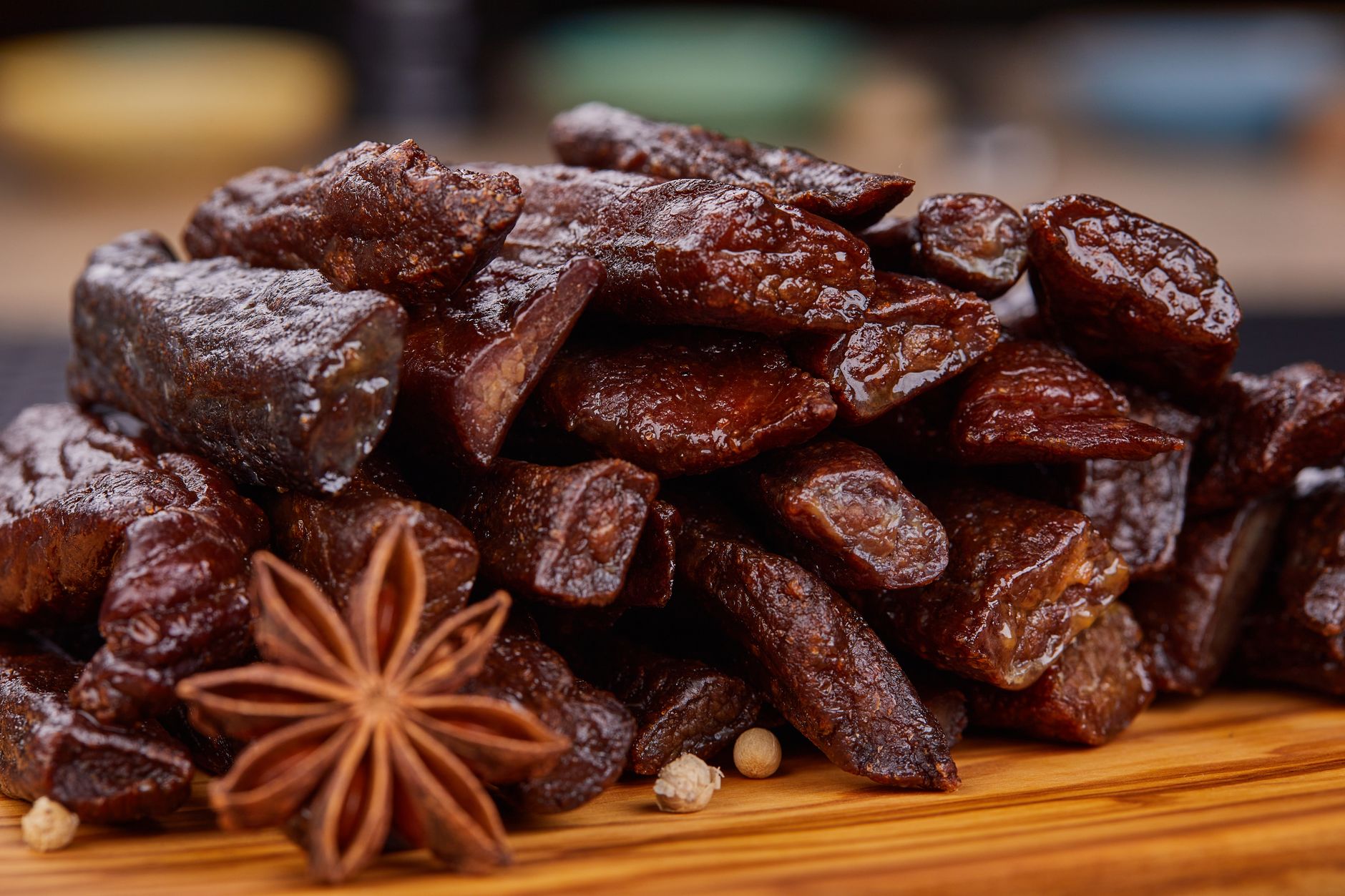
Homemade beef jerky is made by marinating thin strips of lean steak, then drying them slowly until the surface is dry and the center is pleasantly chewy. A brief freezer rest makes slicing easier, while controlled heat in an oven or dehydrator helps cook the beef safely and remove enough moisture for storage.
I have made this recipe with both flank steak and top round. Flank steak has a deeper beef flavor, but top round is easier to slice evenly and usually dries more uniformly. Cut the strips with the grain for a firm, traditional chew.

Health Benefits & Nutrition
Jerky is concentrated food, so a small portion can provide satisfying protein. It also packs a lot of flavor into a portable snack. Here are a few practical points about this recipe:
- Protein-rich: Lean beef contributes protein, which helps make the snack filling.
- Convenient energy: The finished strips are lightweight and easy to pack for hikes, road trips, or busy afternoons.
- Iron and vitamin B12: Beef naturally provides nutrients involved in normal red blood cell formation and energy metabolism.
- Less added sugar than many packaged versions: This marinade uses a tablespoon of honey for balance rather than a large amount of sweetener.
The main nutritional drawback is sodium. Soy sauce and Worcestershire sauce are both salty, so the approximate nutrition per serving can vary widely by brand, trimming, and final moisture level. People limiting sodium, or managing a medical condition, should ask a doctor or dietitian whether this snack fits their needs.
This recipe contains soy and wheat in many standard brands of soy sauce and Worcestershire sauce. Check labels carefully if you have allergies or need a gluten-free product. Use certified gluten-free substitutes rather than assuming every brand is suitable.
Ingredients & Preparation
Recipe Card
| Prep time | 9 hours 20 minutes |
|---|---|
| Cook time | 5 hours |
| Total time | 14 hours 20 minutes |
| Servings | 8 servings |
| Calories | Approximately 205 per serving |
| Diet tags | High-protein, dairy-free |
Full ingredient list
- 1 1/2 to 2 pounds flank steak
- 2/3 cup Worcestershire sauce
- 2/3 cup soy sauce
- 1 tablespoon honey
- 2 teaspoons freshly ground black pepper
- 2 teaspoons onion powder
- 1 teaspoon liquid smoke
- 1 teaspoon red pepper flakes
Equipment needed
- Freezer-safe plate or shallow tray
- Sharp chef’s knife
- 1-gallon resealable bag or covered nonreactive container
- Wire racks and rimmed baking sheets, or a food dehydrator
- Paper towels
- Oven thermometer if your oven temperature is unreliable
- Airtight container for storage
Tips for choosing quality ingredients
Choose flank steak with a deep red color and minimal surface fat. Fat does not dry as well as lean meat, and even small fatty edges can become rancid during storage. Top round or eye of round can replace flank steak if you prefer a leaner, more uniform cut.
Use a soy sauce you already enjoy because its salt level and flavor dominate the marinade. Regular soy sauce gives the strongest seasoning. For a milder result, use low-sodium soy sauce, then taste a tiny drop of the unused marinade before adding the meat. Never taste marinade after it has touched raw beef.
Freshly ground black pepper gives the best aroma. I tried doubling the liquid smoke in an early batch, and it tasted harsh rather than smoky. One teaspoon is enough for this quantity of beef.

Step-by-Step Instructions
1. Firm and slice the steak
Trim all visible fat and silverskin from 1 1/2 to 2 pounds of flank steak. Place the steak on a plate and freeze it for 60 minutes. Slice it into strips about 1/8 to 1/4 inch thick. Cut with the grain for a firm chew. The meat should feel firm but still yield slightly under the knife.
2. Mix and apply the marinade
Place the sliced beef in a 1-gallon resealable bag with 2/3 cup Worcestershire sauce, 2/3 cup soy sauce, 1 tablespoon honey, 2 teaspoons black pepper, 2 teaspoons onion powder, 1 teaspoon liquid smoke, and 1 teaspoon red pepper flakes. Seal the bag and massage it for 60 seconds to coat every strip.
3. Marinate under refrigeration
Refrigerate the sealed bag at 40°F or below for 8 hours. Turn the bag once halfway through marinating so the liquid reaches both sides. Do not marinate at room temperature. The beef should smell savory and peppery, not sour.
4. Arrange the strips for drying
Heat an oven or dehydrator to 160°F. Remove the beef from the marinade and pat each strip dry with paper towels. Arrange the pieces in one layer on dehydrator trays or wire racks set over rimmed baking sheets, leaving at least 1/4 inch between strips. Do not let pieces overlap.
5. Dry until safe and chewy
Dry the beef at 160°F for 4 to 5 hours, rotating trays after 2 1/2 hours if needed. Begin checking at 4 hours. Finished jerky should look darker, feel dry on the surface, and bend with a slight crack rather than snap immediately. For food safety, the beef should reach 160°F during the drying process. Cool the strips completely before storing.
The first time I made this, I crowded the rack and created pale, soft patches where the strips touched. Spacing really matters. I also found that thinner pieces finish nearly an hour before thicker ones, so remove individual strips as they become leathery instead of waiting for every piece.
Variations & Substitutions
- Milder jerky: Reduce the red pepper flakes from 1 teaspoon to 1/4 teaspoon. Keep the other ingredients unchanged so the sweet and savory balance remains intact.
- Hot jerky: Use 2 teaspoons red pepper flakes and add 1/2 teaspoon cayenne. Do not add extra liquid, or the drying time may increase.
- Lower-sodium version: Replace the regular soy sauce with 2/3 cup low-sodium soy sauce. The result will still be savory, but less salty.
- Gluten-free version: Replace the soy sauce with 2/3 cup gluten-free tamari and use a gluten-free Worcestershire sauce. Check every label for wheat ingredients.
- Less smoky flavor: Use 1/2 teaspoon liquid smoke. This gives a gentle background note without removing the marinade’s pepper and onion character.
- Different beef cut: Replace the flank steak with 1 1/2 to 2 pounds of top round or eye of round. Freeze it for 60 to 90 minutes, then slice against or with the grain according to your preferred chew.
For more savory inspiration before changing the marinade, browse these ideas for Best fresh herbs for steak. Fresh herbs are better added to a serving dish than to this long-drying recipe, where their flavor can become muted.
Storage & Shelf Life
Cool the jerky completely before sealing it. Store it in an airtight container in the refrigerator for up to 14 days. Place a small piece of parchment between layers if the strips are sticky, and check the container after the first day for condensation.
For longer storage, freeze the cooled jerky in a freezer bag with as much air pressed out as possible. It keeps best for up to 2 months. Thaw the sealed bag in the refrigerator, not on the counter, and use the jerky within several days after thawing.
Discard the batch if you notice mold, a sour or rancid smell, unusual sliminess, or fuzzy spots. Do not scrape off a questionable area and keep the rest. Jerky that has trapped moisture can spoil even when the outside looks dry.
Pro Tips
Slice against the grain for tenderness. The recipe’s traditional firm texture comes from slicing with the grain. If you want easier chewing, turn the steak and cut across the visible muscle fibers instead. Keep every strip similar in thickness so the batch finishes together.
Patting dry improves texture. Excess marinade on the surface makes the beef sticky and slows evaporation. After removing the strips, press them gently between paper towels. Do not rinse them, because that washes away seasoning.
Use racks rather than a flat pan. Airflow under the beef helps the underside dry. If you only have a baking sheet, line it with foil and turn the strips halfway through. A wire rack gives a more even result.
Do not rely on color alone. Dark soy sauce can make the beef look finished before the center dries. Bend the thickest strip. It should flex and show fine cracks, but it should not feel wet or spongy in the middle.
Keep the marinade refrigerated. Raw beef should stay cold from slicing through marinating. Wash the knife, board, tray, and any surface that touched the raw meat with hot, soapy water.
Balance smoke carefully. Liquid smoke varies in strength between brands. Add the measured amount the first time, then adjust in a future batch. Increasing it during the same batch is difficult because the flavor cannot be removed.
For a roast-inspired seasoning direction, you can also compare the flavors in What herbs go with roast beef. Keep fresh herbs out of the wet marinade unless you are prepared for a shorter refrigerated shelf life.
Questions & Answers
When is the best time to eat Beef Jerky Recipe?
The best time to eat homemade beef jerky is once it has cooled completely and rested for about 30 minutes after drying. That short rest lets the texture settle and makes it easier to judge the final chew. It works well as a portable snack, but portion sizes matter because jerky is concentrated and salty.
Can I make this jerky without a dehydrator?
Yes, you can make it in an oven set to 160°F. Arrange the strips on wire racks over baking sheets, leave space around each piece, and keep the oven door closed as much as possible. An oven thermometer helps because many ovens run hotter or cooler than the displayed setting.
Should beef jerky be sliced with or against the grain?
Slice with the grain for a traditional chewy texture, or against the grain for more tender pieces. Look for the long lines running through the steak and cut parallel to them for a firmer bite. For a mixed batch, slice half each way and compare the texture.
How thin should the beef be sliced?
Slice the beef between 1/8 and 1/4 inch thick. Pieces near 1/8 inch dry faster and become crisp if left too long, while 1/4-inch strips stay chewier. Freezing the steak for about 60 minutes firms it enough to produce cleaner, more even slices.
Can I reuse the beef jerky marinade?
No, do not reuse marinade that has touched raw beef. Discard it after removing the meat, and never use it as a sauce unless it has been boiled thoroughly. Even then, the marinade’s flavor may be overly salty after absorbing meat juices.
Why is my homemade jerky too tough?
Jerky is usually too tough because the slices are too thin, the beef dried too long, or the steak was cut with the grain. Check the strips early, beginning at 4 hours, and remove pieces individually when they bend and crack. Thicker slices and a shorter drying time create a softer chew.
Can I use ground beef for this recipe?
Ground beef requires a different method and should not be substituted directly here. It needs to be formed into thin sheets or pressed through a jerky gun, then dried while reaching a safe internal temperature. Use lean ground beef and follow your dehydrator manufacturer’s instructions for ground meat.
More Recipes You Will Love
If you enjoy bold beef flavor, try a roast beef recipe with rosemary, thyme, or garlic. Those seasonings bring an earthy character that works especially well with lean cuts and simple pan juices.
For another portable option, make thinly sliced steak bites with black pepper and onion. They cook much faster than jerky, so you can serve them warm with roasted vegetables or a crisp salad.
You could also build a snack board with homemade jerky, sharp cheese, pickles, nuts, and fresh fruit. The tangy and creamy additions soften the salty intensity of the dried beef.
Conclusion
This Beef Jerky Recipe creates deeply savory strips with peppery heat, gentle sweetness, and a controlled smoky finish. The most important details are trimming the fat, slicing evenly, marinating under refrigeration, and drying at a steady 160°F. Let the finished jerky cool before storing so trapped steam does not create moisture. If you make a batch, leave a comment with your preferred chew, rate the recipe, or share it with someone who enjoys homemade snacks.
FAQs
When is the best time to eat Beef Jerky Recipe?
The best time to eat this jerky is when you need a portable, protein-rich snack, such as on a hike, during a road trip, or during a busy afternoon. The lightweight strips pack easily and can be stored at room temperature in an airtight container. Because the marinade is salty, it works best as a snack in moderation, especially for anyone watching their sodium intake.
How long does homemade beef jerky last?
Homemade beef jerky generally stays fresh for about one to two months when stored in an airtight container in a cool, dry place. For longer storage, refrigerate or freeze it. Make sure the strips are fully dried and cooled before sealing, because leftover moisture can shorten shelf life and encourage spoilage.
Can I use top round instead of flank steak for jerky?
Yes, top round works well in place of flank steak for this jerky recipe. It is leaner, easier to slice into even strips, and usually dries more uniformly, though it has a milder beef flavor. Trim away any visible fat and cut the strips with the grain for a firm, traditional chew.
Why is my beef jerky too tough to chew?
Jerky that is too tough has usually been dried for too long or sliced too thick. Thin, even strips dry more evenly and stay pleasantly chewy rather than hard. Check the pieces before the full drying time ends and remove any that bend without cracking, since they will continue to firm up as they cool.
Can I make beef jerky in an oven without a dehydrator?
Yes, a home oven can work well for jerky when you control the heat carefully. Use an oven thermometer to confirm the temperature, set wire racks over rimmed baking sheets so air circulates, and keep the oven door closed as much as possible. A dehydrator offers more consistent results, but careful oven drying is a practical alternative.