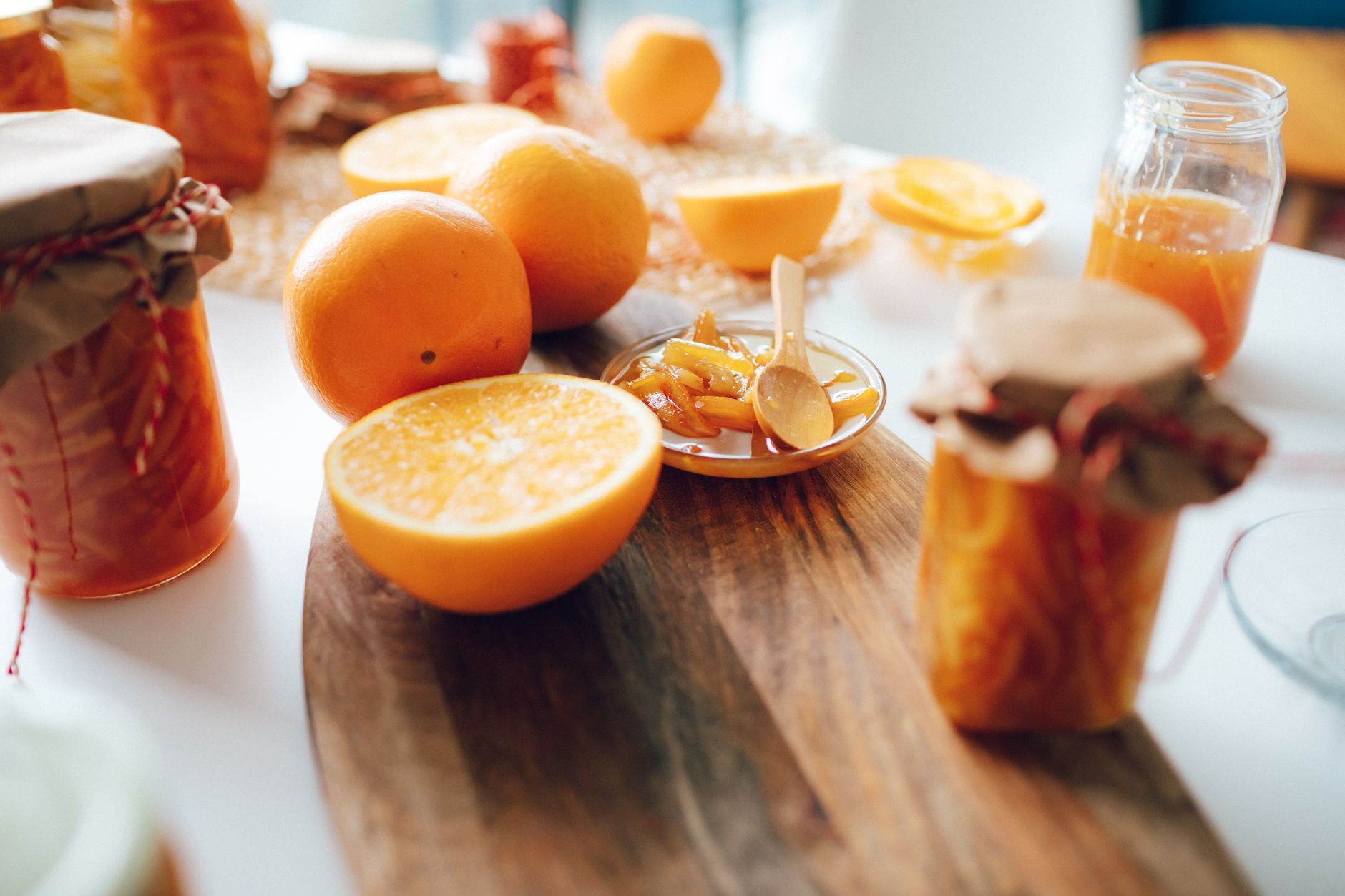
Why Anna‘s Orange Marmalade Recipe?
The first spoonful is bright, bittersweet, and fragrant, with thin ribbons of orange peel suspended in a glossy golden spread. Anna‘s Orange Marmalade Recipe uses whole sliced oranges and lemons, so the peel provides both texture and the natural pectin needed for a firm set.
Anna‘s Orange Marmalade is a classic American-style preserve made by simmering thinly sliced oranges and lemons with sugar. The fruit rests overnight before cooking, which softens the peel and helps draw out flavor. A long, gentle simmer produces a clear, golden marmalade with a tender citrus peel and a softly set texture. Spread it on toast, spoon it over yogurt, or use it to glaze roasted vegetables and pastries.
I have made this in both three-pint and four-pint batches. The final yield depends on how much water evaporates and how long you cook it. A wide stainless-steel pot gives the most even results and makes the final set easier to judge.

Health Benefits & Nutrition
This marmalade is a treat rather than a low-sugar fruit spread. Its main nutritional feature is sugar, but the citrus contributes small amounts of fruit nutrients and plant fiber.
- Citrus flavor from whole fruit: Oranges and lemons provide natural acidity and aromatic oils from the peel. That sharpness helps balance the sweetness.
- A small amount of fiber: Thin strips of peel and fruit contribute some dietary fiber, although the amount per tablespoon is modest.
- No added fat: The recipe contains no butter, oil, or cream, making it naturally fat-free.
- Useful in small portions: A tablespoon adds strong flavor to toast, oatmeal, yogurt, sauces, and baked goods without needing a large serving.
Nutrition varies with the final yield and serving size. One tablespoon contains approximately 55 calories, 14 grams of carbohydrates, and 13 grams of sugar. These are estimates, not laboratory-tested values. If you need to limit added sugar or manage a medical condition, ask a doctor or registered dietitian how this preserve fits your eating plan.
Ingredients & Preparation
Recipe Card
| Details | Amount |
|---|---|
| Prep time | 12 hours 15 minutes, including overnight resting |
| Cook time | 2 hours 30 minutes |
| Total time | 14 hours 45 minutes |
| Servings | About 48 tablespoons |
| Calories | Approximately 55 calories per tablespoon |
| Diet tags | Vegetarian, vegan, gluten-free, dairy-free |
Full Ingredient List
- 4 large seedless oranges
- 2 lemons
- 8 cups granulated sugar
- 8 cups water
Equipment Needed
- Sharp chef’s knife or mandoline
- Large stainless-steel or enamel-coated pot
- Wooden spoon or heatproof spatula
- Candy thermometer
- Small plate for the cold-plate test
- Clean heatproof jars and lids
- Ladle and wide-mouth funnel, if available
Tips for Choosing Quality Ingredients
Choose oranges with smooth, brightly colored skins that feel heavy for their size. Heavy fruit usually contains more juice. Seedless oranges make preparation quicker, but check each slice because an occasional seed can still appear.
Use thin-skinned lemons with a fresh, firm texture. Very thick, dry peel can make the finished marmalade more bitter. Since the peel stays in the recipe, scrub all citrus under running water and dry it before slicing.
Plain granulated sugar works best here. Avoid brown sugar, liquid sweeteners, or sugar substitutes. They change the acidity, color, flavor, and setting behavior.

Step-by-Step Instructions
1. Slice the citrus thinly
Wash and dry the oranges and lemons. Cut each fruit in half crosswise, then slice it into very thin half-moons, about 2 to 3 millimeters thick. Remove visible seeds and place the slices, pulp, and collected juice in a large stainless-steel pot.
A mandoline makes the slices especially even, but use a hand guard and work slowly. The first time I made this, my thicker slices stayed chewy after cooking. Keeping the peel thin made a noticeable difference in the final texture.
2. Soften the fruit and dissolve the sugar
Add 8 cups of water to the pot. Set the burner to high and bring the mixture to a full boil, stirring every few minutes. Once boiling, remove the pot from the heat and stir in 8 cups of sugar.
Continue stirring for about 2 minutes, until the sugar crystals are no longer visible on the bottom or sides of the pot. Cover the pot and leave it at room temperature for 12 hours. The peel will soften and the mixture will smell strongly of fresh citrus.
3. Simmer the marmalade gently
The next day, bring the covered mixture back to a boil over medium-high heat. Remove the lid, reduce the burner to low, and simmer uncovered for 2 hours. Stir every 15 to 20 minutes so the peel does not settle and scorch.
After the first 2 hours, increase the heat to medium and boil gently for another 30 minutes. Skim foam from the surface with a spoon. The marmalade should become a deeper golden orange, and the peel should look translucent rather than opaque.
4. Check the set at 220°F
Attach a candy thermometer to the pot without letting its tip touch the bottom. Cook until the marmalade reaches 220°F, stirring often during the final 30 minutes. The bubbles will become slower and heavier as the mixture thickens.
For a second check, place a teaspoon of marmalade on a small plate and refrigerate it for 2 to 3 minutes. Push it with your fingertip. It should wrinkle slightly and move as one soft layer. If it runs quickly, cook for another 5 minutes and test again.
Do not rely on the thermometer alone if your pot is shallow or your thermometer is inaccurate. My marmalade once reached the target temperature before the cold-plate test showed a set, so I cooked it for several extra minutes and avoided a runny result.
5. Fill and cool the jars
Place clean, heatproof jars on a stable surface. Ladle the hot marmalade into the jars, leaving about 1/4 inch of headspace. Wipe each rim with a clean, damp paper towel, then apply the lids.
Let the jars cool undisturbed at room temperature for 12 to 24 hours. Check the texture once fully cool. For home storage without a validated canning process, refrigerate the jars rather than treating them as shelf-stable pantry preserves.
Variations & Substitutions
Seville-style bitter orange variation
Replace 2 of the 4 sweet oranges with bitter oranges when they are available. Keep the two lemons and the same 8 cups of water and sugar. Bitter oranges produce a more traditional, assertive marmalade, but the finished spread may taste sharper.
Grapefruit citrus variation
Replace 2 oranges with 1 large grapefruit, using the same thin-slice method. Keep the remaining 2 oranges, 2 lemons, 8 cups of water, and 8 cups of sugar. Grapefruit has a stronger bitter note, so taste the cooled marmalade before deciding whether to use it as a breakfast spread or glaze.
Ginger-orange marmalade
Add 2 tablespoons of finely grated fresh ginger with the sliced citrus and water. Do not replace any sugar or water. Fresh ginger adds warmth and a mild peppery finish without changing the basic cooking method.
Vanilla citrus marmalade
Add 1 split vanilla bean during the 2-hour simmer. Remove the pod before filling the jars. Alternatively, stir in 1 teaspoon of pure vanilla extract after removing the pot from the heat. The extract gives a softer vanilla aroma but slightly less visual appeal.
Reduced batch
For a smaller batch, halve every ingredient: 2 oranges, 1 lemon, 4 cups of sugar, and 4 cups of water. Use a smaller pot, but keep the overnight rest. Begin checking the set after about 90 minutes of simmering because a smaller volume can reach the finishing point sooner.
Do not replace the granulated sugar with honey or maple syrup in equal volume. Those substitutions affect the final temperature, acidity, and set, so they need a separately tested formula.
Storage & Shelf Life
Refrigerate cooled marmalade in clean, tightly closed jars for up to 3 weeks. Use a clean spoon each time, and keep the jar chilled between servings.
For longer storage, spoon the cooled marmalade into freezer-safe containers, leaving about 1/2 inch of space for expansion. Freeze for up to 6 months. Thaw one container overnight in the refrigerator and stir before serving. The texture may be slightly softer after freezing.
This recipe does not include a validated water-bath canning process. If you want shelf-stable pantry jars, follow current instructions from a recognized food-preservation authority and use the correct jar preparation, headspace, processing time, and altitude adjustment for your location.
Discard the marmalade if you see mold, bubbling that was not present when it cooled, an alcoholic or fermented smell, leaking, unusual cloudiness, or a lid that bulges. Do not scrape off mold and use the remaining contents.
Pro Tips for Better Marmalade
- Use a wide pot: A broad cooking surface encourages even evaporation. A narrow, deep pot takes longer and can leave the peel crowded together.
- Keep the slices uniform: Thin, even peel cooks at the same rate. Thick pieces can remain tough while thinner pieces dissolve into the syrup.
- Stir more often near the end: Once the sugar concentration rises, the marmalade can catch on the bottom quickly. Stir every few minutes during the final 30 minutes.
- Skim early foam: Removing foam gives the finished spread a clearer, more jewel-like appearance. Do not scrape the foam back into the pot.
- Use the cold-plate test: A spoonful cooled on a chilled plate shows the final texture more reliably than judging hot marmalade in the pot.
- Watch the temperature: Keep the thermometer tip in the liquid, away from the pan base. A false high reading can cause overcooking.
- Prevent sticky stains: Wipe drips from the jar rims and work surface while they are still warm. Dried marmalade becomes much harder to remove.
- Balance the bitterness: Do not remove all the white pith. It contributes pectin, but excessive thick pith can make the marmalade harsh. Thin slicing helps distribute it evenly.
For a savory breakfast spread, serve a small spoonful beside toast and soft cheese. If you are planning a larger brunch, an Asparagus bundles recipe gives the table a fresh contrast to the sweet citrus.
Serving Questions & Answers
When is the best time to eat Annas Orange Marmalade Recipe?
The best time to eat Annas Orange Marmalade Recipe is after it has cooled completely, preferably the following day. Cooling allows the syrup to finish setting and the citrus flavor to mellow. Serve it at breakfast with toast, scones, oatmeal, or yogurt, or use it later as a glaze for roasted vegetables and baked goods.
Why is my orange marmalade too runny?
Runny marmalade usually needs more cooking time or did not reach a sufficient set. Return it to a wide pot and simmer over medium heat for 5 to 10 minutes, then repeat the cold-plate test. Avoid adding powdered pectin unless you are following a separately tested formula.
Why did my marmalade become too firm?
Overcooking is the most common reason for firm marmalade. The mixture loses water as it passes the setting point, so even a few extra minutes can matter. Warm the marmalade gently with 1 to 2 tablespoons of water per cup, stir until smooth, and refrigerate it again to reassess the texture.
Can I make this marmalade without lemons?
You can make it without lemons, but the flavor and set will change. Lemons provide acidity, juice, and additional peel. For a substitute, use 2 tablespoons of bottled lemon juice per removed lemon, but the marmalade may be less aromatic and softer.
Can I use a food processor to slice the fruit?
A food processor is not recommended for the citrus slices because it chops the peel unevenly. Uneven pieces cook at different speeds and can create a rough texture. Use a sharp knife or mandoline instead, keeping the slices thin and consistent.
How can I reduce the bitterness?
Use sweet oranges, remove seeds, and slice the peel very thinly to keep bitterness balanced. Do not remove every trace of white pith because it helps the marmalade set. If the finished spread tastes too sharp, serve it with butter, cream cheese, or a mild cheese rather than changing the cooked batch.
What can I do with extra marmalade?
Use extra marmalade as a glaze for roasted carrots, squash, or salmon, or whisk it into a simple vinaigrette. It also works in thumbprint cookies, layer cakes, yogurt bowls, and grilled cheese sandwiches. Warm it with a teaspoon of water before brushing it onto pastries.
More Recipes You Will Love
For a savory spread, try Blackstone classic smash burgers 12656418. The crisp edges and rich beef pair surprisingly well with a tiny spoonful of bittersweet orange marmalade.
If you enjoy building a brunch menu around homemade food, pair the marmalade with warm biscuits, soft cheese, fresh fruit, or the linked Asparagus bundles recipe. The bright citrus cuts through buttery and savory dishes.
Marmalade also makes a useful baking ingredient. Stir it into muffin batter, layer it between sponge cakes, or brush it over a warm fruit tart for a glossy finish.
Conclusion
Anna‘s Orange Marmalade Recipe rewards patience with a clear, golden spread, tender citrus peel, and a lively sweet-bitter flavor. Thin slicing, an overnight rest, and careful temperature checking make the biggest difference. Store the finished jars in the refrigerator unless you use a properly tested canning method. Try it on toast first, then explore savory glazes and baked treats. If you make it, share how your texture turned out and leave a rating or comment.
FAQs
When is the best time to use Annas Orange Marmalade Recipe?
The best time to use Annas Orange Marmalade Recipe is at breakfast, spread on toast or stirred into oatmeal. It also works well spooned over yogurt or used to glaze roasted vegetables and pastries. Since it is a sugary treat, a single tablespoon adds plenty of citrus flavor.
How should you store homemade Annas Orange Marmalade Recipe?
Store Annas Orange Marmalade Recipe in clean, sealed heatproof jars in a cool, dark place, and refrigerate it once opened. Make sure the jars and lids are clean and tightly closed. Always use a clean, dry spoon when scooping so you do not introduce moisture or crumbs.
Why didn't my Annas Orange Marmalade Recipe set?
If Annas Orange Marmalade Recipe does not set, it usually needs more cooking time. Test it with the cold-plate method: spoon a little onto a small chilled plate, wait about a minute, then push it with a finger. If the surface wrinkles, it is ready. If it runs together, keep simmering and test again.
Can you make Annas Orange Marmalade Recipe with less sugar?
Reducing the sugar in Annas Orange Marmalade Recipe is not recommended without changing the method, because sugar helps the marmalade set and keeps it stable. Cutting it can lead to a runny texture and a shorter shelf life. If you need to limit added sugar, ask a doctor or registered dietitian for guidance.
Why is my Annas Orange Marmalade Recipe bitter?
Bitterness usually comes from thick, dry peel or excess white pith. Choose thin-skinned lemons, scrub all citrus, and slice the fruit thinly so the peel cooks evenly. The overnight rest also softens the peel and helps draw out flavor.