Why Salmon Jerky Recipe Works
A good strip of salmon jerky should smell faintly smoky, feel firm at the edges, and still have a little chew in the center. This salmon jerky recipe turns fresh salmon into a savory snack with soy sauce, molasses, lemon, pepper, and liquid smoke.
Salmon jerky is made by briefly firming salmon in the freezer, slicing it thinly, marinating it, and drying it at a controlled temperature. A short oven step brings the fish to a safe internal temperature before slow dehydration removes moisture and creates a chewy texture.
The method below uses a conventional oven and dehydrator rather than a box fan. That approach gives you better temperature control and makes the finished jerky easier to handle safely. You can adjust the drying time depending on how thickly you cut the salmon and how chewy you prefer each strip.

Health Benefits & Nutrition
Salmon provides protein, and oily fish such as salmon naturally contains omega-3 fats. Protein can help make a snack more filling, while the fat in salmon contributes richness and keeps the dried strips from tasting too lean.
- Protein: Salmon is a concentrated source of protein, which helps give this snack a satisfying, substantial texture.
- Omega-3 fats: Salmon naturally contains EPA and DHA, two types of omega-3 fat found in seafood.
- Vitamin B12: Salmon supplies vitamin B12, a nutrient involved in normal blood and nerve function.
- Minerals: Salmon contributes selenium and other minerals, although the exact amount varies by fish and portion size.
This recipe is also fairly high in sodium because soy sauce forms the base of the marinade. Choose reduced-sodium soy sauce if you want a milder salt level, but remember that jerky becomes more concentrated as it dries.
Do not eat the salmon if you have a fish or soy allergy. Keep raw fish refrigerated while preparing it, wash hands and utensils thoroughly, and use a thermometer for the oven step. Anyone who is pregnant, immunocompromised, or managing a medical condition should ask a doctor or dietitian about suitable fish choices and preparation methods.
The nutrition estimate below is approximate. It depends on the salmon’s fat content, how much marinade remains on the fish, and how much moisture is removed during drying.
Ingredients & Preparation
Recipe Card
| Prep time | 3 hours |
|---|---|
| Cook time | 4 hours |
| Total time | 7 hours |
| Servings | 4 servings |
| Calories | Approximately 320 calories per serving |
| Diet tags | High-protein, dairy-free, pescatarian |
Full Ingredient List
- 1 1/4 pounds skinless salmon fillet, pin bones removed
- 1/2 cup soy sauce
- 1 tablespoon molasses
- 1 tablespoon freshly squeezed lemon juice
- 2 teaspoons freshly ground black pepper
- 1 teaspoon liquid smoke
Equipment Needed
- Freezer-safe plate or shallow tray
- Large resealable bag or shallow glass container
- Sharp chef’s knife
- Colander or wire rack
- Paper towels
- Instant-read thermometer
- Wire rack and rimmed baking sheet
- Food dehydrator with adjustable temperature control
Tips for Choosing Quality Ingredients
Choose a thick, fresh salmon fillet with a clean ocean scent. The flesh should look moist and spring back when gently pressed. A center-cut piece is easiest to slice into consistently sized strips, while very thin tail pieces can dry faster than the rest.
Fresh or thawed frozen salmon both work. If using frozen fish, thaw it in the refrigerator and pat it dry before slicing. Remove the skin and pin bones first. I have found that skin-on pieces are awkward to eat after drying, and the skin can prevent the marinade from coating the fish evenly.
Use regular soy sauce for a deeper, saltier flavor or reduced-sodium soy sauce for a gentler result. Molasses gives the strips a dark, slightly bitter sweetness. Do not replace it with a large amount of maple syrup; syrup made the first batch sticky and caused the edges to brown too quickly.
Step-by-Step Instructions
1. Firm the Salmon in the Freezer
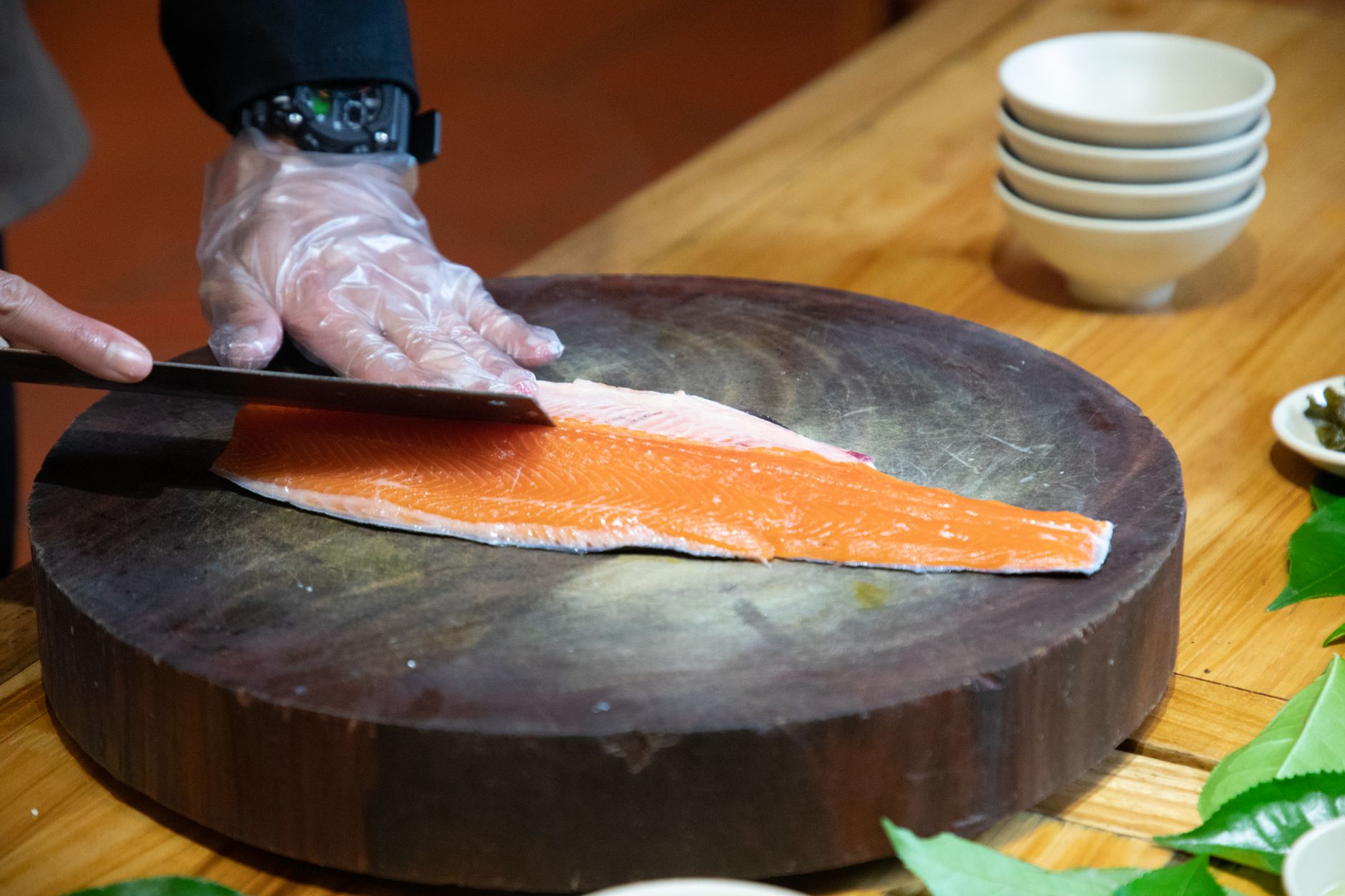
Place the skinless salmon on a plate and freeze it for 45 minutes. It should feel firm when pressed but not be frozen solid. This short chill makes it much easier to cut clean, even strips.
Slice the salmon against the grain into strips about 1/4 inch thick. Strips of similar thickness finish drying at roughly the same time. If your fillet is unusually thick, cut the strips closer to 1/8 inch for a firmer, more traditional jerky texture.
2. Mix the Marinade and Chill the Fish
Add the soy sauce, molasses, lemon juice, black pepper, and liquid smoke to a large resealable bag or shallow glass container. Seal the bag and knead it for 20 seconds, or whisk the mixture for 30 seconds in the container.
Add the salmon strips and turn them gently until coated. Refrigerate for 2 hours. I tested a longer overnight marinade, but the fish became noticeably saltier without gaining much extra flavor, so two hours gives a better balance.
3. Drain and Arrange the Salmon
Set a colander over a bowl and drain the salmon for 5 minutes. Pat both sides dry with paper towels. The strips should look glossy but not drip marinade; excess liquid makes the drying process slower and can create sticky edges.
Arrange the pieces in one layer on a wire rack set over a rimmed baking sheet. Leave about 1/2 inch between strips so warm air can circulate. Do not let the pieces overlap.
4. Heat the Salmon to a Safe Internal Temperature
Heat the oven to 275°F. Bake the salmon strips for 20 minutes, then check the thickest strip with an instant-read thermometer. The center should reach 145°F.
The fish will look opaque and slightly darker around the edges. You may hear a quiet sizzle as the marinade warms, and the kitchen should smell smoky and savory. If the thickest piece has not reached 145°F, continue baking in 5-minute increments and check again.
5. Dehydrate Until Chewy
Transfer the cooked salmon to dehydrator trays, leaving space around every strip. Set the dehydrator to 145°F and dry the fish for 3 hours 40 minutes, checking after 3 hours.
The finished jerky should be firm, dry to the touch, and flexible enough to bend without breaking immediately. When I first made this recipe, I stopped as soon as the surface looked dry; the centers were still soft and wet. Cutting one thick strip in half is the most reliable check. It should show no glossy, raw-looking center.
Cool the strips completely on a clean rack for 30 minutes before storing. Cooling prevents trapped steam from softening the jerky inside its container.
Variations & Substitutions
Less-Salty Salmon Jerky
Replace the soy sauce with 1/2 cup reduced-sodium soy sauce. Keep the other quantities unchanged. The finished strips will still taste savory because the marinade concentrates during drying.
Maple Pepper Salmon
Replace the molasses with 1 tablespoon pure maple syrup and reduce the black pepper to 1 teaspoon. Watch the strips closely during the oven step because maple sugars can darken faster than molasses.
Ginger Garlic Version
Add 1 teaspoon finely grated fresh ginger and 1 small garlic clove, finely grated, to the original marinade. Keep the marinade time at 2 hours. Minced garlic can cling to the strips and scorch, so grate it very finely.
Spicy Citrus Jerky
Add 1/2 teaspoon crushed red pepper and replace 1 teaspoon of the lemon juice with lime juice. For a milder version, use 1/4 teaspoon crushed red pepper instead.
Dehydrator-Only Method
If your dehydrator manual specifically provides a safe fish-dehydrating procedure, follow its temperature and preheating directions. For the most consistent home method, still complete the 275°F oven step first, then transfer the salmon to the dehydrator.
Storage & Shelf Life
Store completely cooled salmon jerky in an airtight container in the refrigerator for up to 7 days. Place a small piece of parchment between layers if the strips are soft or slightly tacky.
For longer storage, wrap individual portions tightly in freezer paper or place them in a freezer-safe bag with as much air pressed out as possible. Freeze for up to 2 months. Thaw one sealed portion in the refrigerator, then eat it within 3 days.
Discard the jerky if it develops a sour or unpleasant odor, fuzzy spots, visible mold, a slimy surface, or an unusually wet texture. Do not taste food to decide whether it is safe. If condensation appears inside the container, refrigerate the jerky immediately and use it within a few days.
Because homemade jerky does not contain commercial preservatives and moisture levels vary, it should not be kept at room temperature for months. Refrigeration is the safer everyday storage choice.
Pro Tips for Better Texture and Flavor
- Slice while partially frozen: A firm fillet gives straighter strips and reduces the chance of tearing delicate flesh.
- Cut across the grain: Cutting across the muscle fibers creates a more tender chew. Cutting with the grain makes noticeably tougher strips.
- Measure thickness: Aim for about 1/4 inch. Thin pieces become brittle, while thick pieces can stay damp in the center.
- Dry the surface first: Patting away excess marinade helps the fish dry instead of steam. It also reduces sticky patches from the molasses.
- Use a rack: A rack allows air to move under the salmon. Placing the strips directly on a solid baking sheet can leave the underside wet.
- Rotate trays: If your dehydrator has warm and cool areas, rotate the trays halfway through the drying time.
- Check the thickest piece: The thinnest strip may look finished while the center of a thicker piece remains soft. Always test the largest strip.
- Cool before sealing: Warm jerky releases steam into the container. That moisture can make the texture soft and shorten storage life.
For a snack board, serve the strips with cucumber, crackers, or a small bowl of cream cheese. A tangy seafood dip also works nicely; a Quick cocktail sauce recipe 1957470 adds brightness without requiring another long preparation.
When is the best time to eat Salmon Jerky Recipe?
The best time to eat salmon jerky is after it has cooled completely and within 7 days when refrigerated. Cooling allows the texture to settle and prevents condensation in the container. It works well as a packed lunch snack, hiking food kept cold, or a savory addition to a seafood platter.
Can I make this salmon jerky without a dehydrator?
Yes, you can finish it in a low oven, although the texture may be less even. After the 275°F safety step, reduce the oven to its lowest setting, place the salmon on a rack, and dry it with the door slightly ajar for about 3 to 5 hours. Check regularly because ovens vary widely.
Should salmon jerky be made with skin-on salmon?
Use skinless salmon for the easiest eating texture. Skin can become tough and chewy after drying, and it prevents the marinade from reaching that side of the fish. If your salmon has skin, remove it before freezing and slicing.
How thin should I slice the salmon?
Slice the fish about 1/4 inch thick for a chewy strip that does not dry too quickly. Slices closer to 1/8 inch become firmer and may finish up to an hour earlier. Keep the thickness consistent across the batch so you can judge doneness accurately.
Why is my salmon jerky too salty?
Salmon jerky is usually too salty because the strips were marinated too long, the marinade was not balanced, or the fish dried excessively. Use reduced-sodium soy sauce, limit marinating to 2 hours, and remove excess marinade before drying. Do not rinse the fish, as rinsing can spread raw fish juices around the sink.
Can I use frozen salmon for this recipe?
Yes, thawed frozen salmon works well when it has been kept frozen properly and thawed overnight in the refrigerator. Pat it dry after thawing, then chill it for 45 minutes before slicing. Avoid slicing fish that is still hard in the center because the strips will not be even.
How do I know when salmon jerky is done?
Salmon jerky is done when the strips are opaque, dry on the surface, and flexible but firm. Cut the thickest piece open to check for a glossy or wet center. The salmon should first reach 145°F in the oven, then continue drying until the desired chewy texture develops.
More Recipes You Will Love
If you enjoy seafood snacks and easy savory meals, try pairing this jerky with pasta, fresh vegetables, or a simple dip. The smoky salmon has enough flavor to stand on its own, but it also works well as part of a larger grazing plate.
For a more substantial seafood dinner, try this Shrimp with roasted garlic pesto pasta recipe 1948624. The creamy pesto, tender shrimp, and roasted garlic bring a completely different flavor profile while keeping seafood at the center of the meal.
You can also use thin pieces of leftover jerky as a topping for salad, rice bowls, or scrambled eggs. Add it just before serving so the strips stay pleasantly chewy rather than becoming soft.
Conclusion
This salmon jerky recipe is a practical way to turn a fresh fillet into a smoky, protein-rich snack with a firm, satisfying chew. The key details are consistent slicing, a measured marinade, the 145°F safety step, and enough drying time for the center to lose excess moisture. Keep the finished strips refrigerated, and adjust the pepper, sweetness, or heat to suit your taste. If you make a batch, leave a rating or share how your texture turned out.
FAQs
When is the best time to eat Salmon Jerky Recipe?
Salmon Jerky Recipe is best eaten as a portable, protein-rich snack, such as on a hike, at the office, or between meals. Its chewy texture and smoky, savory flavor make a small portion satisfying. Because dried salmon is concentrated in salt, eat it in moderate amounts and pair it with fruit or vegetables for a more balanced snack.
How should I store homemade salmon jerky?
Store homemade salmon jerky in an airtight container in the refrigerator and eat it within a few days. For longer storage, freeze it in sealed bags and thaw only what you plan to eat. Keep jerky away from heat and humidity, since moisture can soften the strips and encourage spoilage.
Can I use reduced-sodium soy sauce in salmon jerky?
Yes, reduced-sodium soy sauce works well in this marinade and gives the finished strips a milder salt level. Keep in mind that jerky becomes saltier as moisture leaves the fish. Taste a small piece after drying to decide whether to adjust the seasoning the next time you make it.
Why is my salmon jerky too tough to chew?
Salmon jerky usually becomes too tough when the strips are sliced too thick or dried for too long. Cut the fish into thin, even strips and check them earlier in the drying time. Properly dried strips should bend and show a little chew rather than snap cleanly.
Can I make salmon jerky without a dehydrator?
Yes, a conventional oven set on low heat with a wire rack over a rimmed baking sheet can dry salmon strips. First bring the strips to a safe internal temperature, checked with an instant-read thermometer, then keep drying at low heat until they reach the chew you want. Check them often, since oven temperatures can vary.