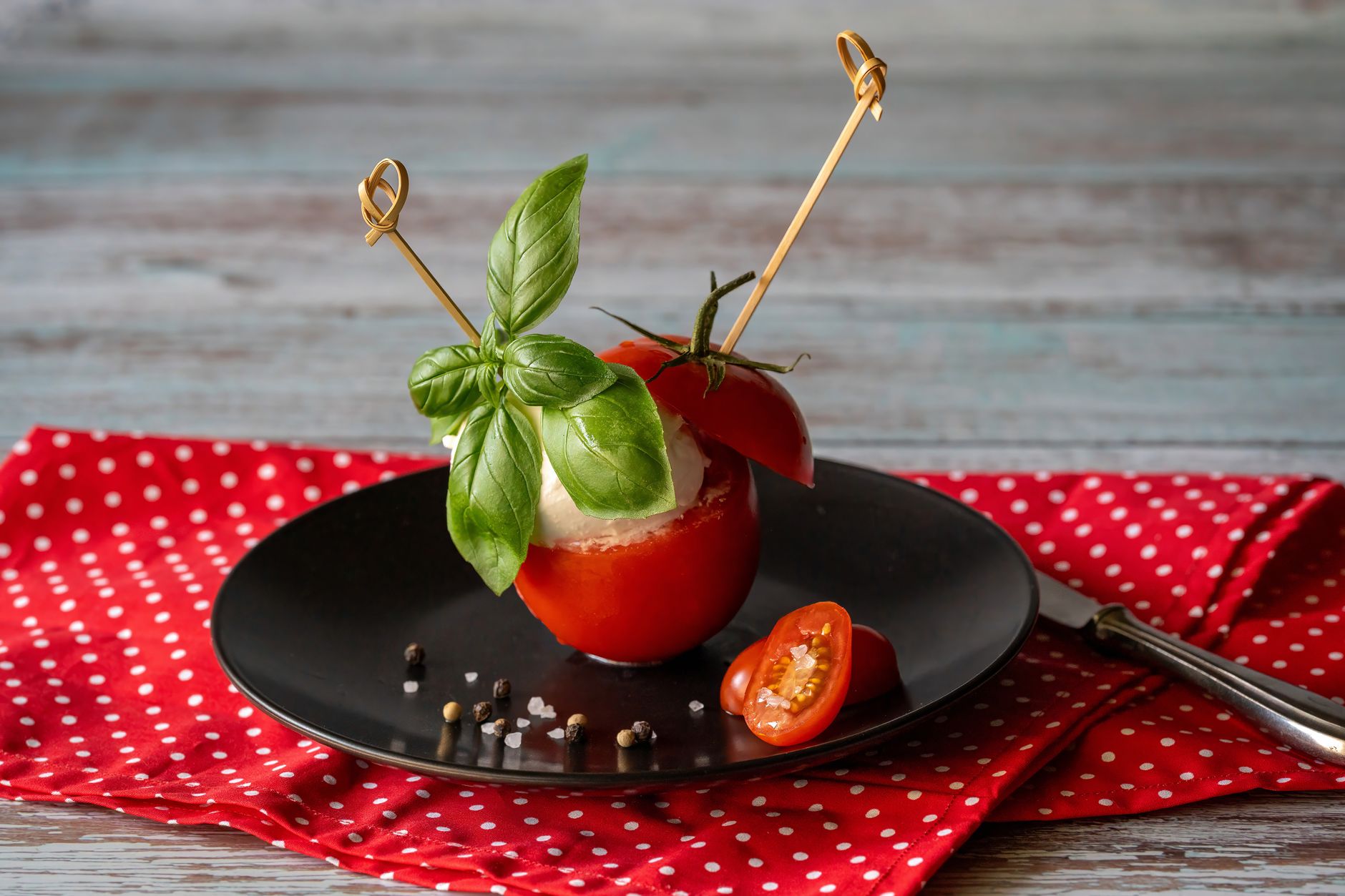
Why Roasted Tomato Caprese Salad Recipe?
The tomatoes roast slowly until their edges turn dark, glossy, and sweet, filling the kitchen with a warm garlic aroma. Cool mozzarella and fresh basil balance that concentrated flavor beautifully.
Roasted Tomato Caprese Salad Recipe combines slow-roasted plum tomatoes, creamy fresh mozzarella, basil, olive oil, and balsamic vinegar on one platter. Roasting removes excess moisture and intensifies the tomatoes, making this Italian-inspired salad richer than a standard raw Caprese. Serve it at room temperature as a starter, light lunch, or side dish.
I first made this with tomatoes that looked fairly firm and ordinary. After two hours in a low oven, they became soft, jammy, and lightly caramelized. The key is patience: high heat can scorch the garlic before the tomatoes develop their concentrated texture.
Health Benefits & Nutrition
This salad is made with a short list of recognizable ingredients. Its nutrition depends on the size of the tomatoes, the amount of cheese used, and how generously you drizzle the oil.
- Tomatoes provide vitamin C and potassium. They also add water and natural sweetness while remaining relatively light.
- Olive oil supplies unsaturated fat. It carries the garlic and basil flavors across the tomatoes and helps create a satisfying dressing.
- Mozzarella contributes protein and calcium. It also makes the salad more filling than vegetables alone.
- Basil, garlic, and balsamic vinegar add flavor without much quantity. Their strong flavors help keep the ingredient list simple.
Per serving, this recipe contains approximately 340 calories, 18 grams of protein, 10 grams of carbohydrates, and 26 grams of fat. These figures are estimates, not laboratory measurements, and will change with the mozzarella brand and serving size.
People with milk allergies or lactose intolerance should use a suitable dairy-free mozzarella alternative, understanding that texture and melting characteristics may differ. Anyone managing a medical condition or following a medically restricted diet should check ingredient labels and ask a qualified healthcare professional for personal guidance.
Ingredients & Preparation
Recipe Card
| Prep time | Cook time | Total time | Servings | Calories (approx) | Diet tags |
|---|---|---|---|---|---|
| 45 minutes | 2 hours | 2 hours 45 minutes | 6 | 340 per serving | Vegetarian, gluten-free |
Full Ingredient List
- 12 plum tomatoes, halved lengthwise, with seeds removed but cores left intact
- 1/4 cup extra-virgin olive oil, plus extra for finishing
- 1 1/2 tablespoons balsamic vinegar
- 2 large garlic cloves, finely minced
- 2 teaspoons granulated sugar
- 1 1/2 teaspoons kosher salt, plus more for finishing
- 1/2 teaspoon freshly ground black pepper, plus more for finishing
- 16 ounces fresh salted mozzarella
- 12 fresh basil leaves, thinly sliced
Equipment Needed
- Rimmed sheet pan
- Small bowl or measuring jug
- Chef’s knife and cutting board
- Paper towels
- Large serving platter
Tips for Choosing Quality Ingredients
Choose plum tomatoes that feel firm but smell faintly sweet at the stem. They contain less water than many slicing tomatoes, so they hold their shape while concentrating in the oven. Very soft tomatoes can work, but they may collapse before their edges caramelize.
Use fresh mozzarella packed in water or lightly salted brine. The cheese should feel springy and moist, not rubbery. I prefer a ball that can be cut into slices slightly thinner than the tomatoes. Fresh basil should have bright green leaves without black spots.
A flavorful extra-virgin olive oil makes a noticeable difference because it is used both before and after roasting. For the vinegar, choose a balsamic with a pleasantly sweet-tart flavor. It does not need to be expensive or syrup-thick.
Step-by-Step Instructions
Step 1: Heat the oven and prepare the tomatoes
Preheat the oven to 275°F (135°C). Rinse and dry the tomatoes, then halve them lengthwise. Use your fingers or a small spoon to remove the seeds while leaving the cores intact. Arrange the halves cut-side up in one layer on a rimmed sheet pan.
Step 2: Season the tomato halves
Whisk the 1/4 cup olive oil, balsamic vinegar, minced garlic, sugar, kosher salt, and black pepper in a small bowl for 30 seconds. Spoon or drizzle the mixture evenly over the tomatoes, making sure some garlic reaches each half.
Step 3: Roast slowly at 275°F
Roast the tomatoes at 275°F for 2 hours. Rotate the pan halfway through if your oven browns unevenly. The tomatoes are ready when they look visibly shrunken, their edges are dark golden, and the centers feel soft and jammy. You should smell sweet tomato and garlic rather than sharp, burnt garlic.
Step 4: Cool the tomatoes for 30 minutes
Remove the sheet pan from the oven and cool the tomatoes at room temperature for 30 minutes. Do not cover them while hot, or trapped steam will make the surfaces watery. The first time I made this, I rushed this step and the warm tomatoes softened the mozzarella too quickly.
Step 5: Slice, layer, and finish the salad
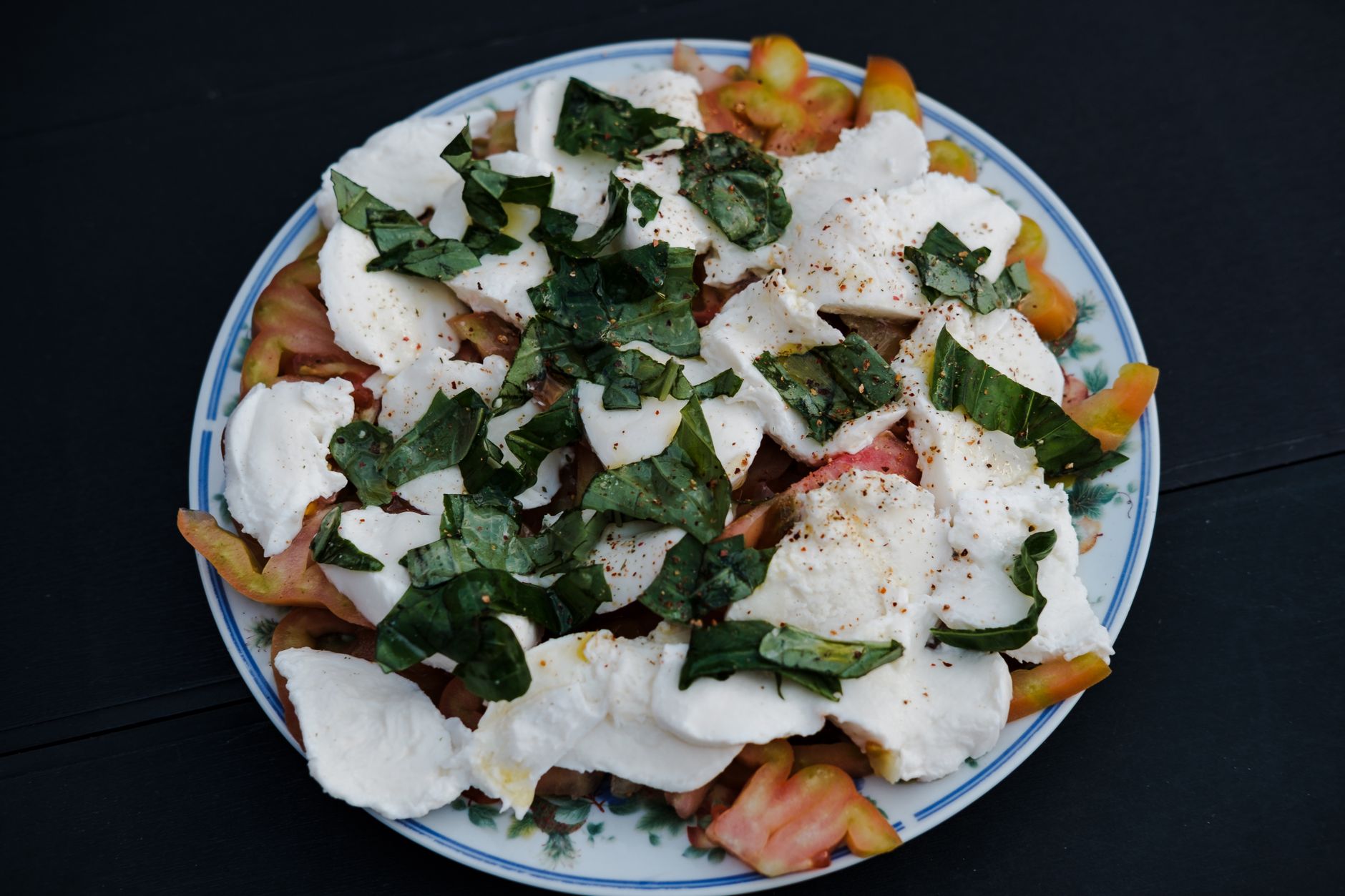
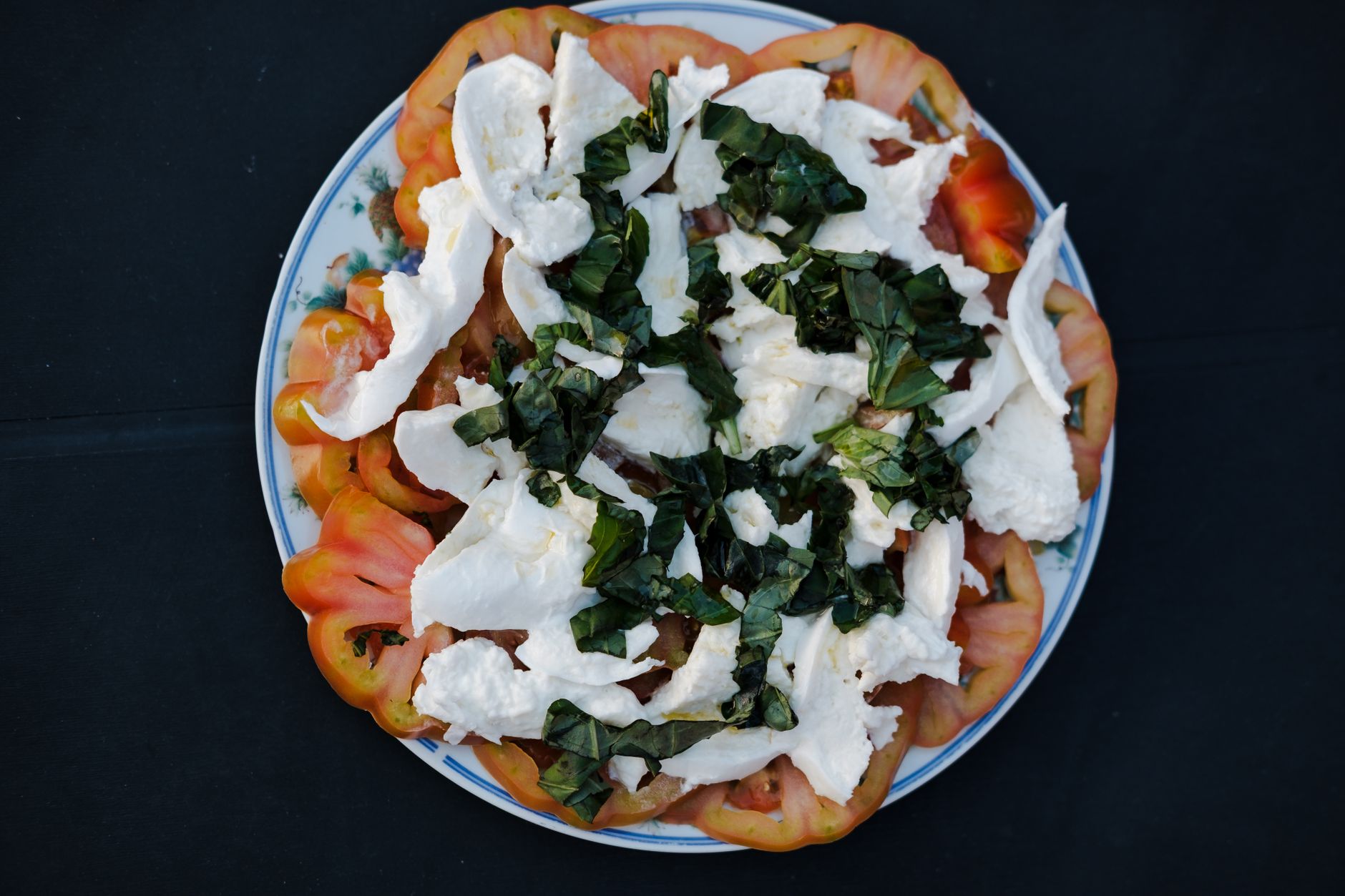
Pat the mozzarella dry with paper towels and cut it into slices just under 1/2 inch thick. Cut large slices in half if needed. Arrange alternating tomato and mozzarella slices on a platter, scatter the julienned basil over the top, and season lightly with salt and pepper. Finish with a light drizzle of olive oil and serve at room temperature.
The finished tomatoes should be tender enough to cut with the side of a fork but firm enough to lift onto a platter. If liquid has collected on the sheet pan, leave it behind rather than pouring it over the salad.
Variations & Substitutions
- Cherry tomato version: Replace the 12 plum tomatoes with 2 pounds of cherry tomatoes. Roast them whole for about 75 to 90 minutes, stirring once, until blistered and wrinkled. Use small mozzarella pearls or cut a larger ball into bite-size pieces.
- Tomato and burrata platter: Replace the 16 ounces of mozzarella with 2 large burrata balls, about 8 ounces each. Spoon the cooled roasted tomatoes around the burrata instead of layering them tightly.
- Lower-salt option: Use unsalted mozzarella and reduce the initial kosher salt to 1 teaspoon. Taste after plating before adding more. Balsamic vinegar still provides plenty of flavor.
- Herb variation: Use 8 basil leaves plus 2 tablespoons of chopped flat-leaf parsley. Keep the basil for its sweet aroma, while parsley adds a fresher, greener note.
- Garlic-free variation: Omit the garlic and add 1/4 teaspoon of dried oregano to the oil mixture. This gives the tomatoes an earthy flavor without replacing garlic with raw onion, which can overpower the cheese.
- Whole-grain serving: Spoon the roasted tomato mixture over toasted sourdough or cooked farro. Use roughly 1 cup cooked farro for every two salad servings.
I tried replacing the balsamic vinegar with lemon juice once, but the sharper acidity made the slow-roasted tomatoes taste less rounded. Lemon works better as a tiny finishing touch than as a one-for-one replacement.
Storage & Shelf Life
Store the roasted tomatoes separately from the mozzarella and basil in airtight containers in the refrigerator for up to 4 days. Keep the tomatoes in their roasting juices, but drain excess liquid before serving so the platter does not become watery.
The assembled salad is best eaten the same day, although leftovers can be refrigerated for up to 2 days. Let the tomatoes and cheese stand at room temperature for about 20 minutes before serving. Add fresh basil after chilling because refrigerated basil can darken and lose its fragrance.
Freezing is not recommended for the finished salad. Tomatoes can be frozen after roasting for up to 2 months, but they will thaw softer and are better suited to sauces, grain bowls, or toast. Fresh mozzarella also becomes crumbly after freezing and thawing.
Discard the dish if it develops a sour or fermented smell, fuzzy mold, unusual discoloration, slimy surfaces, or excessive bubbling. Do not taste food that shows clear signs of spoilage.
Pro Tips
- Remove seeds, not cores. The cores help the tomato halves hold their shape during the long roast, while removing the loose seeds prevents excess watery juice.
- Keep the tomatoes cut-side up. This lets the oil and balsamic mixture stay in the tomato cups instead of running directly onto the pan.
- Use a rimmed pan. The tomato juices and oil can spread as the fruit softens. A rimmed sheet pan prevents drips and makes cleanup easier.
- Do not crowd the pan. Leave a little space around each half. Crowding traps steam and slows the browning that gives this dish its deep flavor.
- Watch the garlic. Minced garlic can burn before the tomatoes finish. Mixing it into the oil and keeping the oven at 275°F protects it during the long roast.
- Dry the mozzarella carefully. A short rest on paper towels prevents watery patches from collecting around the cheese. Do not press hard, or the cheese will lose its creamy texture.
- Slice basil just before serving. A sharp knife makes clean ribbons and reduces bruising. If the leaves turn dark immediately, they were likely crushed or cut with a dull blade.
- Season in layers. The tomatoes are seasoned before roasting, but the cheese needs a light final seasoning. Taste one tomato with a piece of mozzarella before adding more salt.
For a simple Italian meal, pair this platter with a Fettucine alfredo with zucchini ribbons recipe 1958081. The crisp acidity of the tomatoes helps balance the creamy pasta.
Questions & Answers
When is the best time to eat Roasted Tomato Caprese Salad Recipe?
The best time to eat this salad is at room temperature, shortly after assembly. The tomatoes taste sweeter and the mozzarella feels creamier when neither is refrigerator-cold. Serve it as a starter, lunch, or side dish within a few hours of assembling it. Add the basil and final olive oil drizzle just before serving.
Can I make the roasted tomatoes ahead of time?
Yes, you can roast the tomatoes up to 4 days ahead. Cool them completely, then refrigerate them in a sealed container with their juices. Bring them toward room temperature before plating. Prepare the mozzarella and basil on the day you serve the salad for the freshest texture and color.
Why did my roasted tomatoes become watery?
Watery tomatoes usually result from using very juicy tomatoes, crowding the pan, or covering them while they cool. Remove the seeds, leave space between the halves, and cool them uncovered. Drain any excess liquid before assembling. The tomatoes should soften and shrink, but they should not sit in a pool of juice.
Can I use regular slicing tomatoes?
Yes, but plum tomatoes give the most reliable result. If using large slicing tomatoes, cut them into thick wedges and remove the loose seeds. They may need an additional 15 to 25 minutes at 275°F because they contain more water. Watch the edges closely and remove any pieces that brown early.
How do I stop the mozzarella from becoming too soft?
Cool the tomatoes for the full 30 minutes before layering them with the cheese. Pat the mozzarella dry and keep it refrigerated until the tomatoes are ready. If the tomatoes are still warm, arrange them on the platter first and add mozzarella after they have cooled further.
Can I use dried basil instead of fresh basil?
Fresh basil is strongly recommended, but dried basil can be used in the tomato seasoning. Add 1 teaspoon dried basil to the oil mixture before roasting, then omit the fresh basil. Dried basil will not provide the same bright aroma or attractive green ribbons on top.
What should I serve with this salad?
Serve it with crusty bread, grilled chicken, roasted fish, or a simple pasta dish. The tomatoes also work well over toasted sourdough as an open-faced lunch. For dessert after an Italian-inspired meal, try this Sicilian fig cookies recipe.
More Recipes You Will Love
If you enjoy creamy cheese with bright vegetables, the Fettucine alfredo with zucchini ribbons recipe 1958081 makes a comforting main course. Its zucchini ribbons add a fresh contrast to the rich Alfredo sauce.
For a sweet finish, bake the Sicilian fig cookies recipe. The fruit filling, citrus notes, and tender pastry fit naturally after an Italian-style meal.
You can also serve this salad beside grilled bread rubbed with garlic. The bread catches the tomato juices and turns a light platter into a more substantial lunch.
Conclusion
Slow roasting transforms firm plum tomatoes into tender, concentrated bites with caramelized edges and a savory garlic aroma. Layer them with fresh mozzarella, basil, and a final drizzle of olive oil for a simple platter that feels special without complicated cooking. This Roasted Tomato Caprese Salad Recipe is especially good when served at room temperature. If you make it, share how your tomatoes turned out, leave a rating, or pass the recipe along to someone who loves Italian flavors.
FAQs
When is the best time to eat Roasted Tomato Caprese Salad Recipe?
This salad is best served at room temperature, shortly after assembly, as a starter, light lunch, or side dish. Roasted tomatoes taste richest when they are no longer piping hot, and the mozzarella and basil stay fresh and vibrant when added close to serving time.
Can I make Roasted Tomato Caprese Salad Recipe ahead of time?
Yes, you can roast the tomatoes a day ahead and refrigerate them in an airtight container. Bring them to room temperature before serving, then add the mozzarella and basil just before serving so the cheese stays fresh and the basil stays bright.
Can I use dairy-free mozzarella in Roasted Tomato Caprese Salad Recipe?
Yes, a dairy-free mozzarella alternative can work, though its texture and flavor may differ from fresh dairy mozzarella. Choose a sliceable plant-based style and taste it first, since results vary by brand. People with milk allergies or lactose intolerance should check labels carefully.
Why are my roasted tomatoes watery instead of caramelized?
Watery tomatoes usually need more time, a drier surface, or more space on the pan. Pat the halves dry with paper towels and roast them low and slow so moisture evaporates gradually. Crowding the sheet pan traps steam, so spread the tomatoes cut side up with room between them.
What kind of tomatoes work best for Roasted Tomato Caprese Salad Recipe?
Plum tomatoes work best because they contain less water and hold their shape better than many slicing tomatoes. Choose fruit that feels firm and smells faintly sweet at the stem. Very soft tomatoes can still be used, but they may collapse before their edges caramelize.