Why Classic Eggs Benedict
Imagine biting into a perfectly toasted English muffin topped with sizzling Canadian bacon, a silky poached egg, and a luscious golden hollandaise sauce that gently coats each ingredient. Classic Eggs Benedict delivers a harmonious blend of creamy, tangy, and savory flavors that awaken your taste buds with every bite. Originating in New York City in the late 1800s, this dish remains a brunch staple loved for its comforting richness and sophisticated flair, making it irresistible for weekend gatherings or special mornings.
Health Benefits & Nutrition
While indulgent, Classic Eggs Benedict offers notable nutritional benefits. Eggs provide a high-quality source of protein essential for muscle repair and immune function (Harvard T.H. Chan School of Public Health). The yolks contain choline, important for brain health and development. Canadian bacon offers lean protein with less fat compared to traditional bacon, making it a lighter choice for this dish. Additionally, the lemon juice in hollandaise sauce contains vitamin C, an antioxidant that supports skin and immune health.
However, this dish is high in cholesterol and saturated fat, so it’s best enjoyed in moderation, especially for those with heart health concerns or during pregnancy. Consult with a healthcare provider if you have specific dietary restrictions or allergies related to eggs or dairy.
Ingredients & Preparation
Recipe Card
| Prep Time | Total Time | Servings | Calories (per serving) | Diet Tags |
|---|---|---|---|---|
| 20 minutes | 50 minutes | 4 | 835 kcal | Gluten (muffins), Dairy, Egg |
Full Ingredient List
- 2 sticks (1 cup) unsalted butter
- 3 large egg yolks
- 4 teaspoons fresh lemon juice, divided
- 2 pinches cayenne pepper
- Kosher salt, to taste
- 2 tablespoons distilled white vinegar
- 8 large eggs
- 2 tablespoons unsalted butter, plus more for spreading
- 8 slices Canadian bacon
- 4 English muffins, split
- Chopped fresh chives, for garnish
Equipment Needed
- Small saucepan for melting butter
- Medium saucepan for double boiler (or heat water for indirect heat)
- Whisk
- Slotted spoon
- Large wide pot for poaching eggs
- Ramekins or small bowls for cracking eggs
- Toaster or oven for English muffins
Tips for Choosing Quality Ingredients
- Select fresh, farm-raised eggs for richer yolks and better flavor.
- Use high-quality unsalted butter for creamy hollandaise without overpowering saltiness.
- Opt for thick-cut Canadian bacon to add savory crispness without too much grease.
- Sprinkle fresh chives at the end to add brightness and enhance presentation.
Step-by-Step Instructions
Step 1: Prepare the Hollandaise Sauce (15 minutes)
Melt 2 sticks of unsalted butter in a small saucepan over medium heat until fully melted and clear, about 6 to 8 minutes. Carefully pour off the clear butter into a liquid measuring cup, discarding the milk solids left behind.
Step 2: Create a Double Boiler Setup (5 minutes)
Fill a medium saucepan with about 1 inch of water. Heat over medium until steaming, not boiling. Place a stainless steel or heatproof bowl on top, ensuring it doesn’t touch the water.
Step 3: Thicken the Egg Yolks (3–5 minutes)
In the bowl, whisk together 3 large egg yolks, 1 tablespoon water, and 2 teaspoons fresh lemon juice. Whisk constantly over the steaming water until the mixture thickens to a pale yellow, about 3 to 5 minutes. Avoid letting the water boil to prevent curdling.
Step 4: Incorporate Butter & Season (5 minutes)
Remove the bowl from heat. Slowly add the melted butter, drop by drop, whisking continuously until the sauce thickens. Stir in the remaining 2 teaspoons lemon juice, cayenne pepper, and ¼ teaspoon kosher salt. If sauce becomes too thick, whisk in warm water 1 tablespoon at a time to loosen. Keep warm by placing the bowl over the pot with heat turned off, whisking occasionally.
Step 5: Poach the Eggs (12 minutes)
Fill a large pot with 3 inches of water and bring to a gentle simmer over medium-high heat. Add 2 tablespoons distilled white vinegar. Crack 4 eggs individually into ramekins, then gently slide into the simmering water, spacing eggs apart. Poach until whites are set but yolks remain runny, about 3 to 4 minutes. Remove eggs with a slotted spoon and drain on paper towels. Repeat for remaining eggs.
Step 6: Prepare Canadian Bacon & English Muffins (10 minutes)
Melt 2 tablespoons butter in a skillet over medium heat. Cook Canadian bacon slices until lightly browned and sizzling, about 2 minutes per side. Toast English muffins until golden and spread warm butter on them for extra richness.
Step 7: Assemble & Serve
Place two Canadian bacon slices on each muffin half. Top with a poached egg and generous spoonful of warm hollandaise sauce. Garnish with chopped fresh chives and serve immediately.

Variations & Substitutions
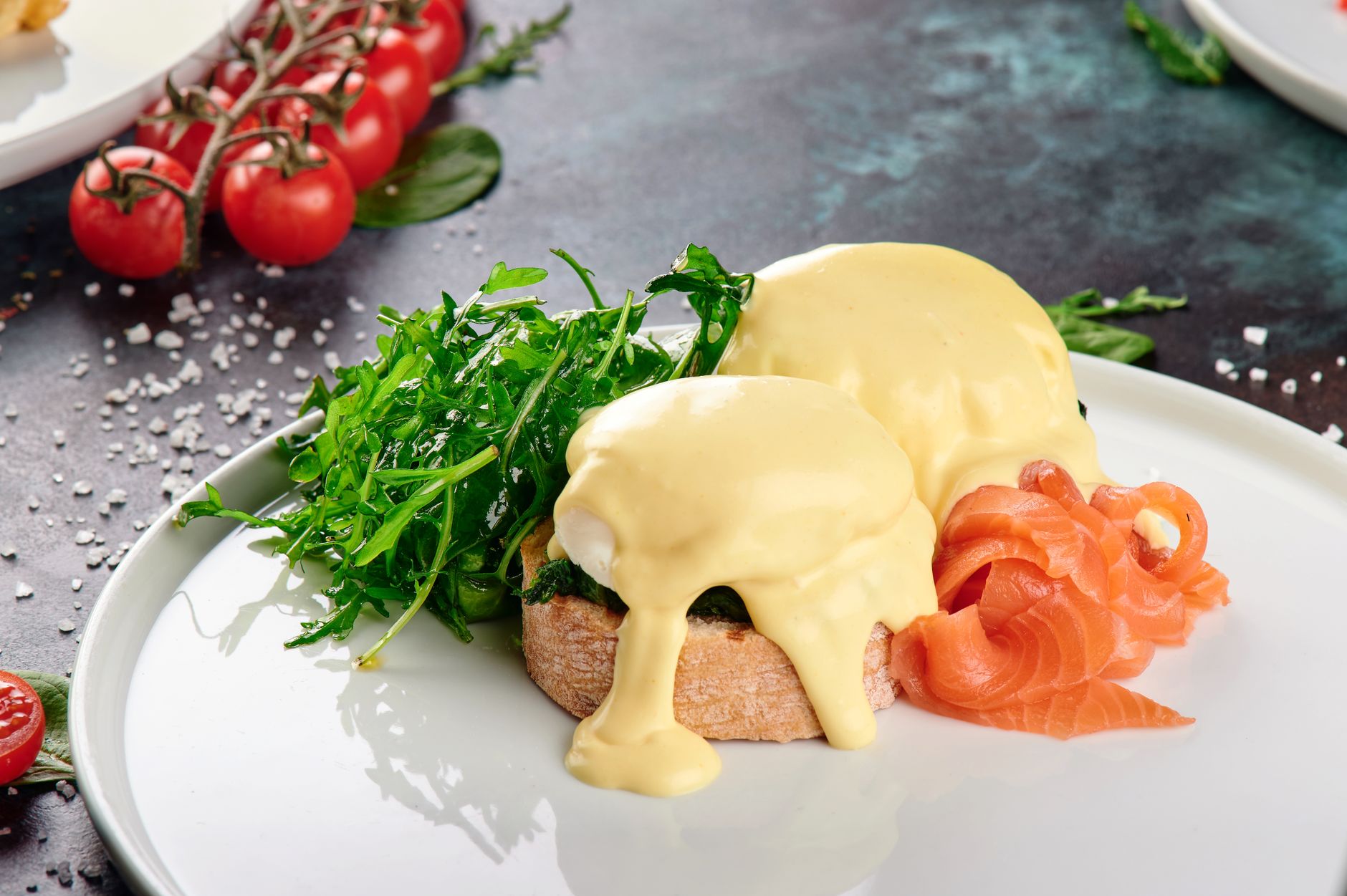
- Swap Protein: Substitute Canadian bacon with smoked salmon for a seafood twist. Use turkey bacon for a leaner option.
- Change the Bread: Switch English muffins for toasted sourdough or a flaky croissant to add texture and depth.
- Veggie Benedict: Replace bacon with sautéed spinach or grilled asparagus to create Eggs Florentine, a lighter yet flavorful version.
- Dairy-Free Hollandaise: Use olive oil or vegan butter substitutes to make a dairy-free sauce, whisked with aquafaba instead of egg yolks for an alternative approach.
Storage & Shelf Life
Store leftover hollandaise sauce in an airtight container in the refrigerator for up to 2 days. Reheat gently over a double boiler while whisking to prevent separation.
Poached eggs taste best fresh and are not recommended for storage. If English muffins or Canadian bacon remain, refrigerate and consume within 3 days.
Signs of spoilage include sour smell, curdled sauce, or slimy texture. Always discard if any off odors or changes are detected.
Pro Tips
- Whisk hollandaise sauce vigorously and gradually add butter to achieve a smooth, creamy texture without breaking.
- Use fresh eggs at room temperature for perfect poaching; cold eggs can cause whites to spread excessively.
- Add vinegar to poaching water to help egg whites coagulate quickly for neat, compact poached eggs.
- Keep hollandaise warm but away from direct heat to prevent curdling or scrambling.
- Toast English muffins just before serving to maintain crispness against soft toppings.
When is the best time to eat Classic Eggs Benedict?
Classic Eggs Benedict shines at brunch, especially during leisurely weekend mornings or special occasions. The dish’s richness pairs beautifully with morning coffee and fresh juice. For a fresh start to your day or a celebratory meal, serve Eggs Benedict just after preparing to enjoy its creamy hollandaise and runny yolks at their peak texture and flavor.
Can I prepare hollandaise sauce ahead of time?
You can make hollandaise sauce up to a day in advance and keep it warm over a double boiler or in a thermos. However, it’s best served fresh for optimal texture and flavor. Reheat gently if needed, whisking to restore smoothness.
Is it possible to poach eggs in advance?
Poached eggs are best eaten immediately, but you can prepare them up to one day ahead. Cool poached eggs in iced water, refrigerate in a sealed container, and gently rewarm in hot water for about 30 seconds before serving.
What alternative sauces can I use if I don‘t like hollandaise?
Try swapping hollandaise with a light béarnaise, creamy avocado sauce, or tangy yogurt-based dressings. Each offers a unique flavor profile that complements the classic components of Eggs Benedict.
How do I make my hollandaise sauce thicker?
To thicken hollandaise, whisk the egg yolks thoroughly and add melted butter slowly. If the sauce is too thin, let it cook gently a bit longer over the double boiler while whisking constantly. Avoid overheating to prevent curdling.
Are there any dietary restrictions I should be aware of?
Classic Eggs Benedict contains eggs, butter, and gluten from English muffins, which may trigger allergies or intolerances. Those with heart disease should moderate intake due to saturated fat and cholesterol content.
What’s the best way to reheat Canadian bacon without drying it out?
Reheat Canadian bacon slices in a non-stick pan over medium-low heat for 1–2 minutes per side, or wrap them loosely in foil and warm in a 300°F oven for 10 minutes. Avoid high heat to preserve juiciness.
More Recipes You Will Love
If you enjoy Classic Eggs Benedict, explore other rich and comforting recipes like Smoked turkey with wild rice for a hearty, savory dinner option. For soothing remedies to balance indulgent meals, check out our guide on How to soothe a sore throat at night, featuring natural ingredients to ease discomfort and promote well-being.
Conclusion
Classic Eggs Benedict is a luxurious brunch idea that combines creamy hollandaise, perfectly poached eggs, and savory Canadian bacon for an unforgettable flavor experience. By mastering this recipe, you can bring a touch of elegance to your table while enjoying a satisfying blend of textures and tastes. Feel free to share your results, rate this recipe, or leave a comment with your own twists — your feedback helps keep the kitchen inspired and delicious!
FAQs
When is the best time to eat Classic Eggs Benedict?
Classic Eggs Benedict is best enjoyed during brunch hours, typically late morning to early afternoon. It’s perfect for weekend gatherings, special occasions, or leisurely mornings when you want a rich and satisfying meal.
Can I prepare Classic Eggs Benedict ahead of time?
You can prepare some components ahead, like toasting English muffins and cooking Canadian bacon. However, poached eggs and hollandaise sauce are best made fresh to maintain their texture and flavor.
Is Classic Eggs Benedict healthy to eat regularly?
While containing protein and some nutrients, Classic Eggs Benedict is high in cholesterol and saturated fat. It’s best enjoyed occasionally as part of a balanced diet, especially if you have heart health concerns.
What can I substitute for Canadian bacon in Classic Eggs Benedict?
You can substitute Canadian bacon with smoked salmon, spinach, or avocado for variation. These alternatives offer different flavors while keeping the dish delicious and satisfying.
How do I keep the hollandaise sauce from curdling?
To prevent curdling, whisk the egg yolks constantly over gentle heat and avoid direct boiling. Remove from heat before adding melted butter and add it slowly while whisking continuously.