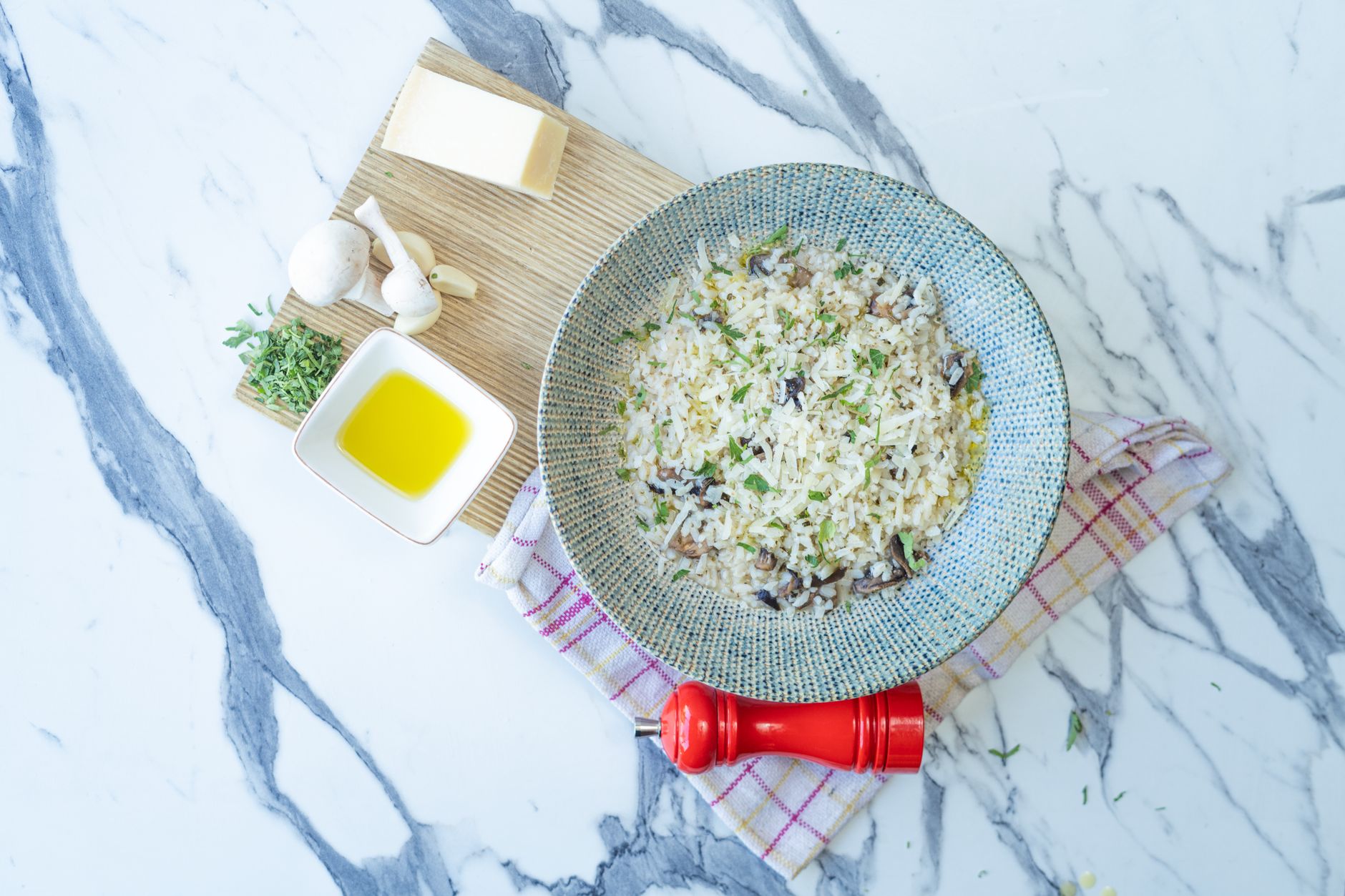
Why Asian Mushroom Risotto?
Imagine a dish where the creamy richness of Italian risotto meets the bold, fragrant flavors of Asian cuisine. Asian Mushroom Risotto offers that unique fusion, blending earthy shiitake and maitake mushrooms with the subtle heat of Thai chiles and the freshness of lemongrass. Each bite brings a perfect harmony of textures—from tender grains to succulent mushrooms—making it a satisfying meal that comforts and excites your palate. This recipe redefines risotto by infusing it with vibrant Asian spices and ingredients, creating a dish that’s both familiar and refreshingly new.
Health Benefits & Nutrition
Asian Mushroom Risotto isn‘t just a feast for your taste buds; it’s also packed with health benefits. Mushrooms like shiitake and maitake contain beta-glucans that can support immune function, according to research published in the Journal of Nutrition. These fungi are also rich in antioxidants, which help combat oxidative stress and inflammation. Arborio rice provides complex carbohydrates for steady energy, while fresh ginger and lemongrass offer anti-inflammatory and digestive benefits. However, if you’re sensitive to spicy foods or prone to allergies from mushrooms, adjust ingredients accordingly and consult your healthcare provider if needed.
Ingredients & Preparation
Recipe Card
| Prep Time | 15 minutes |
|---|---|
| Total Time | 1 hour 5 minutes |
| Servings | 4 |
| Calories Per Serving | 574 kcal |
| Diet | Gluten-Free (with gluten-free broth), Vegetarian option possible |
Full Ingredient List
- 4 cups low-sodium chicken broth (or vegetable broth for vegetarian)
- 1 stalk lemongrass, smashed
- 2 tablespoons extra-virgin olive oil
- 1 tablespoon unsalted butter, room temperature
- 1 pound mixed mushrooms (shiitake, hon shimeji, or maitake), torn or chopped
- 2 cups thinly sliced Tokyo negi (or leeks or scallions)
- 2 cloves garlic, chopped
- 1 tablespoon finely grated ginger
- 2 fresh green Thai chiles, finely chopped
- ½ teaspoon kosher salt
- 1 cup Arborio rice
- 1 cup dry white wine (Pinot Grigio or similar)
- ¼ teaspoon toasted sesame oil
- 1 cup freshly grated Parmigiano Reggiano cheese, plus extra for garnish
- ¼ cup fresh basil leaves, roughly chopped
- ¼ cup pickled ginger for garnish
Equipment Needed
- Medium saucepan for broth
- Straight-sided medium skillet or sauté pan
- Wooden spoon for stirring
- Grater for Parmesan and ginger
- Sharp knife and cutting board
Tips for Choosing Quality Ingredients
- Choose fresh, firm mushrooms with no dark spots or slimy texture for the best flavor and texture.
- Look for bright green Tokyo negi or tender leeks that feel heavy for their size.
- Pick lemongrass stalks that are pale yellow-green and not dried out at the ends.
- Use a dry, crisp white wine to add acidity without overwhelming the earthiness of the mushrooms.
- Freshly grate Parmigiano Reggiano yourself for richer, more authentic taste.
Step-by-Step Instructions
1. Simmer the Broth with Lemongrass (10 minutes)
Pour 4 cups of low-sodium chicken broth into a medium saucepan. Add the smashed lemongrass stalk. Bring to a gentle simmer over medium-high heat, then reduce the heat to low to keep it warm throughout the cooking process.
2. Sauté Mushrooms and Aromatics (9 minutes)
In a medium skillet, heat 2 tablespoons of olive oil with 1 tablespoon of unsalted butter over medium-high heat. Once the butter melts and stops bubbling, add the mixed mushrooms. Stir frequently with a wooden spoon, cooking until mushrooms are golden brown and releasing their juices—about 6 minutes. Lower the heat to medium, then stir in the sliced Tokyo negi, chopped garlic, grated ginger, green Thai chiles, and ½ teaspoon kosher salt. Cook until the negi softens and everything becomes fragrant, about 3 minutes.
3. Toast the Arborio Rice and Deglaze (7 minutes)
Add 1 cup of Arborio rice directly into the skillet. Stir to coat the rice evenly with the flavorful mushroom and oil mixture. Pour in 1 cup of dry white wine. Scrape the skillet’s bottom gently with your spoon to lift all browned bits. Allow the wine to simmer until nearly evaporated, about 3 minutes.
4. Gradually Add Broth and Cook Risotto (20 minutes)
Begin adding the warm broth in increments: ladle in 1 cup first, stirring constantly until mostly absorbed, roughly 4 minutes. Then add ¾ cup broth at a time. Stir continuously, letting each addition absorb before adding next. Continue this process until the rice is tender with a slight bite, and the mixture becomes creamy—about 20 minutes total.
5. Finish with Sesame Oil and Cheese (3 minutes)
Remove the risotto from heat. Stir in ¼ teaspoon toasted sesame oil and 1 cup freshly grated Parmigiano Reggiano until melted and combined. Adjust seasoning with more salt if needed.
6. Garnish and Serve
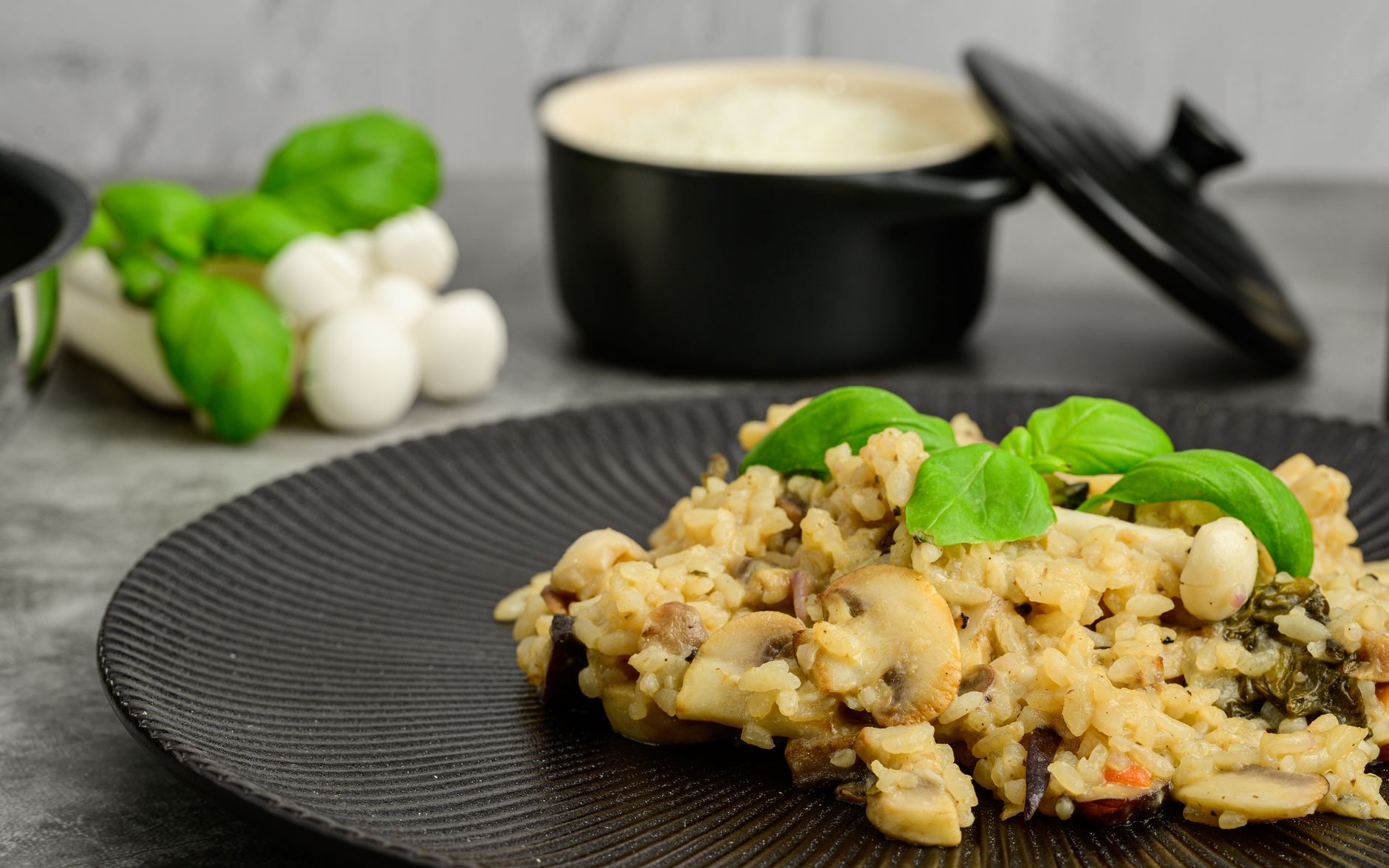
Plate the risotto and garnish with additional Parmesan cheese, fresh basil leaves, and pickled ginger for a tangy contrast. Serve immediately for the best creamy texture.
Variations & Substitutions
- Vegetarian/Vegan: Replace chicken broth with vegetable broth and skip Parmigiano or use nutritional yeast for a cheesy flavor without dairy.
- Spice Level: Omit the Thai chiles or substitute with milder peppers like jalapeños for less heat while keeping flavor complexity.
- Mushroom Mix: Use oyster mushrooms or cremini if shiitake or maitake aren’t available. Dried porcini rehydrated in warm water can add deep umami notes.
- Grain Alternatives: Substituting Arborio rice for pearl barley or farro can provide more chewiness but will alter the cooking time and consistency.
Storage & Shelf Life
Store leftover Asian Mushroom Risotto in an airtight container in the refrigerator for up to 3 days. When reheating, add a splash of broth or water to loosen the texture and heat gently on the stove. To freeze, cool completely, portion into freezer-safe containers, and freeze for up to 2 months. Thaw overnight in the fridge before reheating. Watch for signs of spoilage like off odors, mold, or sour taste—discard if any are present.
Pro Tips
- Maintain constant stirring during broth additions to release starches from the rice, producing that signature creamy texture.
- Keep the broth warm to avoid interrupting the cooking process and temperature of the risotto.
- Don’t rush the wine evaporation—it deglazes the pan and layers acidity that balances the richness.
- Use a wooden spoon instead of metal to avoid damaging the rice grains and to better control stirring intensity.
- Add toasted sesame oil last to preserve its delicate aroma and avoid bitterness.
When is the best time to eat Asian Mushroom Risotto?
Asian Mushroom Risotto is perfect for a cozy dinner when you want something comforting yet sophisticated. Its warm, creamy texture and aromatic spices make it ideal for chilly evenings or special occasions when you want to impress with unique flavors.
Can I make this risotto ahead of time?
While risotto is best enjoyed fresh to keep its creamy consistency, you can prepare it up to 2 days in advance and gently reheat with added broth. However, avoid cooking it fully and reheating later as the texture may become gummy.
Is this recipe gluten-free?
The recipe is naturally gluten-free if you use gluten-free broth and wine. Always check labels on packaged ingredients like pickled ginger to confirm they do not contain gluten or additives.
Can I substitute other types of rice?
Arborio rice is essential for classic risotto‘s creamy texture due to its high starch content. Using other rice like basmati or jasmine will not yield the same creaminess and is not recommended.
How spicy is the dish with Thai chiles?
Two green Thai chiles add a moderate spicy kick that‘s balanced by creamy cheese and sweet scallions. You can adjust the amount or remove seeds for milder heat to suit your preference.
What can I serve alongside this risotto?
Asian Mushroom Risotto pairs wonderfully with light, crisp salads or steamed vegetables. For a broader Asian meal, try serving with egg drop soup for a seamless flavor match.
How do I store leftover risotto?
Keep leftovers refrigerated in an airtight container for up to 3 days. Reheat gently over low heat, stirring in broth to restore creaminess and avoid drying out.

More Recipes You Will Love
If you enjoy the mix of Asian flavors in this risotto, you might appreciate the light warmth of egg drop soup. It‘s a simple, silky broth that complements the richness here beautifully.
For a sweet finish, try the tropical delight of the Pandan chiffon layer cake with coconut pastry cream. Its airy texture balances this hearty meal perfectly.
Conclusion
Asian Mushroom Risotto delivers a delicious fusion of creamy Italian texture and bold Asian aromatics that elevate your dinner experience effortlessly. With fresh mushrooms, fragrant lemongrass, and a touch of heat, this recipe offers unforgettable comfort food with depth. Ready to elevate your rice game? Try this recipe today and share your experience—we’d love to hear your tips and tweaks!
FAQs
When is the best time to eat Asian Mushroom Risotto?
Asian Mushroom Risotto is perfect for lunch or dinner when you want a comforting yet flavorful meal. It’s ideal for cooler days or anytime you crave a rich, satisfying dish with a unique fusion of flavors.
Can Asian Mushroom Risotto be made vegetarian or vegan?
Yes, you can make Asian Mushroom Risotto vegetarian by using vegetable broth instead of chicken broth. For a vegan version, omit the butter and cheese or substitute with plant-based alternatives to maintain creaminess and flavor.
What types of mushrooms work best in this recipe?
Earthy mushrooms like shiitake, maitake, and hon shimeji are best for this risotto. They provide rich umami flavors and a meaty texture that complements the creamy Arborio rice and Asian spices.
Is Asian Mushroom Risotto gluten-free?
Yes, this dish can be gluten-free if you use gluten-free broth and ensure all other ingredients are free from gluten contamination. Arborio rice itself is naturally gluten-free.
How spicy is Asian Mushroom Risotto with Thai chiles?
The fresh green Thai chiles add a mild to moderate heat that can be adjusted by the amount you use. You can reduce or omit the chiles if you prefer a milder flavor without compromising the aromatic profile.